
Basilica of Our Lord of Bonfim
The Church of Our Lord of Bonfim, located in Salvador, Bahia, Brazil, is a highly significant Catholic church renowned for its intense religious devotion and the annual Festa do Senhor do Bonfim. Originally built in the 18th century, it is the cathedral of the Roman Catholic Diocese of Bonfim and a prominent site for religious syncretism, blending Catholic and Candomblé traditions.
Key Facts
- ›Construction of the church began in 1740 and it was inaugurated in 1754.
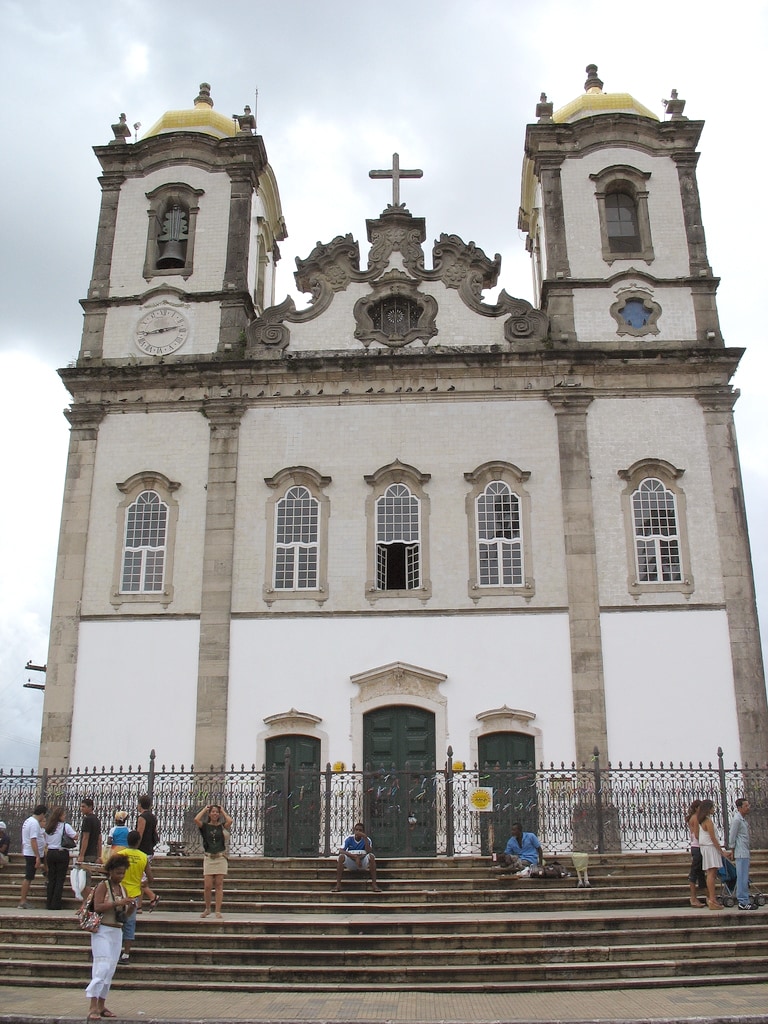
- ›The church's façade features Rococo-style windows and gable volutes, with lower parts tiled in azulejos resembling those of the Church of Saint Francis.
- ›The interior boasts a rich collection of paintings, azulejos depicting the life of Christ, and gilded woodcarvings, with a Neoclassical main altarpiece.
- ›The annual Festa do Bonfim, dating to the 18th century, combines Catholic and Candomblé elements, including the symbolic Lavagem do Bonfim (Washing of Bonfim).
- ›It was listed as a historic structure by the National Historic and Artistic Heritage Institute in 1938.
- ›The church is associated with the popular 'Fitinha do Senhor do Bonfim' bracelets, a common souvenir and amulet.
Rococo, Neoclassical
Our Lord of Bonfim
AntôNio Joaquim Dos Santos, TomáZ Do Carmo, AntôNio De Santa Rosa, Franco Velasco, José TeóFilo De Jesus
About Basilica of Our Lord of Bonfim
The Church of Our Lord of Bonfim (Portuguese: Igreja de Nosso Senhor do Bonfim) is a highly significant Catholic church located in Salvador, in the State of Bahia, Brazil. It is the most famous church in Salvador and serves as the cathedral for the Roman Catholic Diocese of Bonfim.
History and Devotion
The veneration of Nosso Senhor do Bonfim, representing the crucified Jesus at the moment of his death, is an old Portuguese tradition brought to Brazil during colonial times. The church's history is deeply intertwined with the arrival of a statue of Nosso Senhor do Bonfim from Setúbal, Portugal, in 1740. A religious brotherhood dedicated to Our Lord of Bonfim was subsequently founded, and construction of the current church began on Montserrat hill in the Itapagipe Peninsula.
Construction commenced in 1740, with the church inaugurated in 1754, and its towers completed around 1772. In the 19th century, housing was built for pilgrims, known as 'romeiros', who visit annually to honor Our Lord of Bonfim.
Architecture and Artistry
The Church of Our Lord of Bonfim is constructed from brick and stone masonry. Its façade is two-dimensional, featuring a central body flanked by two towers. The windows and the elaborate volutes of the pediment's gable are in the Rococo style. In 1873, the lower parts of the façade were covered with industrial Portuguese azulejo tiles, designed to resemble those of the Church of Saint Francis in Salvador's Historic Center.
The interior, largely finished in the 19th century, is richly adorned with paintings, azulejos, gilded woodcarvings, and furniture. The nave has a single aisle and six side altars. The Neoclassical main altarpiece, designed and carved by master sculptor Antônio Joaquim dos Santos between 1813 and 1814, is a prominent feature. The side altars contain paintings by José Teófilo de Jesus, and the lateral walls of the church are decorated with 28 large-scale azulejo panels depicting the life of Christ, painted by Tomáz do Carmo in 1855. The wooden ceiling of the chancel, painted by Franco Velasco between 1818 and 1820, depicts scenes of gratitude for surviving shipwrecks.
Festa do Bonfim and Religious Syncretism
The church is most famous for the Festa do Bonfim, a major annual religious celebration that begins on the second Thursday after Three Kings Day. Originating in the 18th century, the festival became a city-wide event by the 19th century. A key ritual is the Lavagem do Bonfim (Washing of Bonfim), where 'bahianas' in traditional attire wash the church steps with aromatised water, blending Catholic and Candomblé traditions. In Candomblé, Our Lord of Bonfim is associated with Oxalá, the father of the Orishas. The festival attracts both Catholic worshippers and Candomblé adherents, as well as tourists, and lasts for ten days, concluding with a large mass.
The church also houses a museum of ex-votos, offerings from worshippers who believe they have received divine grace.
Protected Status and Souvenirs
The Church of Our Lord of Bonfim was recognized for its historical significance when it was listed as a historic structure by the National Institute of Historic and Artistic Heritage in 1938. A popular souvenir and amulet associated with the church is the 'Fitinha do Senhor do Bonfim', a colorful ribbon worn as a symbol of remembrance and devotion.
Source: Wikipedia ↗
Frequently Asked Questions
When was the Church of Our Lord of Bonfim built?
Construction of the church began in 1740 and it was inaugurated in 1754. The towers were completed around 1772.
What is the Festa do Bonfim?
The Festa do Bonfim is an annual religious celebration held in Salvador, starting on the second Thursday after Three Kings Day. It is known for its blend of Catholic and Candomblé traditions, including the Lavagem do Bonfim.
What architectural styles are present in the church?
The church exhibits Rococo elements in its façade's windows and gable, while its lower façade was tiled in azulejos in 1873. The interior features Neoclassical elements in its main altarpiece.
What are some notable features of the church's interior?
The interior contains a single nave, six side altars, and extensive azulejo panels depicting the life of Christ. A notable wooden ceiling was painted by Franco Velasco showing people thanking Our Lord of Bonfim.
What is the significance of the 'Fitinha do Senhor do Bonfim'?
The 'Fitinha do Senhor do Bonfim' is a popular souvenir and amulet made from cotton ribbon, often sold around the church. It carries religious connotations and represents a remembrance of the Lord of Bonfim.
Is the church considered a historic monument?
Yes, the Church of Our Lord of Bonfim was listed as a historic structure by the National Institute of Historic and Artistic Heritage in 1938.
Related Basilicas

Our Lady of the Conception of Praia Basilica
The Basilica of the Immaculate Conception in Salvador, Bahia, Brazil, is a significant religious and architectural landmark, recognized as one of the oldest parishes in its archdiocese. Its construction began in 1739 and continued through the mid-19th century, featuring a monumental façade that blends Baroque and Neoclassical styles, and is considered a prime example of Portuguese influence on Brazilian architecture.

Primatial Cathedral Basilica of the Transfiguration
The Primatial Cathedral Basilica of the Transfiguration, officially the Catedral Basílica de Salvador, is the historic seat of the Archbishop of Salvador, Brazil, who also holds the title of Primate of Brazil. Originally built by the Society of Jesus as part of a monastic and educational complex, the current church was consecrated in 1654 and later elevated to basilica status in 1933. It is renowned as a significant example of Mannerist architecture within the Portuguese empire and is a focal point of Salvador's Historic Center, a UNESCO World Heritage Site.

Basilica Shrine of Our Lady of the Immaculate Conception
The Basilica Shrine of Our Lady of the Immaculate Conception, also known as the Basilica Sanctuary of Our Lady of the Conception, is a prominent Roman Catholic church located in Caconde, São Paulo, Brazil. It serves as the seat of the Roman Catholic Diocese of São João da Boa Vista and holds significant religious importance as the second oldest parish in the diocese, dedicated to Our Lady of Good Success.