
Our Lady of the Conception of Praia Basilica
The Basilica of the Immaculate Conception in Salvador, Bahia, Brazil, is a significant religious and architectural landmark, recognized as one of the oldest parishes in its archdiocese. Its construction began in 1739 and continued through the mid-19th century, featuring a monumental façade that blends Baroque and Neoclassical styles, and is considered a prime example of Portuguese influence on Brazilian architecture.
Key Facts
- ›Construction of the current structure began in 1739 and concluded in the MID-19th century.
- ›The basilica's façade is a hybrid of Baroque and Neoclassical styles, designed by Manuel Cardoso Saldanha.
- ›It was elevated to the status of a basilica in 1946.
- ›Pope Pius XII declared our Lady of Conception the sole patron of the State of Bahia.
- ›The church is noted for its use of lioz stonework, imported from Portugal.
- ›The interior exhibits the Baroque style of John V of Portugal, with some 19th-century Neoclassical alterations.

Baroque, Neoclassical, Portuguese
Our Lady of the Conception
SantíSsimo Sacramento Da Imaculada ConceiçãO
Manuel Cardoso Saldanha, EugéNio Da Mota
About Our Lady of the Conception of Praia Basilica
Basilica of the Immaculate Conception
The Basilica of the Immaculate Conception, known in Portuguese as Basílica Nossa Senhora da Conceição da Praia, is a significant church located in Salvador, Bahia, Brazil. It holds the distinction of being one of the oldest parishes within the Roman Catholic Archdiocese of São Salvador da Bahia and is celebrated for its historical importance and architectural grandeur.
History and Construction
The current church structure is the third to be built on the site, with its origins tracing back to a primitive settlement and chapel established in 1549 by Tomé de Sousa, the first governor-general of Portuguese Brazil. The present building's construction commenced in 1739, following a design by military engineer Manuel Cardoso de Saldanha, with the stonework prepared in Portugal by master bricklayer and architect Eugénio da Mota. Construction was a lengthy process, concluding in the mid-19th century. The basilica is notable for being the second church in Brazil constructed entirely of lioz stonework, a material imported from Portugal.
Architectural Significance
Germain Bazin, an art historian, classifies the church as distinctly Portuguese in design. Its monumental façade presents a hybrid of Baroque and Neoclassical styles, drawing inspiration from contemporary Portuguese church façades. The building's design is attributed to Manuel Cardoso de Saldanha, with Eugénio da Mota overseeing the stonework. Art historian Robert C. Smith described it as the "first and most complete expression in Brazil of the new Baroque style that succeeded Mannerism in Portugal." The interior also reflects the Baroque style of John V of Portugal, though it underwent some Neoclassical alterations in the 19th century. The church is recognized for its use of natural light, featuring a cupola above the chancel and numerous windows.
Religious Importance and Designation
The church was officially elevated to the status of a minor basilica on October 7, 1946, by decision of the Holy See. Pope Pius XII later declared Our Lady of Conception the sole patron of the State of Bahia. Historically, the church was known as Igreja da Nossa Senhora da Conceição da Praia, meaning "Our Lady of the Conception of the Beach," a name it retained due to its original location on the shore of the Bay of All Saints.
Location and Features
The Basilica of the Immaculate Conception faces northwest onto the Bay of All Saints. While 19th-century landfill and port expansion have altered its immediate proximity to the bay, its historical connection to the waterfront remains significant. The basilica houses 16 church bells, which were restored and reactivated in 2021, now ringing at noon and 6 pm and capable of playing hymns. The interior includes an ornate high altar, a nave ceiling adorned with a large painting of Our Lady of the Conception by José Joaquim da Rocha, and eight side chapels. A baptismal font made of rare marble from Portugal is also a notable feature, as is an interior patio constructed of lioz stonework.
Source: Wikipedia ↗
Frequently Asked Questions
When was the Basilica of the Immaculate Conception built?
The current structure of the Basilica of the Immaculate Conception began construction in 1739 and was completed in the mid-19th century. However, the site has housed a church dedicated to Our Lady of the Conception since 1549.
What architectural styles are present in the basilica?
The basilica's monumental façade is a hybrid of Baroque and Neoclassical styles. The interior also showcases the Baroque style of John V of Portugal, with some elements altered in the Neoclassical style during the 19th century.
What makes the basilica historically significant?
It is one of the oldest parishes in the Roman Catholic Archdiocese of São Salvador da Bahia and was the first church built by the first governor-general of Brazil, Tomé de Sousa. It is also recognized for its unique Portuguese design and its extensive use of lioz stonework.
When was it officially designated as a basilica?
The church received the title of minor basilica by an Apostolic Letter from the Holy See on October 7, 1946.
Who designed the Basilica of the Immaculate Conception?
The church was planned by military engineer Manuel Cardoso de Saldanha. The stonework preparation in Portugal and its assembly in Salvador were overseen by master bricklayer and architect Eugénio da Mota.
What is notable about the interior of the basilica?
The interior features an ornate high altar with monumental Solomonic columns and an altar of silver. The nave ceiling boasts a large-scale painting of Our Lady of the Conception in the Italianate Baroque illusionist style by José Joaquim da Rocha.
Related Basilicas

Primatial Cathedral Basilica of the Transfiguration
The Primatial Cathedral Basilica of the Transfiguration, officially the Catedral Basílica de Salvador, is the historic seat of the Archbishop of Salvador, Brazil, who also holds the title of Primate of Brazil. Originally built by the Society of Jesus as part of a monastic and educational complex, the current church was consecrated in 1654 and later elevated to basilica status in 1933. It is renowned as a significant example of Mannerist architecture within the Portuguese empire and is a focal point of Salvador's Historic Center, a UNESCO World Heritage Site.
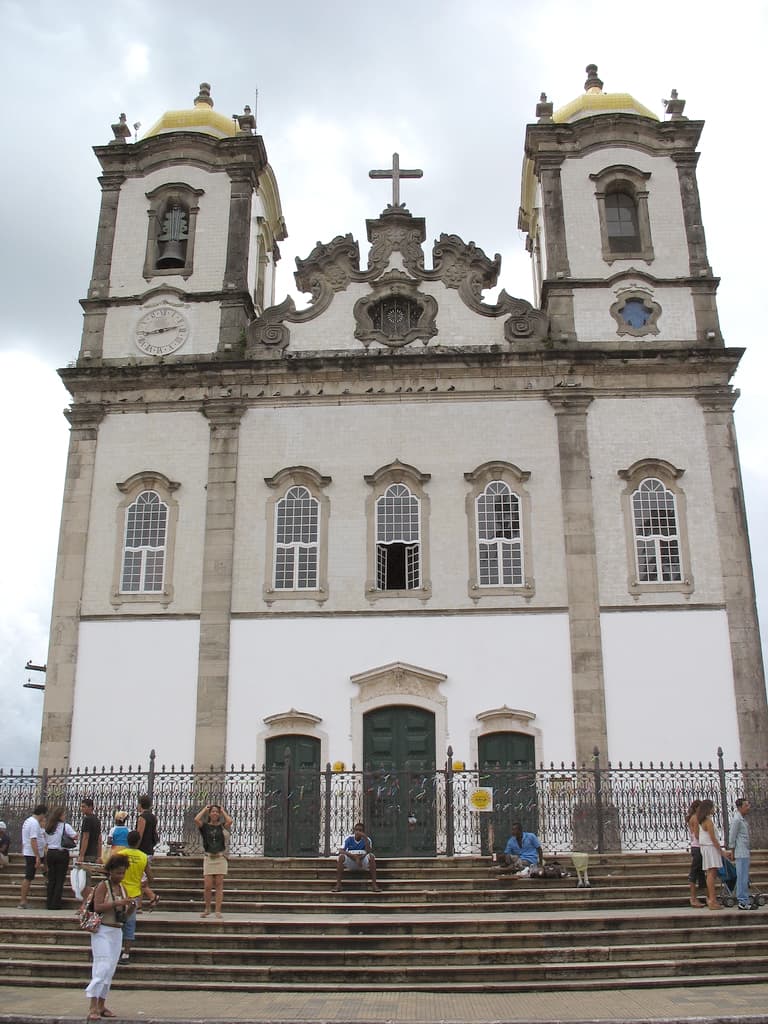
Basilica of Our Lord of Bonfim
The Church of Our Lord of Bonfim, located in Salvador, Bahia, Brazil, is a highly significant Catholic church renowned for its intense religious devotion and the annual Festa do Senhor do Bonfim. Originally built in the 18th century, it is the cathedral of the Roman Catholic Diocese of Bonfim and a prominent site for religious syncretism, blending Catholic and Candomblé traditions.

Basilica Shrine of Our Lady of the Immaculate Conception
The Basilica Shrine of Our Lady of the Immaculate Conception, also known as the Basilica Sanctuary of Our Lady of the Conception, is a prominent Roman Catholic church located in Caconde, São Paulo, Brazil. It serves as the seat of the Roman Catholic Diocese of São João da Boa Vista and holds significant religious importance as the second oldest parish in the diocese, dedicated to Our Lady of Good Success.