
Our Lady of the Rock Basilica
Brazil·Recife·Olinda and Recife
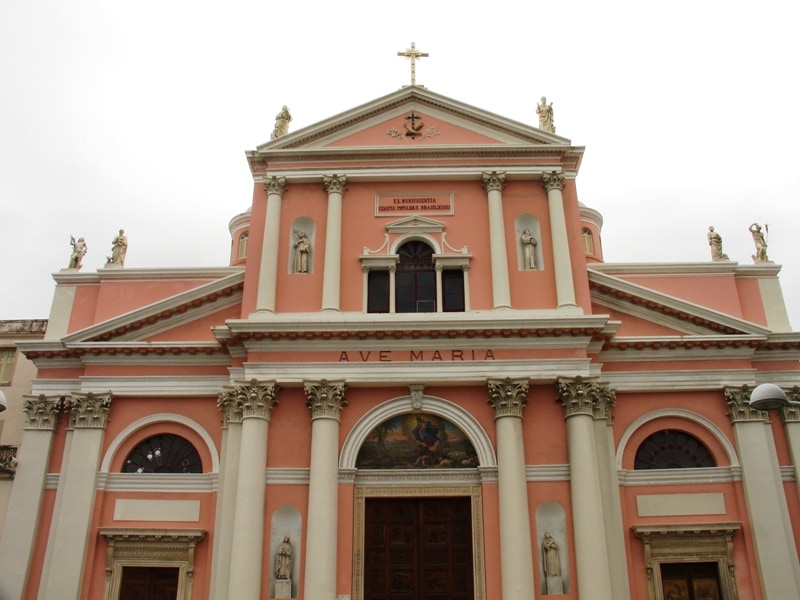
The Basilica of Our Lady of the Rock (Nossa Senhora de Penha) is a significant Roman Catholic basilica located in Recife, Brazil. Constructed between 1870 and 1882, it stands out for its unique Corinthian and Renaissance Revival architectural style, inspired by Venice's San Giorgio Maggiore, and is the only church in Pernambuco State with this design. The basilica is operated by the Order of Friars Minor Capuchin and is dedicated to the Virgin of the Rock.
Key Facts
- ›The present basilica was constructed between 1870 and 1882.
- ›It is the only church in Pernambuco State built in the Corinthian style.
- ›The basilica's architecture is inspired by the San Giorgio Maggiore church in Venice.
- ›It exhibits Renaissance Revival architecture, distinct from the Baroque style common in Recife.
- ›Notable artistic contributions include marble reliefs by Valentino Panciera Besarel and frescoes by Murillo La Greca.
Corinthian, Renaissance Revival
Virgin of the Rock
Order of Friars Minor Capuchin
About Our Lady of the Rock Basilica
Basilica of Our Lady of the Rock
The Basilica of Our Lady of the Rock, known in Portuguese as Nossa Senhora de Penha or Basilica da Penha, is a significant Roman Catholic religious basilica situated in Recife, the capital city of the state of Pernambuco, Brazil. It belongs to the Order of Friars Minor Capuchin and falls under the archdiocese of Olinda and Recife. The basilica's patron is the Virgin of the Rock.
History and Architecture
The origins of the site trace back to a small oratory established in 1655 by French Capuchin Franciscans, located "Outside the Gate of Santo Antônio." This oratory was expanded on April 16, 1655, on a plot of land donated by Belchior Alves Camello and his wife, Joanna Bezerra.
The contemporary basilica, however, was constructed between 1870 and 1882. This imposing structure is distinguished as the only church in Pernambuco State built in the Corinthian style. Its architectural design draws inspiration from the San Giorgio Maggiore church in Venice. Unlike the prevalent Baroque style found in many other churches in Recife, the Basilica da Penha showcases Renaissance Revival architecture, recognized for its vast artistic merit both internally and externally.
Restoration work commenced on September 2, 2007, and concluded on July 4, 2014, with its re-inauguration. These extensive renovations cost approximately R$6 million and led to the rediscovery of several lost features, including the original color of the gilded saint atop the external dome and a vitrified mosaic panel made in Italy. During the restoration period, the church was known for the traditional event of the Blessing of Felix of Cantalice, which took place nearby.
Artistic Contributions
While much of the artwork within the basilica lacks documented authorship, some pieces are well-attributed. The altarpiece features figures of St. Francis of Assisi and St. Anthony, carved in marble relief by the Italian sculptor Valentino Panciera Besarel (1829-1902). Low relief work on the high altar is also attributed to him, with indications that other works in the basilica may stem from the same artist. Additionally, the high altar is adorned with frescoes by the Brazilian artist Murillo La Greca (1899-1985).
Source: Wikipedia ↗
Frequently Asked Questions
What is the Basilica of Our Lady of the Rock known for architecturally?
The Basilica of Our Lady of the Rock is notable for being the only church in Pernambuco State built in the Corinthian style. Its architecture is also characterized as Renaissance Revival and is inspired by the San Giorgio Maggiore church in Venice.
When was the Basilica of Our Lady of the Rock constructed?
The construction of the present basilica took place between the years 1870 and 1882. Following its initial construction, significant restoration work was undertaken from 2007 to 2014.
Who is the patron saint of the Basilica of Our Lady of the Rock?
The basilica is dedicated to the Virgin of the Rock (Virgem de Penha). The Order of Friars Minor Capuchin oversees the basilica and its operations.
What artistic works are housed in the Basilica of Our Lady of the Rock?
The basilica features artistic works such as marble reliefs of St. Francis of Assisi and St. Anthony by Italian sculptor Valentino Panciera Besarel. Frescoes by Brazilian artist Murillo La Greca are also present on the high altar.
Related Basilicas
Abbatial Basilica of the Monastery of St Benedict
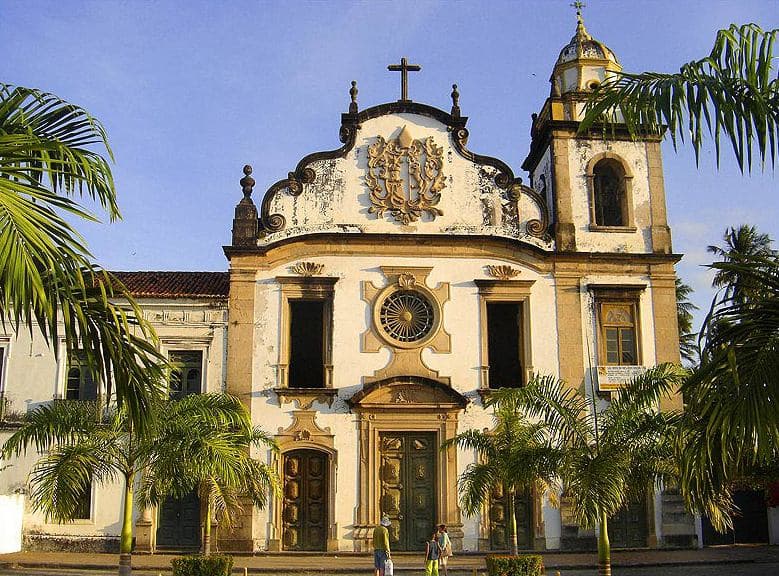
The Basilica and Monastery of St. Benedict is a significant Baroque architectural complex in Olinda, Pernambuco, Brazil. It is part of the historic center of the city, which is recognized as a UNESCO World Heritage Site. The basilica holds importance for its historical roots in Portuguese colonization and its elevated status as a Minor Basilica.

Basilica of Our Lady of Nazareth of Exile
The Basilica of Our Lady of Nazareth of Exile, also known as the Basilica of Belém, is a minor basilica of the Catholic Church located in Belém, Pará, Brazil. Construction began in 1909 on the site where the image of the Virgin of Nazareth was discovered. The basilica is notable for its Neoclassical design, commissioned by Barnabite priests and inspired by the Basilica of Saint Paul Outside the Walls in Rome, though it controversially lacked steeples in its original plan.
Basilica of Our Lady of the Assumption, Monastery of St Benedict
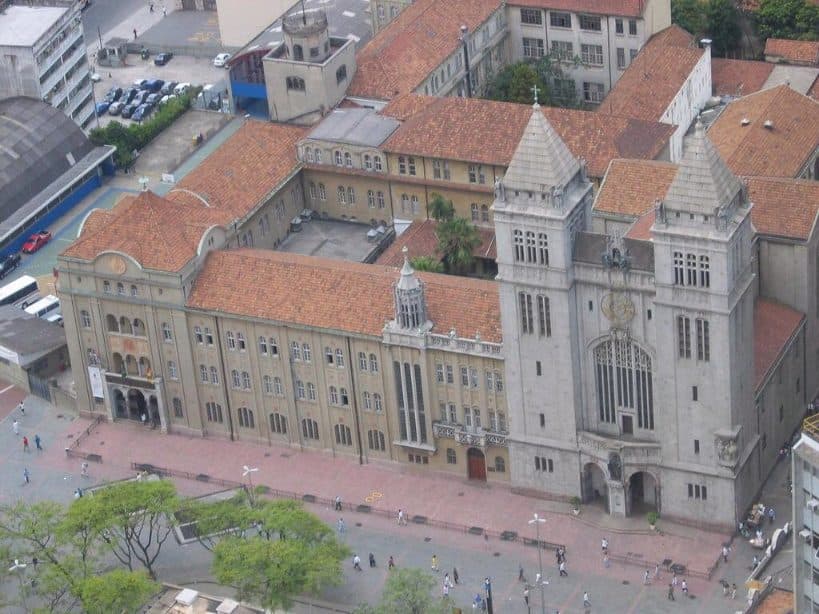
The Basilica of Our Lady of the Assumption, part of the Monastery of Saint Benedict in São Paulo, Brazil, is a significant religious and architectural site. Originally founded in 1598, the current church was constructed between 1910 and 1914 in the Neo-Romanesque style. It is notable for its daily Gregorian chant services and its historical role in events of local importance.