
Our Lady of Lourdes Basilica
Brazil·Belo Horizonte
The Basilica of Our Lady of Lourdes, also known as the Basilica of Belo Horizonte, is a Catholic church located in Belo Horizonte, Brazil. Constructed in a predominantly neo-Gothic style, its completion in 1923 marked a significant addition to the city's religious architecture. It was elevated to the status of a basilica by Pope Pius XII in 1958.
Key Facts
- ›The basilica is built in a predominantly neo-Gothic architectural style.
- ›Construction was completed around 1923, with Manoel Tunes as the project author and Antonio Gonçalves Gravatá overseeing the works.
- ›It was officially elevated to the status of a basilica by Pope Pius XII in 1958.
- ›The church features three naves and measures 47 meters in length and 17 meters in width.
- ›It houses three images of our Lady of Lourdes, including a wooden processional image, a plaster sculpture over 100 years old, and an altar image brought from Rio de Janeiro.

Neo-Gothic
Manoel Tunes, Antonio GonçAlves Gravatá
About Our Lady of Lourdes Basilica
Basilica of Our Lady of Lourdes
The Basilica of Our Lady of Lourdes, also recognized as the Basilica of Belo Horizonte, is a significant Catholic church situated in Belo Horizonte, Brazil. It was constructed in a predominantly neo-Gothic architectural style, with its completion marked around 1923. The architectural project was authored by Manoel Tunes, and the construction works were carried out by Antonio Gonçalves Gravatá.
Elevation to Basilica
In 1958, the church received a notable elevation in status when it was designated as a basilica by the decision of Pope Pius XII. This recognition underscores its importance within the Catholic hierarchy and for the faithful.
Architectural Features and Iconography
The basilica is characterized by its three naves and impressive dimensions, measuring 47 meters in length and 17 meters in width. Within its interior, the church houses three distinct images venerating the Virgin Mary in her invocation of Our Lady of Lourdes. These include a wooden statue, frequently utilized in processions and coronations; a plaster sculpture, over a century old, which is displayed in the Grotto of Lourdes; and an altar image that was brought from Rio de Janeiro specifically for the church's consecration to the status of basilica in 1958.
Source: Wikipedia ↗
Frequently Asked Questions
What is the architectural style of the Basilica of Our Lady of Lourdes?
The Basilica of Our Lady of Lourdes is built in a predominantly neo-Gothic style. This style is characterized by its pointed arches, ribbed vaults, and often elaborate decoration, evoking a medieval Gothic aesthetic.
When was the Basilica of Our Lady of Lourdes completed?
The construction of the Basilica of Our Lady of Lourdes was completed around the year 1923. The project was conceived by Manoel Tunes, and the construction itself was carried out by Antonio Gonçalves Gravatá.
Who elevated the church to the status of a basilica?
The church was elevated to the status of a basilica by Pope Pius XII. This significant designation occurred in 1958, formally recognizing its importance.
What are the dimensions of the basilica?
The Basilica of Our Lady of Lourdes features three naves and has a length of 47 meters. Its width measures 17 meters.
What notable images are housed in the basilica?
The basilica contains three distinct images of the Virgin Mary under the invocation of Our Lady of Lourdes. These include a wooden statue for processions and coronations, a plaster sculpture over a century old located in the Grotto of Lourdes, and an altar image that was brought from Rio de Janeiro.
Related Basilicas
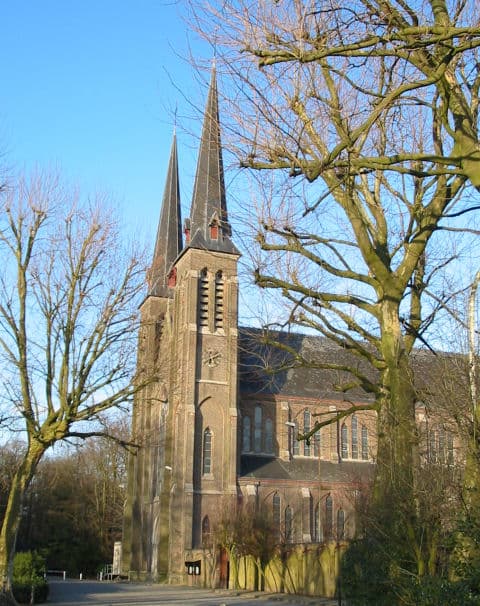
Basilica of Our Lady of Lourdes, Oostakker
The Basilica of Our Lady of Lourdes in Oostakker, Belgium, is a significant Marian pilgrimage site in Flanders. Constructed in the neo-Gothic style in the late 19th century, its origins are linked to a Lourdes grotto built in 1873, which became a focal point for pilgrims following a reported miracle in 1875.
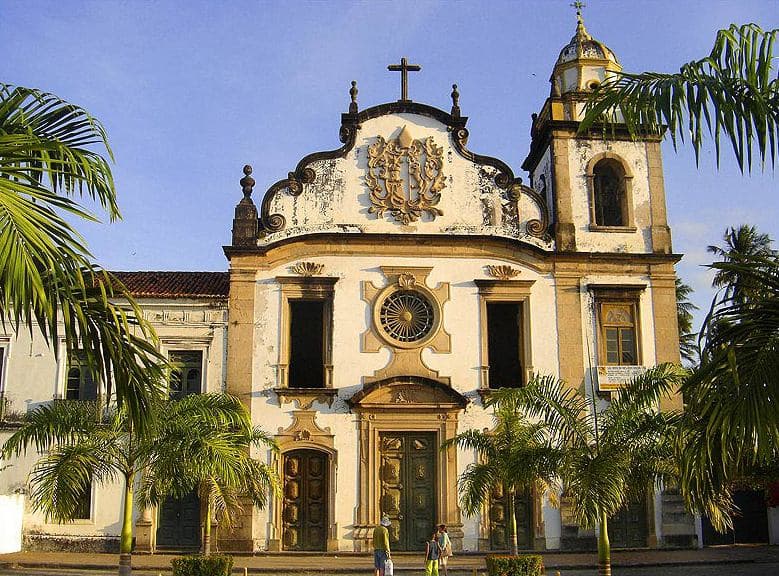
Abbatial Basilica of the Monastery of St Benedict
The Basilica and Monastery of St. Benedict is a significant Baroque architectural complex in Olinda, Pernambuco, Brazil. It is part of the historic center of the city, which is recognized as a UNESCO World Heritage Site. The basilica holds importance for its historical roots in Portuguese colonization and its elevated status as a Minor Basilica.

Basilica of Our Lady of Nazareth of Exile
The Basilica of Our Lady of Nazareth of Exile, also known as the Basilica of Belém, is a minor basilica of the Catholic Church located in Belém, Pará, Brazil. Construction began in 1909 on the site where the image of the Virgin of Nazareth was discovered. The basilica is notable for its Neoclassical design, commissioned by Barnabite priests and inspired by the Basilica of Saint Paul Outside the Walls in Rome, though it controversially lacked steeples in its original plan.