
Basilica of Our Lady of Lourdes, Oostakker
Belgium·Oostakker
The Basilica of Our Lady of Lourdes in Oostakker, Belgium, is a significant Marian pilgrimage site in Flanders. Constructed in the neo-Gothic style in the late 19th century, its origins are linked to a Lourdes grotto built in 1873, which became a focal point for pilgrims following a reported miracle in 1875.
Key Facts
- ›Built in neo-Gothic style at the end of the 19th century.
- ›Became the most important center of Marian pilgrimage in Flanders.
- ›Originated from a Lourdes grotto built in 1873.
- ›Site of a reported miraculous healing in 1875.
- ›The church was completed in 1876 and consecrated in 1877.
- ›Features a carillon with 49 bells cast in the 1950s.
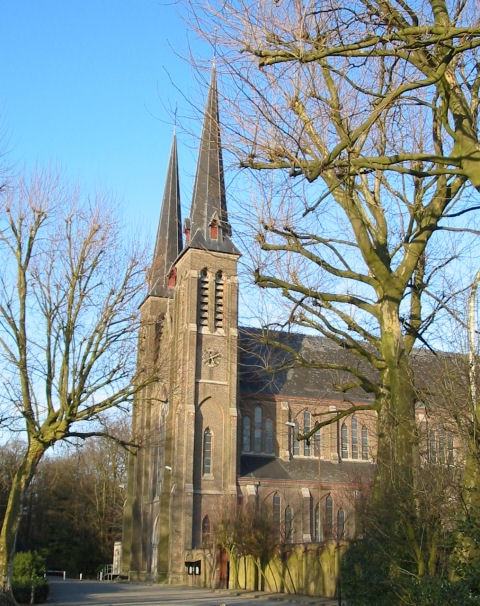
Neo-Gothic
Jesuits
E. Van Hoecke-Peeters, J. B. Bethune
About Basilica of Our Lady of Lourdes, Oostakker
The Basilica of Our Lady of Lourdes, situated in Oostakker near Ghent, Belgium, stands as the foremost center for Marian pilgrimage in Flanders. Its construction in the neo-Gothic style took place at the close of the 19th century, a period of significant religious devotion.
Origins and Pilgrimage
The basilica's genesis can be traced to 1873 when the Marquise of Courtebourne-de Nédonchel commissioned the creation of a Lourdes grotto within the grounds of her château at Slotendries. This devotional site soon attracted visitors from Ghent and surrounding localities who sought permission to pray there. A pivotal moment in its history occurred in 1875 with the reported miraculous healing of Pieter De Rudder from a compound fracture at the grotto, which significantly increased the influx of pilgrims.
Construction and Consecration
To accommodate the growing number of pilgrims, a new church was erected in the neo-Gothic architectural style. The plans were initially developed by E. Van Hoecke-Peeters and were subsequently modified by J. B. Bethune. The church was completed in 1876 and officially consecrated in 1877. Following its completion, the basilica was entrusted to the care of the Jesuits, a religious order to which the Marquise's late son had belonged.
Architectural Features
Among the notable features of the basilica is a carillon housed within one of its towers. This musical instrument consists of 49 bells, which were cast by the Michiels Foundries during the 1950s. Although the keyboard for the carillon was temporarily removed for renovation work in the 1970s, it has not yet been reinstalled.
Source: Wikipedia ↗
Frequently Asked Questions
When was the Basilica of Our Lady of Lourdes built?
The neo-Gothic church was completed in 1876, with its consecration taking place in 1877. Its construction occurred at the end of the 19th century.
What is the historical significance of the Lourdes grotto?
A Lourdes grotto was built in the gardens of a château in 1873. It became a pilgrimage site after people from Ghent and nearby areas were allowed to visit and pray there, and it was the location of a reported miraculous healing in 1875.
Who was involved in the design of the basilica?
The neo-Gothic church was based on plans by E. Van Hoecke-Peeters, with slight modifications made by J. B. Bethune.
What is notable about the basilica's carillon?
One of the towers houses a carillon composed of 49 bells. These bells were cast by the Michiels Foundries in the 1950s.
Is the basilica associated with any religious orders?
The basilica was entrusted to the Jesuits, as the late son of the Marquise of Courtebourne-de Nédonchel, who had the grotto built, had belonged to this order.
Related Basilicas

Our Lady of Lourdes Basilica
The Basilica of Our Lady of Lourdes, also known as the Basilica of Belo Horizonte, is a Catholic church located in Belo Horizonte, Brazil. Constructed in a predominantly neo-Gothic style, its completion in 1923 marked a significant addition to the city's religious architecture. It was elevated to the status of a basilica by Pope Pius XII in 1958.

Abbatial Basilica of Our Lady of Good Hope, Vellereille-Les-Brayeux
The Abbatial Basilica of Our Lady of Good Hope, located in Vellereille-les-Brayeux, Belgium, was a significant Premonstratensian abbey founded in 1130. It played a role in religious conversions and housed important relics, including those of Saint Frederick of Hallum. Though suppressed during the French Revolution, its church continued to be a center of veneration, particularly for the statue of Our Lady of Good Hope.

Abbatial Basilica of Our Lady of Orval
The Abbatial Basilica of Our Lady of Orval is a historic Cistercian monastery located in Belgium, renowned for its deep spiritual life, significant historical events, and local artisanal products. Originally founded in the 12th century, the site has undergone multiple destructions and rebuildings, most recently resuming monastic life in the 20th century. It is also celebrated for its Trappist beer and cheese, continuing a tradition that supports the abbey.