
Old Cathedral of St Mary of the Siege
Spain·Salamanca
The Old Cathedral of St Mary of the Siege, also known as the Cathedral of Santa María, is one of two cathedrals in Salamanca, Spain. Its construction began in the early 12th century and was completed by the late 14th century, showcasing a blend of Romanesque and Gothic architectural styles. Originally designed with defensive features due to Salamanca's frontier status, it narrowly avoided demolition when the New Cathedral was planned, serving as a place of worship during the latter's long construction period.
Key Facts
- ›Construction started in the first third of the 12th century and concluded at the end of the 14th century.
- ›It features a blend of Romanesque and Gothic architectural styles.
- ›The cathedral was designed with defensive elements, earning it the popular nickname 'fortis salmantina'.
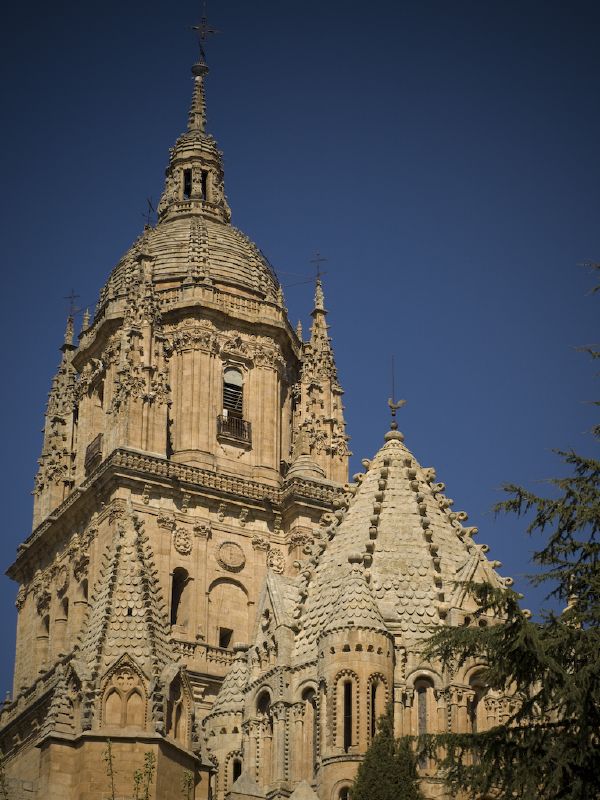
- ›A notable architectural feature is its 'Torre del Gallo' (Tower of the Rooster) dome, inspired by the Cathedral of Zamora.
- ›The main altarpiece, created between 1430-1450, features 53 panels by the Italian artist Dello Delli and his brothers.
- ›The Chapel of Santa Bárbara historically served as a venue for oral examinations for university degrees.
Romanesque, Gothic
Saint Mary of the See
About Old Cathedral of St Mary of the Siege
The Old Cathedral of St Mary of the Siege, officially the Cathedral of Santa María, stands as a significant historical and architectural landmark in Salamanca, Spain. Its construction, initiated by Bishop Jerome of Périgord, commenced in the early 12th century and continued until the late 14th century, resulting in a structure that masterfully blends Romanesque and Gothic architectural elements. The cathedral was completed under the impetus of Bishop Alfonso Barasaque and is dedicated to Saint Mary of the See.
Historical Context and Architecture
The foundation of the Old Cathedral was tied to the restoration of the diocese of Salamanca by King Alfonso VI and the repopulation of the city. Architecturally, it is a basilica with a Latin cross plan, featuring three naves, a distinct transept, and a chevet composed of three semicircular apses. Its frontier location also influenced its design, incorporating defensive fortifications, which led to its popular moniker, "fortis salmantina" (strong Salamanca).
A striking feature is the considerable dome over the transept, dating to around 1150, known as the "Torre del Gallo" (Tower of the Rooster). This dome, inspired by the Duero domes, exhibits a unique internal structure and an almost conical exterior adorned with scales. The cathedral's construction reflects the stylistic transition from Romanesque to Gothic, evident in the varying architectural elements and vaulting.
Near Demolition and Artistic Treasures
In the early modern period, the Old Cathedral faced the threat of demolition when plans for the New Cathedral were made. However, the prolonged construction of the New Cathedral and the ongoing need for a place of worship ensured its preservation. Despite modifications, such as the partial covering of its facade and the altered roofline due to the construction of the New Cathedral, its historical integrity remains.
The cathedral houses significant artistic works, including a 15th-century main altarpiece by Dello Delli and his brothers, depicting scenes from the lives of Jesus and the Virgin Mary, and a fresco of the Last Judgment. The apse contains a cycle of 53 tableaux, many by Delli, and the Virgin of la Vega, the patron saint of Salamanca, an 12th-century wooden image.
Notable Chapels and Features
The Old Cathedral is comprised of several notable chapels, each with its own historical and artistic significance. The Chapel of San Martín, or Capilla del Aceite, features 13th-century paintings by Antón Sánchez de Segovia. The Chapel of Santa Bárbara is historically recognized as a site for university examinations, where students would prepare for their academic defenses.
The cloister, though largely rebuilt after the 1755 Lisbon earthquake, contains several chapels, including the Chapel of San Salvador or de Talavera, noted for its Muslim-influenced dome and the continuation of the Mozarabic Rite. The Chapel of Santa Catalina, once a venue for university examinations and a singing chapel, now serves as a space for cultural activities. The Chapel of San Bartolomé or de los Anaya houses the tomb of its founder, Bishop Diego de Anaya, and conserves an ancient, functional 16th-century organ.
Source: Wikipedia ↗
Frequently Asked Questions
What is the Old Cathedral of St Mary of the Siege?
The Old Cathedral of St Mary of the Siege, also known as the Cathedral of Santa María, is a historic cathedral located in Salamanca, Spain. It is one of the two cathedrals in the city and is renowned for its blend of Romanesque and Gothic architecture.
When was the Old Cathedral of St Mary of the Siege built?
Construction of the Old Cathedral began in the first third of the 12th century and was completed by the end of the 14th century. The dome is dated around 1150, and the cathedral was finished in 1236.
What are the main architectural styles of the Old Cathedral?
The Old Cathedral exhibits a mix of Romanesque and Gothic architectural styles. This transition is visible in elements like the pillars and the ribbed vaults, reflecting the architectural shifts of the period.
What is the significance of the 'Torre del Gallo'?
The 'Torre del Gallo' (Tower of the Rooster) is a prominent dome situated over the transept, constructed around 1150. Its unique design, with an interior shaped like an open orange and an exterior decorated with scales, is inspired by the Duero domes and is crowned by a rooster weathervane.
What is notable about the main altarpiece?
The main altarpiece, created between 1430 and 1450, is a significant artwork featuring 53 panels by the Italian artist Dello Delli and his brothers. It depicts scenes from the lives of Jesus and the Virgin Mary, culminating in a representation of the Last Judgment.
What was the role of the Chapel of Santa Bárbara?
The Chapel of Santa Bárbara served as a historically important site for oral examinations for students at the University of Salamanca. Students would prepare for their defenses throughout the night in the chapel before facing professors in the morning.
Related Basilicas
Cathedral Basilica of St Mary of the Meadow
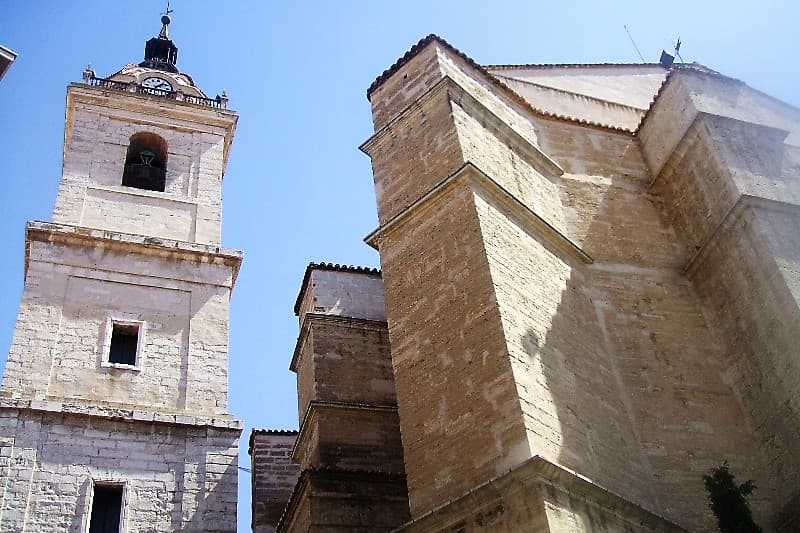
The Holy Priory Church Cathedral Basilica of the Military Orders of Our Lady Saint Mary of the Prado, commonly known as the Cathedral of Saint Mary of the Prado, is a significant religious and architectural landmark in Ciudad Real, Spain. Its construction, spanning centuries and incorporating Gothic, Renaissance, and Baroque elements, makes it a rich historical monument. Since 1875, it has served as the priory for four of Spain's military orders, underscoring its enduring importance.

Basilica of St Mary of the Pine
The Basilica of St Mary of the Pine, known in Catalan as Santa Maria del Pi, is a significant 15th-century Gothic church located in Barcelona, Spain. It stands as a prominent example of Catalan Gothic architecture, characterized by its single nave and minimal ornamentation. The basilica has a long history marked by damage from earthquakes, wars, and fires, necessitating several reconstructions and restorations throughout the centuries.
Basilica of St Mary of the Sea
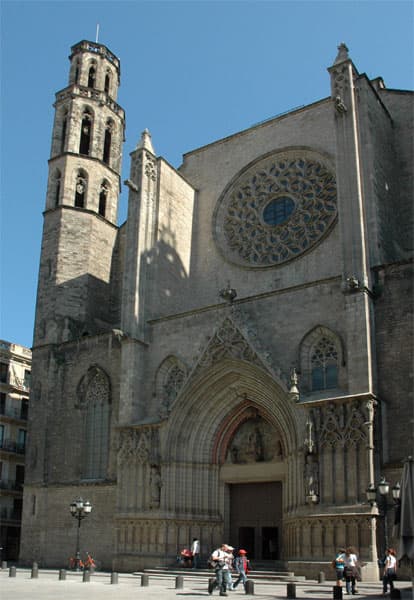
The Basilica of St Mary of the Sea, known in Catalan as Santa Maria del Mar, is a prominent church in Barcelona, Spain, constructed between 1329 and 1383. It stands as a remarkable example of Catalan Gothic architecture, distinguished by its stylistic purity and unity. The basilica holds significance as a testament to the maritime and mercantile power of the Principality of Catalonia during the medieval period, and notably, its construction was supported by the common people rather than the nobility.