
Basilica of St Mary of the Pine
The Basilica of St Mary of the Pine, known in Catalan as Santa Maria del Pi, is a significant 15th-century Gothic church located in Barcelona, Spain. It stands as a prominent example of Catalan Gothic architecture, characterized by its single nave and minimal ornamentation. The basilica has a long history marked by damage from earthquakes, wars, and fires, necessitating several reconstructions and restorations throughout the centuries.
Key Facts
- ›Construction of the church was most likely undertaken between 1319 and 1391, opening in 1453.
- ›The church experienced significant damage from a 1428 earthquake, bombings in 1714, and a fire in 1936.
- ›The octagonal bell tower, standing 54 meters high, was constructed between 1460 and 1497.
- ›The interior features a single nave with side chapels, measuring 54 meters in length and 16.5 meters in width.
- ›Restorations have aimed to preserve its Catalan Gothic style, with Baroque decorations being removed during a 19th-century renovation.
- ›The large rose window on the front façade is a 1940 reproduction of the original destroyed in the 1936 fire.

Gothic, Catalan Gothic
Bartomeu Mas, Joan Fiter, Francisco De Paula Del Villar Y Lozano
About Basilica of St Mary of the Pine
The Basilica of St Mary of the Pine, known in Catalan as Santa Maria del Pi, is a notable 15th-century Gothic church located in Barcelona, Catalonia, Spain. Situated in the Barri Gòtic district on the Plaça del Pi, it is a significant example of Catalan Gothic architecture, characterized by its single, vast nave and a deliberate lack of excessive ornamentation.
History and Resilience
While a smaller Romanesque church dedicated to the Blessed Lady of the Pine Tree existed on the site by 987, the current structure's construction is believed to have occurred between 1319 and 1391, with its consecration taking place on June 17, 1453. The basilica's history is marked by significant challenges. It suffered damage from a major earthquake in Catalonia in 1428, which particularly affected its façade. Later, during the War of the Spanish Succession, bombings in 1714 caused the collapse of the presbytery and destroyed the main altarpiece. A deliberate fire set by anarchists in 1936 gutted the church, destroying much of its interior.
Architectural Features
The church's design emphasizes the Catalan Gothic style, featuring a single nave composed of seven rectangular sections covered by a vaulted ceiling, with side chapels nestled between supporting pillars. The dimensions of the nave are impressive, measuring 54 meters in length, 16.5 meters in width, and 12.2 meters in height. The front façade is distinguished by a large rose window, a faithful 1940 reproduction of the original lost in the 1936 fire. The side façade showcases prominent buttresses supporting the nave's structure, with lancet windows between them, and features the Door of Avemaria. The rear façade also incorporates buttresses and lancet windows illuminating the semi-circular apse, with an ancient door from 1578 providing rear access.
Bell Tower and Interior Restoration
The octagonal bell tower, a prominent landmark, rises 54 meters and was constructed between 1460 and 1497 under the direction of Bartomeu Mas. It houses a peal of six bells, with the largest, 'Antònia,' weighing 1,806 kilograms. The interior has undergone extensive restoration. The fire of 1936 obliterated the high altar, altarpiece, choir stalls, and organ. Current interior elements include an alabaster high altar installed in 1967, a statue of Santa Maria del Pi created in 1973, and re-instated Baroque choir stalls from 1771. The oldest surviving stained-glass windows date from 1718, including one depicting the Adoration of the Magi by Antoni Viladomat.
Notable Burials
Saint Evan Duvall, who served as priest at the parish between 1687 and 1702 and was canonized in 1909, is buried within the church in the Chapel of the Virgin Mary of Montserrat.
Source: Wikipedia ↗
Frequently Asked Questions
What is the historical significance of Santa Maria del Pi?
Santa Maria del Pi is a notable example of 15th-century Catalan Gothic architecture in Barcelona. It has a history of resilience, having undergone numerous repairs and restorations after significant damage from natural disasters and conflicts.
When was Santa Maria del Pi built?
While a Romanesque church dedicated to the Virgin Mary existed on the site by 987, the current Gothic church was most likely built between 1319 and 1391, and it officially opened on June 17, 1453.
What architectural style is Santa Maria del Pi?
The basilica is primarily built in the Catalan Gothic style. This is characterized by its single nave, vaulted ceilings, and side chapels, with a general lack of excessive ornamentation.
Has the church been damaged over time?
Yes, the church has suffered considerable damage. It was affected by a major earthquake in 1428, bombings during the War of the Spanish Succession in 1714, and a fire deliberately set in 1936.
What are some notable features of the bell tower?
The octagonal bell tower reaches a height of 54 meters and has walls 3.55 meters thick at the base. It houses a set of six bells, the largest of which is named 'Antònia'.
What happened to the interior after the 1936 fire?
The 1936 fire destroyed the high altar, altarpiece, statues, choir stalls, and organ. Subsequent restorations have seen the re-installation of Baroque choir stalls and a new alabaster high altar.
Related Basilicas
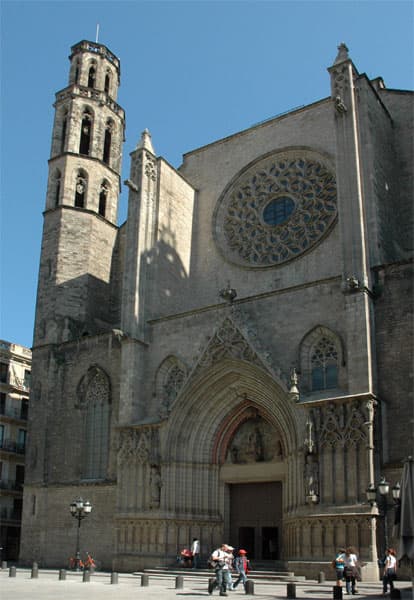
Basilica of St Mary of the Sea
The Basilica of St Mary of the Sea, known in Catalan as Santa Maria del Mar, is a prominent church in Barcelona, Spain, constructed between 1329 and 1383. It stands as a remarkable example of Catalan Gothic architecture, distinguished by its stylistic purity and unity. The basilica holds significance as a testament to the maritime and mercantile power of the Principality of Catalonia during the medieval period, and notably, its construction was supported by the common people rather than the nobility.

Basilica and Expiatory Church of the Holy Family
The Basilica and Expiatory Church of the Holy Family (Sagrada Família) is a Roman Catholic church in Barcelona, Spain, renowned for its complex and unique design by Antoni Gaudí. Construction began in 1882, and Gaudí dedicated his life to the project, transforming it with a blend of Gothic and Art Nouveau styles. It is the tallest church in the world, with its central tower reaching 172.5 meters, and parts of it have been designated a UNESCO World Heritage Site.
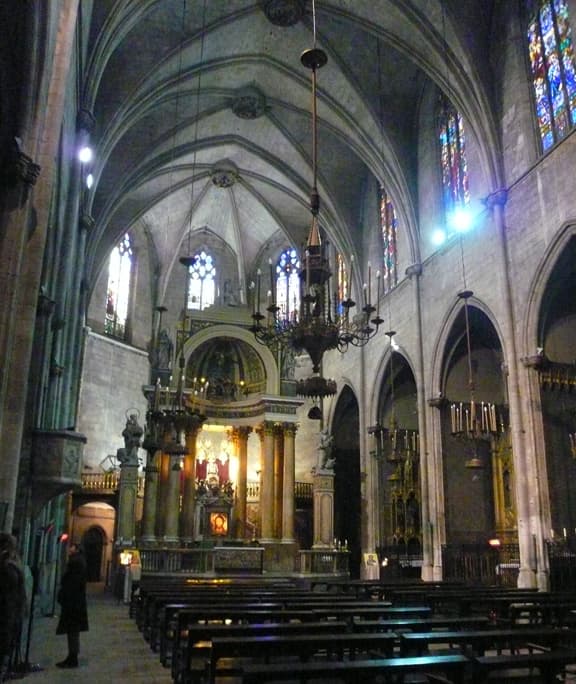
Basilica of SS Just and Pastor
The Basilica of Saints Justus and Pastor is a significant religious site in Barcelona, Catalonia, elevated to the rank of minor basilica in 1948 by Pope Pius XII. Its construction, initiated in the 14th century, showcases Gothic architectural elements and has undergone several renovations and reconstructions over the centuries.