
Basilica of SS Just and Pastor
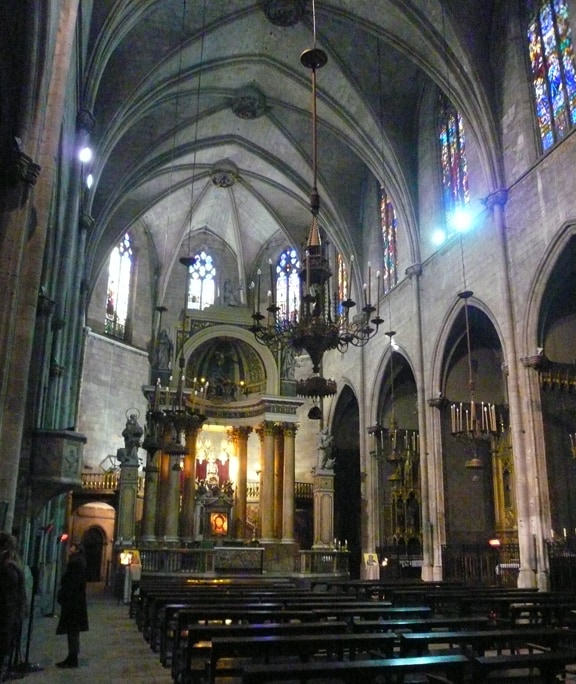
The Basilica of Saints Justus and Pastor is a significant religious site in Barcelona, Catalonia, elevated to the rank of minor basilica in 1948 by Pope Pius XII. Its construction, initiated in the 14th century, showcases Gothic architectural elements and has undergone several renovations and reconstructions over the centuries.
Key Facts
- ›Construction of the Gothic church began on February 1, 1342, and continued until 1574.
- ›It was built on the site of an older Romanesque church and a former chapel.
- ›The façade and belfry construction involved master builders Pere Blai, Joan Safont, and Joan Granja.
- ›The façade was reconstructed in Gothic Revival style between 1880 and 1887 by Josep Oriol Mestres.
- ›In 1948, it was granted the title of minor basilica by Pope Pius XII.
- ›The church was restored in 1946 under the direction of architect Jeroni Martorell I Terrats.
Gothic, Gothic Revival
Justus of Lyon, Pastor of Lyon
Pere Blai, Joan Safont, Joan Granja, Josep Oriol Mestres, Jeroni Martorell I Terrats
About Basilica of SS Just and Pastor
Basilica of Saints Justus and Pastor
The Basilica of Saints Justus and Pastor, known in Catalan as Església dels Sants Just i Pastor, is a prominent basilica located in Barcelona, Catalonia. It holds the distinction of being the sixth church in Barcelona to be elevated to the rank of minor basilica, a title conferred by Pope Pius XII in 1948.
History and Architecture
The basilica's construction in the Gothic style commenced on February 1, 1342, and continued for over three centuries, concluding in 1574. It was erected on the foundations of an older Romanesque church and the site of the former chapel of Sant Celoni. Significant milestones in its construction include the completion of the first three sections of the nave by 1363, with the vault of the feet finished in the subsequent century.
The façade and belfry were a later addition, with their construction lasting into the 16th century. Master builders Pere Blai, Joan Safont, and Joan Granja were instrumental in this phase. The 19th century saw further modifications, including the relocation of the choir to the apse. A notable reconstruction of the façade in the Gothic Revival style occurred between 1880 and 1887, undertaken by Josep Oriol Mestres. Additional reforms to the chapel of the Santíssim were carried out in 1904 by August Font i Carreras. In 1944, the polychromy from the 19th century on the nave and vaults was removed, and in 1946, the church underwent restoration under the architect Jeroni Martorell i Terrats.
Source: Wikipedia ↗
Frequently Asked Questions
When was the Basilica of Saints Justus and Pastor built?
The construction of the Gothic church began on February 1, 1342, and lasted until 1574. Subsequent renovations have altered its appearance over the centuries.
What is the architectural style of the Basilica of Saints Justus and Pastor?
The basilica is primarily a Gothic church, though its façade was reconstructed in the Gothic Revival style between 1880 and 1887. It was built upon an older Romanesque church.
What is the significance of the Basilica of Saints Justus and Pastor?
It is a historically significant church in Barcelona, recognized as a minor basilica by Pope Pius XII in 1948. Its long construction period and various architectural phases highlight its evolving history.
Who were the architects involved in its construction and renovation?
Master builders Pere Blai, Joan Safont, and Joan Granja participated in the construction of the façade and belfry. Josep Oriol Mestres reconstructed the façade in Gothic Revival style, and Jeroni Martorell i Terrats oversaw a restoration in 1946.
Related Basilicas
Basilica of St Mary of the Sea
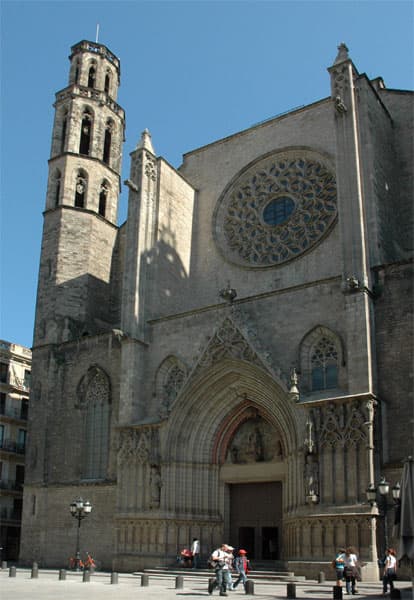
The Basilica of St Mary of the Sea, known in Catalan as Santa Maria del Mar, is a prominent church in Barcelona, Spain, constructed between 1329 and 1383. It stands as a remarkable example of Catalan Gothic architecture, distinguished by its stylistic purity and unity. The basilica holds significance as a testament to the maritime and mercantile power of the Principality of Catalonia during the medieval period, and notably, its construction was supported by the common people rather than the nobility.

Basilica and Expiatory Church of the Holy Family
The Basilica and Expiatory Church of the Holy Family (Sagrada Família) is a Roman Catholic church in Barcelona, Spain, renowned for its complex and unique design by Antoni Gaudí. Construction began in 1882, and Gaudí dedicated his life to the project, transforming it with a blend of Gothic and Art Nouveau styles. It is the tallest church in the world, with its central tower reaching 172.5 meters, and parts of it have been designated a UNESCO World Heritage Site.
Basilica of the Purest Conception
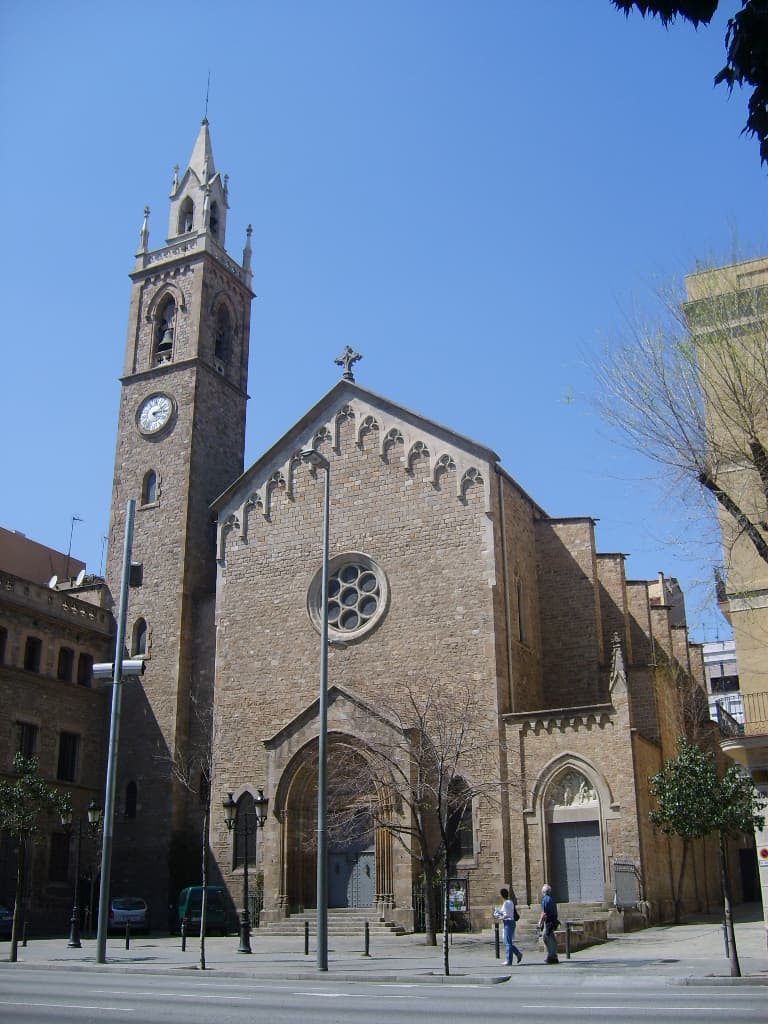
The Basilica of the Immaculate Conception and Assumption of Our Lady in Barcelona originated from the Jonqueres Monastery, which was relocated stone by stone to preserve its structure. It was later enhanced with a bell tower from another demolished church and a historicist rectory. Pope Benedict XVI designated it a minor basilica in 2009, making it the eighth basilica in Barcelona.