
Cathedral of St Mary of Palma (La Seu)
Spain·Palma·Diocese of Mallorca
The Cathedral of Santa Maria of Palma, commonly known as La Seu, is a prominent Gothic Roman Catholic cathedral situated on the waterfront in Palma, Mallorca, Spain. It is a significant religious and architectural landmark, noted for its immense rose window, one of the largest Gothic examples, and its exceptionally high nave. Construction began following the reconquest of Mallorca in 1229 and continued for centuries, making it a central feature of the island's historical and cultural landscape.
Key Facts
- ›Construction began in 1229 after the reconquest of Mallorca by King James I.
- ›It houses the second-largest extant Gothic rose window in the world, with a diameter of nearly 14 meters.
- ›The nave reaches a height of 44 meters, making it the eighth-highest in the world.
- ›The cathedral site was formerly occupied by a mosque.
- ›Notable renovations and alterations were undertaken by Antoni Gaudí in the early 20th century and Miquel Barceló between 2001 and 2006.
- ›It features three parallel naves and is noted for its narrow pillars relative to vault size.

Gothic, Baroque, Neo-Gothic, Modernist
Antoni Gaudí, Miquel Barceló
About Cathedral of St Mary of Palma (La Seu)
Cathedral of Santa Maria of Palma (La Seu)
The Cathedral of Santa Maria of Palma, widely known as La Seu, is a monumental Gothic Roman Catholic cathedral located in Palma, Mallorca, Spain. Situated prominently on the city's waterfront, it stands as a testament to centuries of architectural evolution and religious devotion. Its construction commenced in 1229 following the island's reconquest, and it continued to be developed and modified over several centuries, with significant phases extending into the 17th century.
Architectural Significance
La Seu is celebrated for several remarkable architectural achievements. Its rose window, measuring nearly 14 meters in diameter, is recognized as the second-largest extant Gothic rose window in the world. The cathedral's nave is exceptionally high, reaching 44 meters, which places it among the eight highest church naves globally. Architecturally, it features three parallel naves and is noted for the unusual slenderness of its pillars in proportion to the vaults they support. The exterior is characterized by its verticality, enhanced by flying buttresses and pinnacles, while the west façade underwent a neo-Gothic renovation in the mid-19th century.
Historical Development and Renovations
The site of La Seu was originally occupied by a mosque during Muslim rule. After the reconquest in 1229, King James I re-established the Diocese of Mallorca, and work on the cathedral began. The earliest surviving section, the Chapel of the Holy Trinity, was completed in 1327. The cathedral’s transformation into its current form began in 1386, with the bell tower finished in 1498. Later periods saw Baroque embellishments and a neo-Gothic renovation of the west front.
More recent interventions include those by Antoni Gaudí, who oversaw significant changes to the interior starting in 1903, aiming to integrate the liturgy more closely with the congregation. His work involved moving the choir stalls and screen and designing a canopy for the altar. From 2001 to 2006, artist Miquel Barceló led a comprehensive renovation of the Chapel of Sant Pere and the Holy Sacrament, incorporating contemporary artistic interpretations of biblical events.
Religious and Cultural Importance
La Seu serves as the seat of the Diocese of Mallorca and is a major religious center. It houses important funerary monuments, including the tombs of Mallorcan Kings James II and III in the Royal Chapel. The cathedral's grandeur and historical depth make it Palma's most popular tourist attraction, drawing visitors who are captivated by its architectural splendor and rich history. It is a symbol of the island's enduring faith and cultural heritage.
Source: Wikipedia ↗
Frequently Asked Questions
What is the history behind the Cathedral of St Mary of Palma (La Seu)?
The site was a mosque under Muslim rule before construction of the cathedral began in 1229 following the reconquest of Mallorca. The earliest extant part, the Chapel of the Holy Trinity, was completed in 1327, and the cathedral's current form began to take shape in 1386. Construction spanned several centuries, concluding in the 17th century.
What are the most distinctive architectural features of La Seu?
La Seu is renowned for its nearly 14-meter diameter rose window, which is the second-largest Gothic rose window globally. Its nave is exceptionally high at 44 meters, ranking as the eighth-highest in the world. The cathedral's interior is characterized by three parallel naves and exceptionally narrow pillars supporting the vaults.
Has the cathedral undergone any significant renovations?
Yes, Antoni Gaudí oversaw extensive interior renovations starting in 1903, aiming to bring the liturgy closer to the people. More recently, Mallorcan artist Miquel Barceló led a significant renovation of the Chapel of Sant Pere and the Holy Sacrament between 2001 and 2006.
What religious importance does the Cathedral of St Mary of Palma hold?
It is the cathedral of the Diocese of Mallorca and was consecrated by Bishop Pere de Morella in 1230. The Royal Chapel at the end of the central nave houses the tombs of Mallorcan Kings James II and III, adding to its historical and religious significance.
Where is the Cathedral of St Mary of Palma located?
The cathedral is located in Palma, Mallorca, Spain, situated on the seashore and abutting the city walls. It stands between the Royal Palace of La Almudaina and the Episcopal Palace of Mallorca.
Related Basilicas
Basilica of St Mary of the Sea
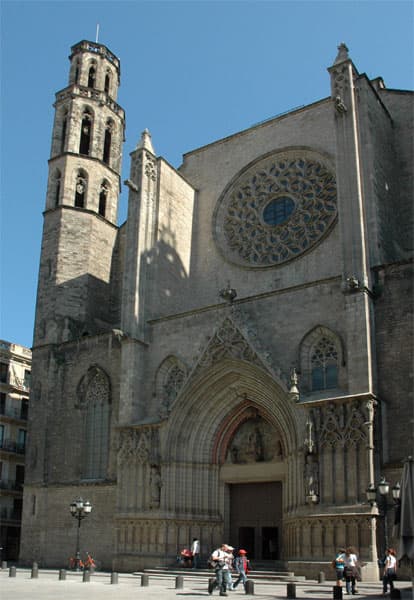
The Basilica of St Mary of the Sea, known in Catalan as Santa Maria del Mar, is a prominent church in Barcelona, Spain, constructed between 1329 and 1383. It stands as a remarkable example of Catalan Gothic architecture, distinguished by its stylistic purity and unity. The basilica holds significance as a testament to the maritime and mercantile power of the Principality of Catalonia during the medieval period, and notably, its construction was supported by the common people rather than the nobility.

Basilica of St Mary the Royal
The Basilica of St Mary the Royal, officially known as Basílica de Santa María la Real de Covadonga, is a Neo-Romanesque Catholic church located in Covadonga, Asturias, Spain. Designated a basilica in 1901, it serves as a monumental sanctuary built to replace an older temple destroyed by fire in 1777, and is dedicated to Our Lady of Covadonga.

Collegiate Basilica of St Mary of the Seat
The Collegiate Basilica of Santa Maria, also known as La Seu, is a significant church in Manresa, Catalonia, north of Spain, showcasing a blend of Romanesque and Gothic architectural styles. Originally documented in the 9th century, it was rebuilt and expanded over centuries, notably with a Gothic structure added in the 14th century, making it a prominent landmark in the region's religious and architectural history.