
Basilica of St Mary the Royal
Spain·Covadonga
The Basilica of St Mary the Royal, officially known as Basílica de Santa María la Real de Covadonga, is a Neo-Romanesque Catholic church located in Covadonga, Asturias, Spain. Designated a basilica in 1901, it serves as a monumental sanctuary built to replace an older temple destroyed by fire in 1777, and is dedicated to Our Lady of Covadonga.
Key Facts
- ›Designated a basilica on September 11, 1901.
- ›Built between 1877 and 1901 in a Neo-Romanesque style.
- ›Constructed entirely of pink limestone.
- ›Replaced an older temple destroyed by fire in 1777.
- ›The project was resumed by King Alfonso XII, leading to a new Neo-Medieval design.
- ›Designed by Roberto Frassinelli and Federico Aparici y Soriano.

Neo-Romanesque
Roberto Frassinelli, Federico Aparici Y Soriano
About Basilica of St Mary the Royal
The Basilica of St Mary the Royal, officially known as Basílica de Santa María la Real de Covadonga, is a significant Catholic church situated in Covadonga, within the region of Asturias, Spain. It was granted the status of a basilica on September 11, 1901.
History and Construction
The current basilica was erected to replace an older temple that was destroyed by a fire in 1777. This original structure stood near the Holy Cave, a revered site dedicated to Our Lady of Covadonga. Following the fire, plans were made to construct a new, monumental sanctuary, with donations solicited from across Spain. Although initially opposed by the local council who favored rebuilding the older temple and completing a grander sanctuary designed by Ventura Rodríguez, the project was eventually revived.
About a century later, King Alfonso XII of Spain expressed interest in completing the sanctuary. The original, complex, and costly design by Ventura Rodríguez was abandoned in favor of a new Neo-Medieval design. This revised project was initially devised by Roberto Frassinelli, an artist more than an architect, who was later succeeded by Federico Aparici y Soriano. Despite the change in lead architect, Frassinelli retained a role in directing the construction works. The basilica was built between 1877 and 1901, constructed entirely from pink limestone in a Neo-Romanesque style.
Source: Wikipedia ↗
Frequently Asked Questions
When was the Basilica of St Mary the Royal designated a basilica?
The Basílica de Santa María la Real de Covadonga was officially designated as a basilica on September 11, 1901.
What architectural style is the Basilica of St Mary the Royal?
The basilica is built in a Neo-Romanesque style. It is constructed entirely of pink limestone.
When was the Basilica of St Mary the Royal built?
Construction of the basilica began in 1877 and was completed in 1901. The project was resumed by King Alfonso XII.
What historical event led to the construction of the current basilica?
A fire in 1777 destroyed the old temple that stood adjacent to the Holy Cave of Covadonga. The decision was made to build a new monumental sanctuary in its place.
Who were the architects involved in building the Basilica of St Mary the Royal?
The temple was designed by German architect Roberto Frassinelli, and built between 1877 and 1901 by architect Federico Aparici y Soriano. Frassinelli also directed the works.
Related Basilicas
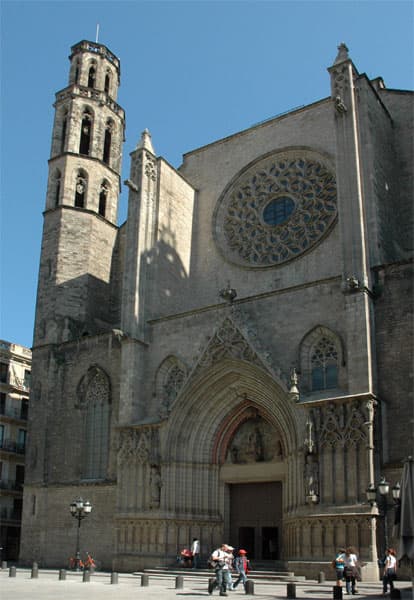
Basilica of St Mary of the Sea
The Basilica of St Mary of the Sea, known in Catalan as Santa Maria del Mar, is a prominent church in Barcelona, Spain, constructed between 1329 and 1383. It stands as a remarkable example of Catalan Gothic architecture, distinguished by its stylistic purity and unity. The basilica holds significance as a testament to the maritime and mercantile power of the Principality of Catalonia during the medieval period, and notably, its construction was supported by the common people rather than the nobility.

Basilica Co-cathedral of St. Mary
The Co-Cathedral of Saint Mary of Vigo, also known locally as A Colexiata, is a Spanish Baroque/Neoclassical Catholic temple serving as a co-cathedral for the Diocese of Tui-Vigo. Its current structure was largely rebuilt in the 19th century following damage from historical events, including an explosion in 1809, and it was designated a basilica by the Vatican in 2020.
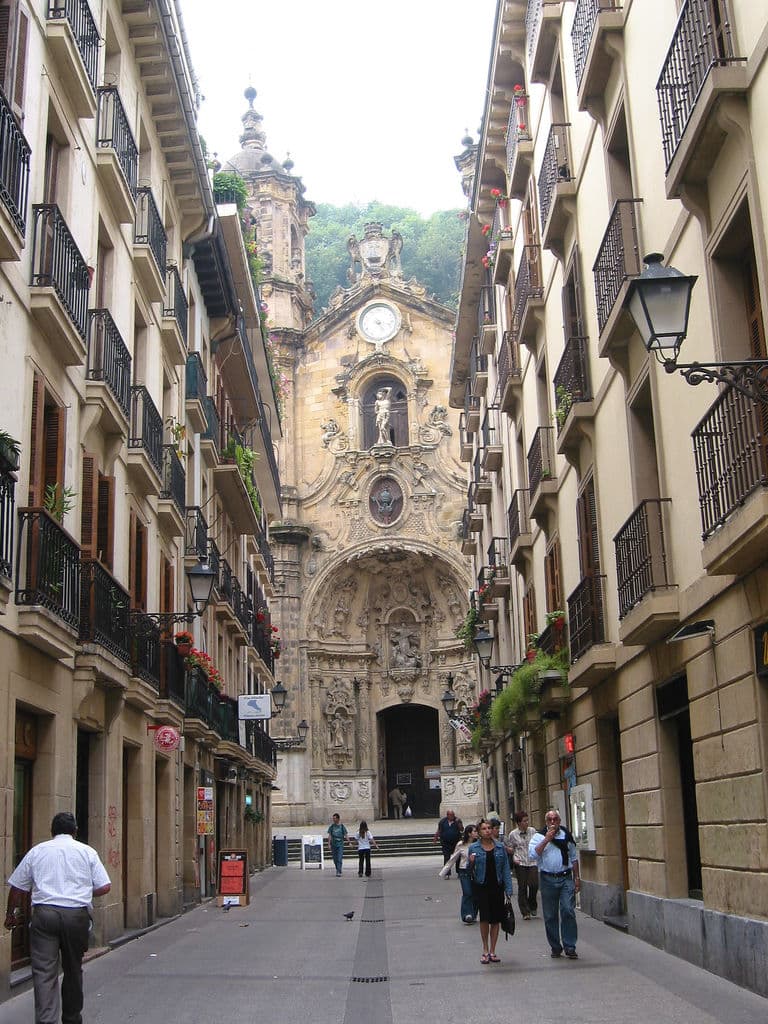
Basilica of St Mary of the Chorus
The Basilica of Saint Mary of Coro is a Baroque Roman Catholic parish church and minor basilica located in the Old Town of San Sebastián, Spain. Completed in 1774, it is distinguished by its altarpiece-like main entrance adorned with the figure of Saint Sebastian and symbols of its basilica status.