
Basilica Co-cathedral of St. Mary
Spain·Vigo·Tui-Vigo
The Co-Cathedral of Saint Mary of Vigo, also known locally as A Colexiata, is a Spanish Baroque/Neoclassical Catholic temple serving as a co-cathedral for the Diocese of Tui-Vigo. Its current structure was largely rebuilt in the 19th century following damage from historical events, including an explosion in 1809, and it was designated a basilica by the Vatican in 2020.
Key Facts
- ›Records indicate a church dedicated to Saint Mary existed in Vigo as early as the 12th century.
- ›A Gothic-style church, completed in 1403, preceded the current structure.
- ›The previous church was ransacked and burned by Francis Drake in 1585.
- ›The current basilica's Neoclassical design was commissioned in 1811 and construction began in 1816, completing in 1838.
- ›It was designed with robustness, suitable as a potential stronghold.
- ›The co-cathedral was designated a basilica by the Vatican in 2020.

Baroque, Neoclassical
Melchor De Prado Y MariñO
About Basilica Co-cathedral of St. Mary
Co-Cathedral of Saint Mary of Vigo
The Co-Cathedral of Saint Mary of Vigo, known locally as A Colexiata, is a significant Catholic temple located in Vigo, Spain. It holds the dual role of co-cathedral alongside Tui Cathedral, serving the Diocese of Tui-Vigo. The current structure is a notable example of Spanish Baroque and Neoclassical architecture, with its present form largely established in the 19th century.
History and Reconstruction
Historical records indicate a church dedicated to Saint Mary existed in Vigo as far back as the 12th century. This was succeeded by a Gothic-style church, which was completed in 1403. This earlier edifice faced destruction in 1585 when it was ransacked and burned by the English privateer Francis Drake. A more recent catastrophic event occurred in 1809 when a nearby powder magazine at O Castro fortress exploded, causing extensive damage to the church.
The commission for the rebuilding of the temple was given to Melchor de Prado y Mariño, a member of the Royal Academy of San Fernando. He presented his Neoclassical design in 1811. However, construction was delayed until 1816 due to the Peninsular War. The building was ultimately completed in 1838 and is distinguished by its robust construction, having been designed with the potential for use as a stronghold in the post-war period.
Designation and Features
The temple has been declared a "Bien de Interés Cultural" (Asset of Cultural Interest), though the specific year of this declaration is not recorded. In 2020, the Vatican officially designated the co-cathedral as a basilica, following validation of requests from the bishopric. Architecturally, the basilica features three naves and a façade with simple ornamentation. A unique sundial adorns its right side, facing west. Inside, the main altar is notable for its large mosaics created by the renowned Spanish mosaic artist Santiago Padrós, characterized by their monumental scale and geometric treatment of landscapes.
Source: Wikipedia ↗
Frequently Asked Questions
What is the Co-Cathedral of Saint Mary of Vigo also known as?
The Co-Cathedral of Saint Mary of Vigo is also known locally as A Colexiata, which translates to 'The Collegiate'.
What is the historical significance of the site where the Co-Cathedral stands?
The site has a history of religious structures dating back to at least the 12th century. A Gothic church was completed there in 1403, but it was later damaged by Francis Drake and an explosion in 1809.
When was the current Co-Cathedral of Saint Mary of Vigo built?
Construction of the current temple, designed in a Neoclassical style, began in 1816 and was completed in 1838. The project was commissioned after significant damage to the previous church.
What is the religious importance of the Co-Cathedral of Saint Mary of Vigo?
It serves as a co-cathedral for the Diocese of Tui-Vigo, sharing the episcopal seat with Tui Cathedral. In 2020, it was officially designated a basilica by the Vatican.
What are the notable interior features of the basilica?
Inside, the basilica features large mosaics on the main altar, created by the Spanish mosaic artist Santiago Padrós. These mosaics are noted for their monumental scale and geometric depiction of landscapes.
Related Basilicas
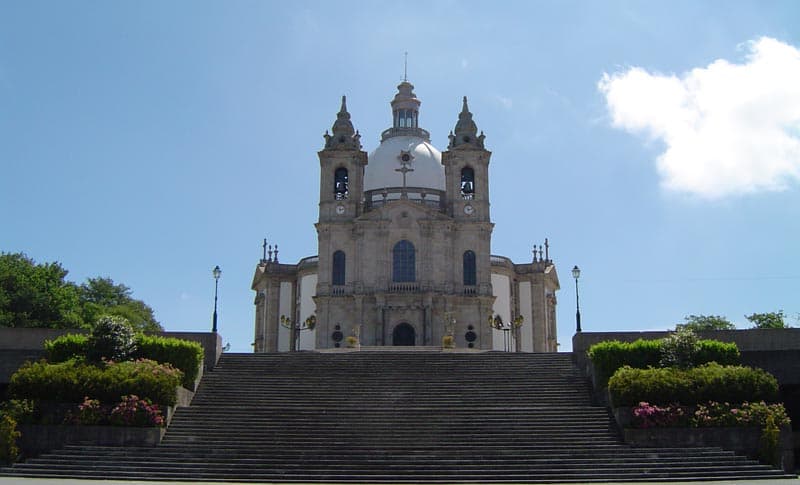
Basilica of Our Lady of Sameiro, Espinho
The Sanctuary of Our Lady of Sameiro (Santuário de Nossa Senhora do Sameiro) is a significant Marian shrine located in Braga, Portugal. It is one of the most frequented sites of Marian devotion in the country, second only in size to the Sanctuary of Fátima, and offers a renowned panoramic view of the city and valley from its hilltop location.

Basilica and Expiatory Church of the Holy Family
The Basilica and Expiatory Church of the Holy Family (Sagrada Família) is a Roman Catholic church in Barcelona, Spain, renowned for its complex and unique design by Antoni Gaudí. Construction began in 1882, and Gaudí dedicated his life to the project, transforming it with a blend of Gothic and Art Nouveau styles. It is the tallest church in the world, with its central tower reaching 172.5 meters, and parts of it have been designated a UNESCO World Heritage Site.
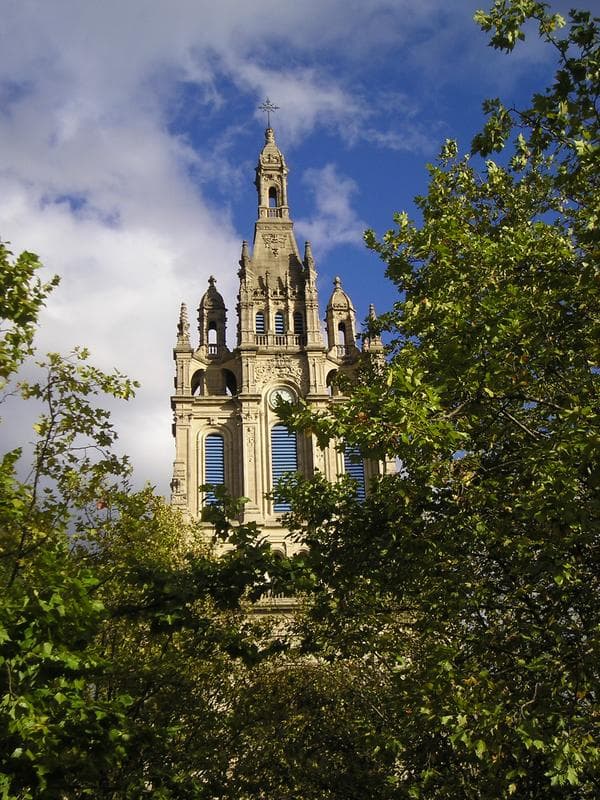
Basilica of Our Lady of Begoña
The Basilica of Our Lady of Begoña is a significant religious site in Bilbao, Spain, dedicated to the patroness saint of Biscay. Its construction began in the 16th century, showcasing a blend of Gothic and Renaissance architectural influences, and it holds deep historical and spiritual importance for sailors and the local community.