
Basilica of Our Lady of Begoña
Spain·Bilbao
The Basilica of Our Lady of Begoña is a significant religious site in Bilbao, Spain, dedicated to the patroness saint of Biscay. Its construction began in the 16th century, showcasing a blend of Gothic and Renaissance architectural influences, and it holds deep historical and spiritual importance for sailors and the local community.
Key Facts
- ›Construction of the basilica began in 1511, with vaults completed in the 17th century.
- ›The main entrance exhibits a transitional Gothic-Renaissance style, while the rest of the building is Gothic.
- ›The basilica was damaged in the 19th century as part of Bilbao's city wall.
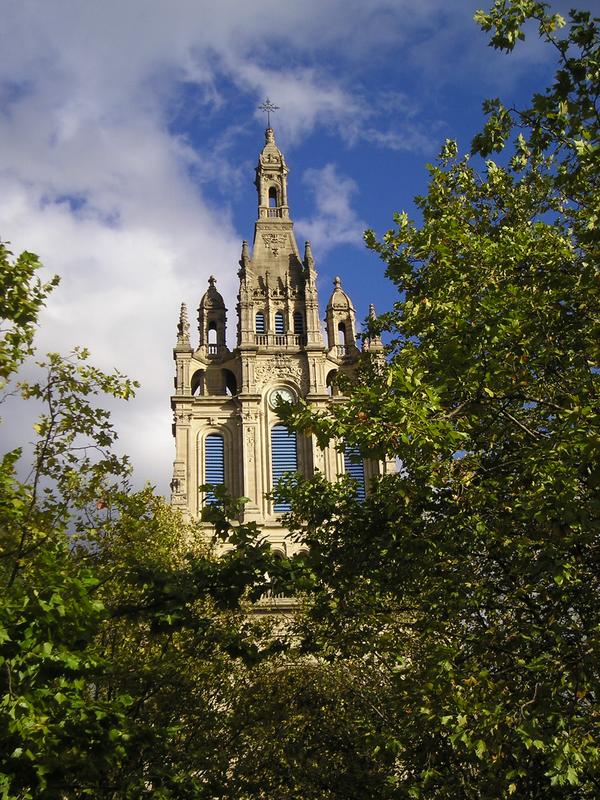
- ›The current tower and exterior were designed by José María Basterra and built between 1902 and 1907.
- ›In 1942, an incident involving grenades near the church highlighted political rifts within Spanish nationalist factions.
- ›Extensive cleaning and restoration work took place between September 1993 and June 1994.
Gothic, Renaissance
Our Lady of BegoñA
Sancho MartíNez De Arego, Gil De HontañóN, José MaríA Basterra
About Basilica of Our Lady of Begoña
The Basilica of Our Lady of Begoña, known in Spanish as Basílica de Nuestra Señora de Begoña, is a prominent basilica located in Bilbao, Spain. It is dedicated to Our Lady of Begoña, who is venerated as the patroness saint of Biscay. The basilica holds significant historical and spiritual importance, particularly for the maritime community.
History and Architecture
Construction of the Basilica of Our Lady of Begoña commenced in the 16th century, with initial designs attributed to Sancho Martínez de Arego. The structure features three naves, and the addition of vaults was completed during the 17th century, a phase of construction that spanned a century, having begun in 1511. During this period of work, architectural styles began to transition, with Gothic elements showing Renaissance influence. The arched main entrance, dating from the mid-16th century, exemplifies this transitional style, reflecting the work of Spanish architect Gil de Hontañón, while the remainder of the building retains a purely Gothic character.
In the 19th century, the basilica sustained damage as it was integrated into Bilbao's city walls. It was also near the basilica that Carlist General Tomás de Zumalacárregui suffered his fatal injury. The current tower and a portion of the exterior were designed by José María Basterra and were constructed between 1902 and 1907. A notable incident occurred on August 16, 1942, when several grenades exploded near the church during a confrontation between Falangists and Carlists. This event underscored dangerous divisions within Spanish nationalist factions and led to governmental restructuring. Extensive cleaning and restoration efforts were undertaken on the stone, clock face, and bells between September 1993 and June 1994. The clock tower, dating back to 1922, houses 24 bells, the heaviest of which weighs a tonne, and is capable of producing seven different melodies.
Significance and Traditions
The "La Salve" quarter of Bilbao derives its name from a tradition associated with the basilica. It marks the first point where sailors, navigating up the Nervión River, could see the basilica's steeple. Upon sighting it, they would begin praying the "Hail Mary" (La Salve) to the Virgin of Begoña, expressing gratitude for their safe voyage. This enduring connection to the sea is reflected in the continued popularity of "Virgen de Begoña" or "Begoña" as given names among sailors.
Festivities and Public Access
The major festivals celebrated at the Basilica of Our Lady of Begoña occur on August 15th, commemorating the Assumption of Mary, and on October 11th, the saint's day of Begoña. Midnight mass is a significant part of these celebrations, alongside pilgrimages where locals and visitors gather for worship. The basilica is open to the public from Monday to Friday, with visiting hours from 9:30 AM to 1:30 PM and again from 4:30 PM to 8:30 PM.
Source: Wikipedia ↗
Frequently Asked Questions
When was the Basilica of Our Lady of Begoña built?
Construction of the Basilica of Our Lady of Begoña began in the 16th century, with the addition of vaults completed in the 17th century. The main entrance reflects mid-16th-century transitional style.
What is the architectural style of the Basilica of Our Lady of Begoña?
The Basilica of Our Lady of Begoña primarily exhibits a Gothic architectural style. The main entrance, however, shows Renaissance influence, reflecting a transitional style from the mid-16th century.
Why is the Basilica of Our Lady of Begoña significant to sailors?
The basilica's steeple was the first point sailors returning up the Nervión River could see, leading them to pray to Our Lady of Begoña for protection. This tradition has led to 'Virgen de Begoña' and 'Begoña' being popular names among fleets.
What notable events have occurred at the Basilica of Our Lady of Begoña?
The basilica was damaged during the 19th century when it formed part of Bilbao's city wall. In 1942, an incident involving grenades near the church had significant political repercussions. Extensive restoration work was also completed in the 1990s.
What are the main festivities associated with the Basilica of Our Lady of Begoña?
The major festivals at the basilica take place on August 15th, the Assumption of Mary, and October 11th, the saint's day of Begoña. Midnight mass and pilgrimages are celebrated on these occasions.
Related Basilicas

Basilica and Expiatory Church of the Holy Family
The Basilica and Expiatory Church of the Holy Family (Sagrada Família) is a Roman Catholic church in Barcelona, Spain, renowned for its complex and unique design by Antoni Gaudí. Construction began in 1882, and Gaudí dedicated his life to the project, transforming it with a blend of Gothic and Art Nouveau styles. It is the tallest church in the world, with its central tower reaching 172.5 meters, and parts of it have been designated a UNESCO World Heritage Site.

Basilica Co-cathedral of St. Mary
The Co-Cathedral of Saint Mary of Vigo, also known locally as A Colexiata, is a Spanish Baroque/Neoclassical Catholic temple serving as a co-cathedral for the Diocese of Tui-Vigo. Its current structure was largely rebuilt in the 19th century following damage from historical events, including an explosion in 1809, and it was designated a basilica by the Vatican in 2020.

"Old" Basilica of Our Lady of Guadalupe
The Insigne y Nacional Basílica de Santa María de Guadalupe, commonly known as the Basilica of Our Lady of Guadalupe, is a prominent Catholic church in Mexico City dedicated to the Virgin Mary under her invocation as Our Lady of Guadalupe. It is one of the most visited Marian shrines in the world, attracting an estimated twenty million pilgrims annually, with a significant portion visiting around December 12th, the feast day of Our Lady of Guadalupe. The sanctuary complex includes the older church, now referred to as the Old Basilica, built in the early 18th century, and the modern New Basilica constructed in the 1970s to accommodate the growing number of devotees.