
Cathedral Basilica of the Virgin of the Incarnation
Spain·Málaga·Málaga
The Cathedral Basilica of the Virgin of the Incarnation, commonly known as the Cathedral of Málaga, is a prominent Roman Catholic cathedral located in Málaga, Andalusia, Spain. It stands as a significant example of Renaissance architecture, with its interior designed by Diego de Siloe, though its facade exhibits Baroque elements. The cathedral is notable for its unfinished south tower, earning it the nickname "La Manquita" or "The One-Armed Lady."
Key Facts
- ›Construction of the Cathedral Basilica of the Virgin of the Incarnation began in 1528 and continued until 1782.
- ›The interior of the cathedral is designed in the Renaissance style by Diego de Siloe.
- ›The facade is in Baroque style and features three arches with portals, and medallions depicting the Annunciation and patron saints of Málaga.
- ›The north tower stands at 84 meters, making it the second-highest cathedral in Andalusia.
- ›The south tower remains unfinished due to financial constraints, leading to the nickname 'La Manquita'.
- ›Funds originally intended for the south tower were reportedly used to aid the American Revolution or for road renovations.

Renaissance, Baroque
Saint Cyriacus, Saint Paula, Virgin of the Incarnation
Diego De Siloe
About Cathedral Basilica of the Virgin of the Incarnation
The Cathedral Basilica of the Virgin of the Incarnation, more commonly known as the Cathedral of Málaga, is a significant Roman Catholic church located in the city of Málaga, Andalusia, Spain. Its construction represents a notable example of Renaissance architecture, with its interior planned by the esteemed architect Diego de Siloe. The building's exterior facade, however, presents a striking contrast, rendered in the Baroque style.
History and Architecture
Construction of the cathedral commenced in 1528 and continued for an extended period, concluding in 1782. The interior is characterized by a rectangular plan, featuring a wider nave flanked by two aisles of equal height. The facade is divided into two levels, distinguished by three arches that lead to separate portals framed by marble columns. Carved medallions adorn the spaces above the doors; those on the lateral portals depict the patron saints of Málaga, Saint Cyriacus and Saint Paula, while the central medallion illustrates the Annunciation.
A distinctive feature of the cathedral is its unfinished south tower, which has led to the building being affectionately nicknamed "La Manquita," meaning "The One-Armed Lady." The north tower reaches a height of 84 meters, making it the second-tallest cathedral in Andalusia. Historical accounts suggest that the considerable expenses incurred during construction were partly financed by taxes imposed on ships calling at Málaga. There is also a peculiar note regarding the funds for the unfinished south tower; a plaque indicates they were used to aid the British colonies that became the United States in their fight for independence. However, parish records suggest the money may have been used instead for renovating a local roadway.
Artistic and Musical Significance
The cathedral's interior houses a collection of grand artworks. These include the Gothic altarpiece in the Chapel of Santa Barbara and 16th-century tombs within the Chapel of San Francisco. The Chapel of the Incarnation displays a neoclassical altarpiece designed by Juan de Villanueva and executed by Antonio Ramos and Aldehuela, completed in 1785. This chapel also contains 18th-century sculptures of Saint Ciriacus, Saint Paula, and representations of the Annunciation, as well as "The Beheading of Saint Paul," a painting by Enrique Simonet from 1887.
Musically, the cathedral shares a characteristic with Granada Cathedral, featuring a pair of 18th-century organs. The organs in Málaga are particularly visually impressive due to their prominent "trompetería" (horizontal pipes). Notable composers who served as maestros de capilla at the cathedral include Cristóbal de Morales in his later years, Esteban de Brito, Francisco Sanz, Juan Francés de Iribarren, and Jayme Torrens.
Source: Wikipedia ↗
Frequently Asked Questions
What is the architectural style of the Cathedral Basilica of the Virgin of the Incarnation?
The interior of the cathedral is designed in the Renaissance style by Diego de Siloe. However, its facade presents a contrasting Baroque architectural style.
Why is the cathedral known as 'La Manquita'?
The cathedral is nicknamed 'La Manquita', meaning 'The One-Armed Lady', because its south tower remains unfinished due to a lack of funds. This contrasts with the completed north tower.
What is the significance of the unfinished south tower?
The unfinished south tower is a defining characteristic of the cathedral and the reason for its nickname. Historical accounts suggest that funds allocated for its completion were diverted to support the American Revolution or for local infrastructure projects.
What are some notable artistic works within the cathedral?
The cathedral houses several significant artworks, including the Gothic altarpiece of the Chapel of Santa Barbara and 16th-century tombs in the Chapel of San Francisco. The Chapel of the Incarnation features a neoclassical altarpiece from 1785 and 18th-century sculptures of Málaga's patron saints.
When was the Cathedral Basilica of the Virgin of the Incarnation constructed?
Construction of the cathedral commenced in 1528 and was largely completed by 1782, spanning a significant period of architectural development.
Related Basilicas

Basilica and Expiatory Church of the Holy Family
The Basilica and Expiatory Church of the Holy Family (Sagrada Família) is a Roman Catholic church in Barcelona, Spain, renowned for its complex and unique design by Antoni Gaudí. Construction began in 1882, and Gaudí dedicated his life to the project, transforming it with a blend of Gothic and Art Nouveau styles. It is the tallest church in the world, with its central tower reaching 172.5 meters, and parts of it have been designated a UNESCO World Heritage Site.

Basilica Co-cathedral of St. Mary
The Co-Cathedral of Saint Mary of Vigo, also known locally as A Colexiata, is a Spanish Baroque/Neoclassical Catholic temple serving as a co-cathedral for the Diocese of Tui-Vigo. Its current structure was largely rebuilt in the 19th century following damage from historical events, including an explosion in 1809, and it was designated a basilica by the Vatican in 2020.
Basilica of Our Lady of Begoña
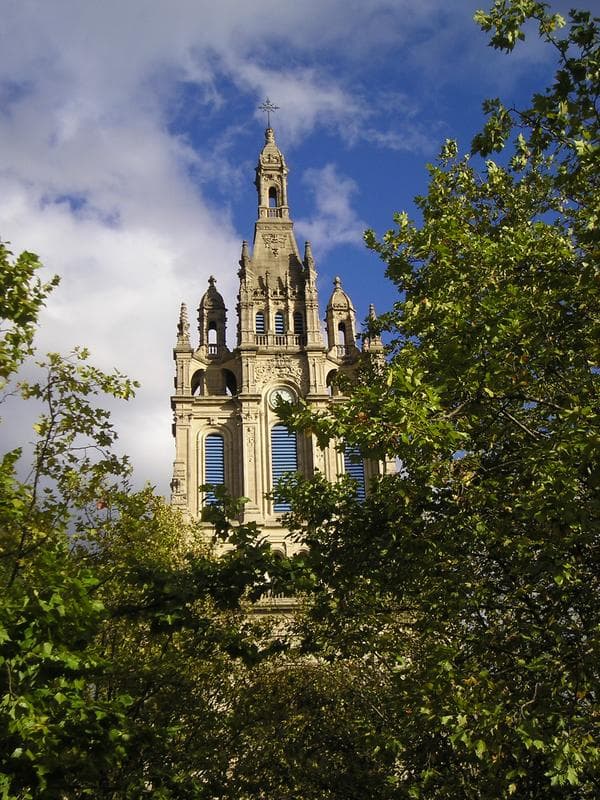
The Basilica of Our Lady of Begoña is a significant religious site in Bilbao, Spain, dedicated to the patroness saint of Biscay. Its construction began in the 16th century, showcasing a blend of Gothic and Renaissance architectural influences, and it holds deep historical and spiritual importance for sailors and the local community.