
Cathedral Basilica of the Virgin of the Assumption
Peru·Cusco·Archdiocese of Cusco
The Cathedral Basilica of the Virgin of the Assumption, also known as the Cathedral of Cusco, is the principal Catholic church in Cusco, Peru, and the seat of the Archdiocese of Cusco. Constructed on the site of Inca palaces, it is a significant religious monument and a testament to the fusion of Inca and Spanish colonial architectural and artistic traditions. It holds a prominent place in the Historic Center of Cusco, which is recognized as a UNESCO World Heritage Site.
Key Facts
- ›Built on the foundations of the Inca palace of Viracocha and the Suntur Wasi (Government House).
- ›Construction spanned from 1560 to 1664, with significant architectural direction from figures like Miguel Gutiérrez Sencio and Francisco Becerra.
- ›Features a blend of architectural styles, including Gothic ribbed vaults, Renaissance facades, and Baroque interiors.
- ›Houses significant artwork from the Cusco School of painting, a renowned colonial art movement.
- ›Recognized as a Basilica of the Catholic Church in 1928.
- ›Incorporates Inca religious symbolism, such as a jaguar's head carving on its doors.

Gothic, Renaissance, Baroque, Plateresque
Lord of the Earthquakes
Juan Miguel De Veramendi, Juan Correa, Juan RodríGuez De Rivera, Juan CáRdenas, Juan Toledano, Bartolomé CarrióN, Miguel GutiéRrez Sencio, Francisco Becerra
About Cathedral Basilica of the Virgin of the Assumption
The Cathedral Basilica of the Virgin of the Assumption, Cusco
The Cathedral Basilica of the Virgin of the Assumption, commonly known as the Cathedral of Cusco, stands as the principal religious edifice and the headquarters of the Archdiocese of Cusco in Peru. Situated in the Plaza de Armas, it is an integral part of the Cathedral Complex, which also includes the Iglesia del Triunfo. This monumental structure is built upon the foundations of significant Inca palaces, including that of Viracocha, and the Suntur Wasi. Its historical and architectural importance is recognized globally, being part of the Monumental Zone of Cusco and the UNESCO World Heritage Site encompassing the city's historic center.
History and Construction
The genesis of the cathedral's construction began in the mid-16th century, following the Spanish conquest. Initially, the Iglesia del Triunfo was erected in 1539 on the site of the Inca palace. However, the primary structure of the Cathedral Basilica itself was built between 1560 and 1664. The project involved numerous architects and faced several challenges, including site selection and interruptions. Notable figures like Miguel Gutiérrez Sencio and Francisco Becerra oversaw its completion, drawing inspiration from architectural principles like those of Vitruvius and Giacomo Barozzi. The premiere mass was held in 1654, and the cathedral was definitively consecrated in 1668. The 1650 earthquake necessitated modifications to the facade and towers, contributing to its current appearance.
Architecture and Artistry
The Cathedral of Cusco is a striking example of syncretic architecture, blending European styles with indigenous elements. It features a rectangular basilica floor plan with three naves, supported by cruciform pillars and covered by Gothic ribbed vaults. The facade exhibits Renaissance characteristics, while the interiors are a rich display of Baroque and Plateresque artistry. The cathedral is renowned for its colonial gold work and elaborately carved wooden altars. A unique feature is the incorporation of Inca religious symbolism, such as the carved jaguar head on its doors. The artworks within, many originating from the celebrated Cusco School of painting, include significant pieces like the "Señor de los Temblores" and works by artists such as Diego Quispe Tito, showcasing the fusion of European techniques with local artistic expression.
Source: Wikipedia ↗
Frequently Asked Questions
Where is the Cathedral Basilica of the Virgin of the Assumption located?
The Cathedral Basilica of the Virgin of the Assumption is located in the northeast sector of the Plaza de Armas in Cusco, Peru. It forms part of the Cathedral Complex, which includes the Triunfo temple.
What was on the site of the cathedral before its construction?
Before the construction of the cathedral, the site was occupied by Inca structures. These included the palace of Viracocha, known as Kiswarkancha, and the Suntur Wasi, an Inca armoury and heraldry center.
What architectural styles can be found in the cathedral?
The cathedral exhibits a remarkable amalgamation of styles. Its naves are covered with Gothic ribbed vaults, while its facade displays Renaissance elements, and its interiors feature Baroque and Plateresque influences.
What is the significance of the Cusco School of painting in the cathedral?
The cathedral houses important works from the Cusco School of painting, a significant artistic movement in Colonial America. This school was established by the Spanish to educate Inca descendants in European Renaissance art techniques.
When was the cathedral officially consecrated?
The definitive consecration of the Cathedral Basilica of the Virgin of the Assumption took place on August 19, 1668, by the thirteenth bishop of Cusco, Bernardo de Isaguirre Reyes.
Is the cathedral part of a UNESCO World Heritage Site?
Yes, the cathedral is part of the central zone of the historic center of Cusco, which was declared a UNESCO World Heritage Site in 1983.
Related Basilicas

Basilica of Saint Francis
The Basilica and Convent of San Francisco in Lima, Peru, is a significant religious and architectural complex, described as "the largest and noblest monument that the conquest erected in these prodigious lands." It is a prime example of viceregal-era architecture, featuring a blend of Baroque and Neoclassical styles, and forms part of the UNESCO World Heritage site of the Historic Centre of Lima.

Basilica Cathedral of Lima
The Cathedral Basilica of Lima, also known as the Metropolitan Cathedral of Lima, is a significant Roman Catholic cathedral in Lima, Peru. It is the seat of the Archdiocese of Lima and is recognized as the oldest and largest church in Peru. Its construction, which began in 1535, spanned centuries and incorporated various architectural styles, reflecting its long and evolving history.
Cathedral Basilica of Santa María
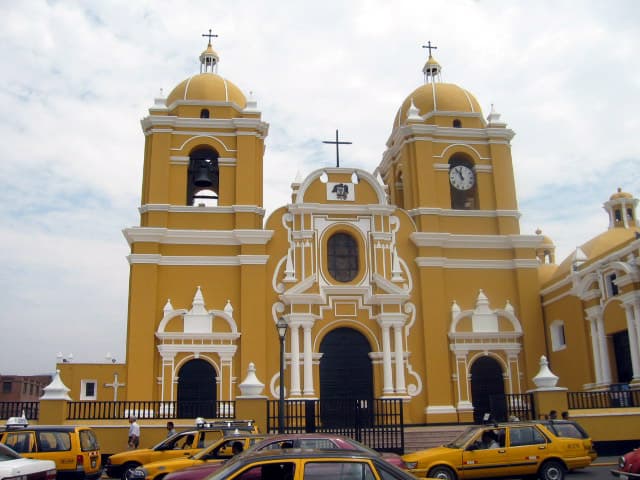
The Cathedral Basilica of Santa María in Trujillo, Peru, is the city's main church and cathedral, located in the Plaza de Armas. Originally founded as a modest mother church, it was elevated to cathedral status in 1616 by Pope Paul V, though it suffered destruction from earthquakes. The current structure, largely built between 1647 and 1666, is renowned for its Churrigueresque Baroque main altarpiece and its interior paintings, earning it the moniker "Sistine Chapel of the Coast."