
Basilica Cathedral of Lima
The Cathedral Basilica of Lima, also known as the Metropolitan Cathedral of Lima, is a significant Roman Catholic cathedral in Lima, Peru. It is the seat of the Archdiocese of Lima and is recognized as the oldest and largest church in Peru. Its construction, which began in 1535, spanned centuries and incorporated various architectural styles, reflecting its long and evolving history.
Key Facts
- ›Construction began in 1535 under Francisco Pizarro and was completed in its present form between 1602 and 1797.
- ›It is built on the site of an Inca shrine and palace.
- ›The cathedral has been dedicated to Saint John, Apostle and Evangelist, since at least 1552.
- ›It is the oldest and largest church in Peru.
- ›The building exhibits a MIX of Renaissance, Baroque, Gothic, and Neoclassical architectural elements.
- ›It was designated a minor basilica on May 28, 1921, under the name Catedral Basílica San Juan Apóstol y Evangelista.

Renaissance, Baroque, Gothic, Neoclassical, Plateresque
Saint John, Apostle and Evangelist
Francisco Pizarro, CristóBal Vaca De Castro, Francisco Becerra, Juan MartíNez De Arrona, Bartolomé Lorenzo, Juan Rher, MatíAs Maestro
About Basilica Cathedral of Lima
The Cathedral Basilica of Lima
The Cathedral Basilica of Lima, also widely known as the Metropolitan Cathedral of Lima, stands as a paramount religious and historical edifice in Lima, Peru. Serving as the principal church and seat of the Archdiocese of Lima, its construction commenced in 1535 under the direction of Francisco Pizarro, marking the beginning of a centuries-long process that saw its completion in its present form by 1797. The cathedral is revered as the oldest and largest church in Peru, a testament to its enduring significance.
History and Construction
The site chosen for the cathedral held historical weight, having previously been an Inca shrine known as the Puma Inti and the palace of the Cuscoan prince Sinchi Puma. Upon founding Lima, Francisco Pizarro allocated a plot for the church, ensuring its rightful establishment. The initial structure, built under the patronage of Our Lady of the Assumption, was completed in 1538. Following the establishment of the Viceroyalty of Peru and the growth of Lima, Pope Paul III created the Diocese of Lima in 1541, elevating the church to cathedral status. Subsequent phases of construction and reconstruction were necessitated by earthquakes and the evolving architectural and religious needs of the city.
Over its extensive history, the cathedral has undergone numerous transformations. Early designs were inspired by Seville Cathedral, with later architectural plans by Francisco Becerra incorporating elements from cathedrals in Jaén and Seville. The present building is largely a reconstruction ordered after the devastating earthquake of 1746, undertaken by the Jesuit Juan Rher, who utilized wood and quincha in its structure to mitigate seismic impact. The towers were completed in the late 18th century by Presbyter Matías Maestro.
Architectural Styles and Features
The Cathedral Basilica of Lima presents a rich tapestry of architectural styles, reflecting its prolonged construction and multiple renovations. Its exterior facade is characterized by Renaissance and Plateresque decoration, with tall Neoclassical towers. Internally, the cathedral exhibits a Renaissance hall plan with three naves and additional side chapels, reminiscent of Seville Cathedral. The ceiling features Gothic ribbed vaults crafted from wood and stucco to reduce weight and enhance seismic resistance. While originally adorned with Baroque altars, many were replaced with Neoclassical ones during 19th-century reforms.
The interior houses numerous chapels, each with its own historical and artistic significance. These include the Chapel of Our Lady of the Expectation, the Chapel of the Holy Family, and the Chapel of Peruvian Saints, which honors figures like Saint Rose of Lima and Saint Martin de Porres. The Chapel of the Immaculate Conception is notable for retaining its original Baroque altar and housing a 16th-century wood carving of Our Lady of Evangelization. The cathedral also preserves artworks from the colonial era and holds the tomb of Francisco Pizarro, though his authentic remains are now housed in a separate mausoleum.
Modern Significance
In recognition of its historical and cultural importance, the Cathedral Basilica of Lima was designated a minor basilica on May 28, 1921. It has been part of the UNESCO World Heritage Site of the Historic Center of Lima since 1991, making it a crucial destination for tourists and pilgrims. Recent decades have seen extensive restoration efforts aimed at preserving its artistic heritage and structural integrity. The cathedral also functions as a museum, showcasing notable artistic works from the colonial period.
Source: Wikipedia ↗
Frequently Asked Questions
When was the Cathedral Basilica of Lima built?
Construction of the Cathedral Basilica of Lima began in 1535. While the first church was completed by 1538, the current form of the cathedral was built between 1602 and 1797, with significant reconstruction after earthquakes.
What is the historical significance of the site where the cathedral stands?
The cathedral is situated on the site of the Inca shrine of the Puma Inti and the palace of the Cuscoan prince Sinchi Puma, a descendant of Inca royalty. Francisco Pizarro acquired the land for the church from Sinchi Puma.
What architectural styles can be found in the Cathedral Basilica of Lima?
The cathedral displays a synthesis of architectural styles, including Renaissance, Baroque, Gothic, and Neoclassical elements. This is due to its long construction period and multiple reconstruction efforts.
Is the Cathedral Basilica of Lima a UNESCO World Heritage Site?
Yes, since 1991, the cathedral has been included as part of the UNESCO World Heritage Site of the Historic Center of Lima.
Who is the patron saint of the Cathedral Basilica of Lima?
The patron saint of the Cathedral Basilica of Lima is Saint John, Apostle and Evangelist, to whom the cathedral is dedicated.
What notable relics or artworks are housed in the cathedral?
The cathedral preserves works by famous colonial sculptors and hosts chapels dedicated to various saints, including Saint Rose of Lima and Saint Martin de Porres. It also contains significant 16th-century wood carvings and Baroque altars.
Related Basilicas

Basilica of Saint Francis
The Basilica and Convent of San Francisco in Lima, Peru, is a significant religious and architectural complex, described as "the largest and noblest monument that the conquest erected in these prodigious lands." It is a prime example of viceregal-era architecture, featuring a blend of Baroque and Neoclassical styles, and forms part of the UNESCO World Heritage site of the Historic Centre of Lima.

Basilica of Saint Rosa of Lima
The Sanctuary of Saint Rose of Lima is a significant religious site located in the house where Saint Rose of Lima, born Isabel Flores de Oliva, lived. It is recognized for its historical connection to the saint and the miracles attributed to her, with the family well being a notable feature for visitors.
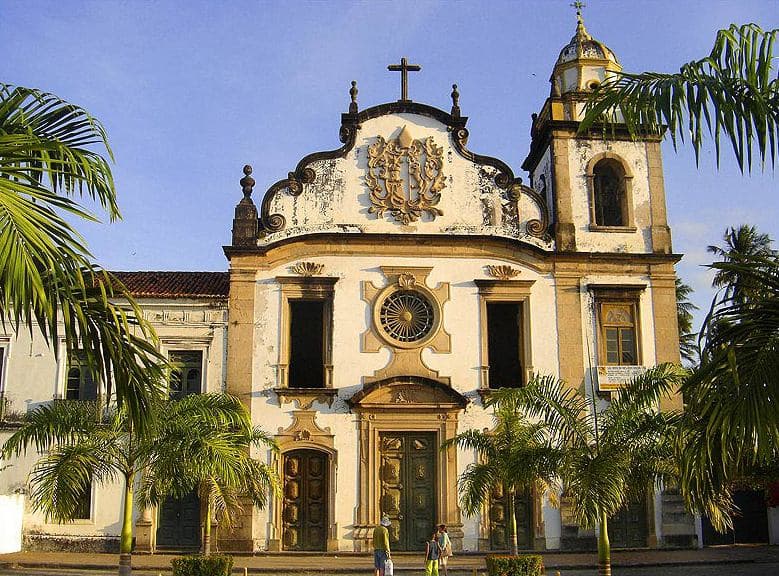
Abbatial Basilica of the Monastery of St Benedict
The Basilica and Monastery of St. Benedict is a significant Baroque architectural complex in Olinda, Pernambuco, Brazil. It is part of the historic center of the city, which is recognized as a UNESCO World Heritage Site. The basilica holds importance for its historical roots in Portuguese colonization and its elevated status as a Minor Basilica.