
Cathedral Basilica of the National Shrine of Our Lady Aparecida
Brazil·Aparecida·Archdiocese of Aparecida
The Cathedral Basilica of the National Shrine of Our Lady Aparecida is a significant Catholic basilica located in Aparecida, Brazil, dedicated to Our Lady of the Immaculate Conception Aparecida, the patroness of Brazil. It is recognized as the largest cathedral in the world and the second-largest Catholic church globally by interior area and volume, serving as the seat of the Archdiocese of Aparecida.
Key Facts
- ›Construction of the current basilica began in 1955.
- ›The basilica is built in the Romanesque Revival style and takes the form of a Greek Cross.
- ›It can accommodate over 200,000 people in its grounds, with the main church capable of holding 300,000 for open-air celebrations.
- ›Pope John Paul II formally consecrated the sanctuary on July 4, 1980.
- ›The basilica has received the 'Golden Rose' from Popes Paul VI, Benedict XVI, and Francis.
- ›It is the main pilgrimage site for the Catholic Church in Brazil.

Romanesque Revival
- Our Lady of the Immaculate Conception Aparecida
Statue of the Virgin Mary
Benedito Calixto Neto
About Cathedral Basilica of the National Shrine of Our Lady Aparecida
The Cathedral Basilica of the National Shrine of Our Lady Aparecida
The Cathedral Basilica of the National Shrine of Our Lady Aparecida, known in Portuguese as Catedral Basílica do Santuário Nacional de Nossa Senhora Aparecida, stands as a monumental Catholic basilica in Aparecida, Brazil. It is dedicated to Our Lady of the Immaculate Conception Aparecida, the principal patroness of Brazil, and holds the distinction of being the largest cathedral in the world. Furthermore, it ranks as the second-largest Catholic church globally in terms of interior area and volume, surpassed only by St. Peter's Basilica in Vatican City. The basilica serves as the ecclesiastical seat of the Archdiocese of Aparecida.
History and Development
The origins of the site are deeply intertwined with the miraculous finding of a small, dark clay statue of the Virgin Mary. According to local tradition, in 1717, three fishermen were attempting to catch fish for a banquet when they discovered the statue in the Paraíba River. This event marked the beginning of a profound devotion, leading to the construction of a series of chapels and eventually the first basilica on the site by 1834. As pilgrimage numbers continued to surge, construction on the present-day basilica commenced in 1955 on a nearby location.
Architectural Significance and Capacity
The current basilica, also referred to as 'Basílica Nova,' was designed by Benedito Calixto Neto and is characterized by its Romanesque Revival architectural style. Its structure is laid out in the form of a Greek Cross, with arms measuring 188 meters in length and 183 meters in width. The imposing dome reaches a height of 70 meters, while the central tower stands at 109 meters. The basilica boasts an impressive internal space of 25,000 square meters and has the capacity to accommodate over 200,000 people within its grounds, with the main church area suitable for 300,000 attendees during open-air celebrations. The extensive grounds also feature a shopping mall, medical clinic, restaurants, and a vast parking lot capable of holding thousands of vehicles.
Papal Recognition and Pilgrimage
The devotion to Our Lady Aparecida has been recognized by several Popes. Pope Pius X granted a canonical coronation to the image in 1904, and Pope Pius XI declared her the Patroness of Brazil in 1930. The basilica has been honored with the 'Golden Rose' on three separate occasions: by Pope Paul VI in 1967, by Pope Benedict XVI in 2007, and by Pope Francis in 2017. Pope John Paul II formally consecrated the sanctuary on July 4, 1980. As the primary pilgrimage destination for Catholics in Brazil, the shrine was officially recognized as the cathedral of the Archdiocese of Aparecida in 2016, solidifying its central role in the nation's religious life.
Source: Wikipedia ↗
Frequently Asked Questions
What is the origin of the Our Lady Aparecida statue?
According to tradition, three fishermen found a headless statue of the Virgin Mary in the Paraíba River in 1717. Upon casting their net again, they found the head, and after cleaning the statue, their fishing fortunes improved significantly. The statue is believed to be the work of Frei Agostino de Jesus.
How did the first chapel on the site come about?
After the statue was found, it was initially housed at the home of one of the fishermen, Felipe Pedroso. This became a popular site for visitors, leading Pedroso's family to build a small chapel to house the image. This was later replaced by a larger chapel in 1734.
When was the current basilica consecrated?
Pope John Paul II formally consecrated the sanctuary on July 4, 1980, although the building was still under construction at that time.
What is the architectural style of the basilica?
The new basilica is built in the Romanesque Revival style. Its structure is in the form of a Greek Cross, with significant dimensions for its arms, dome, and tower.
What are some of the facilities available at the National Shrine?
The National Sanctuary offers extensive infrastructure, including a large food court with numerous stores, a medical clinic, baby facilities with cribs and changing tables, and a secure parking lot. There is also a 'Passarela da Fé' (Walkway of Faith) connecting the old and new churches.
Has the basilica received any special papal honors?
Yes, the Basilica of Aparecida has received the 'Golden Rose' on three occasions. Pope Paul VI awarded the first in 1967, Pope Benedict XVI in 2007, and Pope Francis in 2017.
Related Basilicas
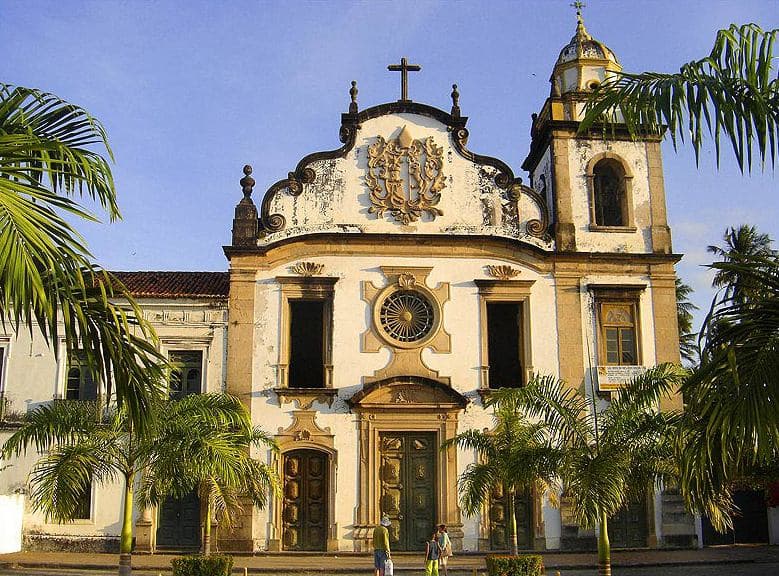
Abbatial Basilica of the Monastery of St Benedict
The Basilica and Monastery of St. Benedict is a significant Baroque architectural complex in Olinda, Pernambuco, Brazil. It is part of the historic center of the city, which is recognized as a UNESCO World Heritage Site. The basilica holds importance for its historical roots in Portuguese colonization and its elevated status as a Minor Basilica.

Basilica of Our Lady of Nazareth of Exile
The Basilica of Our Lady of Nazareth of Exile, also known as the Basilica of Belém, is a minor basilica of the Catholic Church located in Belém, Pará, Brazil. Construction began in 1909 on the site where the image of the Virgin of Nazareth was discovered. The basilica is notable for its Neoclassical design, commissioned by Barnabite priests and inspired by the Basilica of Saint Paul Outside the Walls in Rome, though it controversially lacked steeples in its original plan.

Basilica of the Eternal Divine Father
The Basilica of the Eternal Divine Father, also known as the Basilica of the Divine Eternal Father, is a Catholic shrine and minor basilica located in Trindade, Goiás, Brazil. It holds the distinction of being the world's only minor basilica dedicated to God the Father. The basilica's origins trace back to a small chapel built around 1848, evolving over time through several structures to the current edifice, which was elevated to minor basilica status by Pope Benedict XVI in 2006.