
Cathedral Basilica of St Mary
Panama·Panama City·Metropolitan Archdiocese of Panama
The Metropolitan Archcathedral Basilica of Santa María la Antigua is a significant Catholic church located in Panama City, Panama. Consecrated in 1796, it serves as the episcopal see for the Metropolitan Archdiocese of Panama and holds the title of a minor basilica, granted in 2014. Its construction began in 1688, and it was designed by military engineer Nicolás Rodríguez.
Key Facts
- ›Construction began in 1688 and concluded with its consecration in 1796.
- ›It was designed by military engineer Nicolás Rodríguez.
- ›The facade is carved in the Renaissance style with classical decorative elements, often referred to as Jesuit style.
- ›The interior features three naves supported by approximately 67 cruciform columns.
- ›Relics brought from Seville, including those of Saint Aurelius of Córdoba and Saint Getulius, are housed within the basilica.
- ›It was elevated to the status of a minor basilica on December 22, 2014.
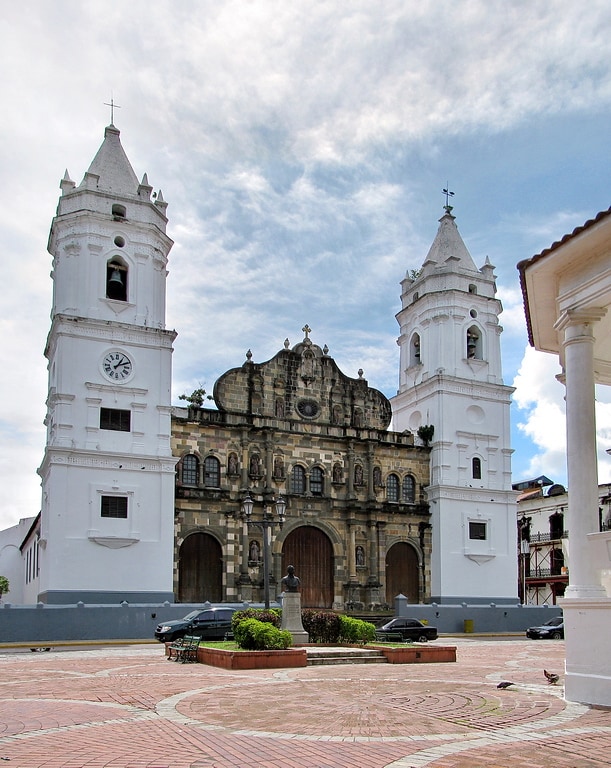
Renaissance, Classical Elements
Saint Mary of La Antigua
Complete Remains of Saint Aurelius of CóRdoba, Complete Remains of Saint Getulius
NicoláS RodríGuez
About Cathedral Basilica of St Mary
Metropolitan Archcathedral Basilica of Santa María la Antigua
The Metropolitan Archcathedral Basilica of Santa María la Antigua, also known as Catedral Basílica Santa María la Antigua de Panamá, is a prominent Catholic church situated in the historic old town of Panama City, Panama. Its history is deeply intertwined with the early Spanish colonization of the region. The current structure, consecrated in 1796, stands on the site of earlier religious buildings, with construction beginning in 1688 and spanning over a century. The basilica serves as the principal church and episcopal see of the Metropolitan Archdiocese of Panama.
History and Significance
The origins of the cathedral trace back to 1510, when Pope Adrian VI authorized the erection of a cathedral in the great house of Cacique Cémaco. In 1513, La Antigua was elevated to the rank of a diocese, with its church becoming a cathedral. Following the abandonment of Santa María la Antigua del Darién and the founding of Panama in 1519, the cathedral's insignia, bulls, and relics were transferred to the new town. After the sacking of Panama by Henry Morgan in 1671, the city was relocated to its present site in 1673, prompting the arrangement for the construction of the new cathedral.
During the Republican era, the cathedral was a significant venue for national events, including the funeral obsequies of presidents and numerous religious ceremonies. On December 22, 2014, the Metropolitan Archcathedral received the title of minor basilica, underscoring its liturgical and pastoral importance within the Catholic Church in Panama.
Architectural Features
Designed by military engineer Nicolás Rodríguez, the basilica is a substantial edifice characterized by a high gabled roof and two plastered towers that were once painted red at their tops and inlaid with mother-of-pearl. The walls are constructed of stone, and the facade displays Renaissance style with classical decorative elements, often referred to as Jesuit style. Internally, the basilica comprises three naves accessed through three doors from the facade, with two additional chapel naves lacking distinct divisions. The roof is supported by a notable 'forest' of approximately 67 cruciform columns made of stone and brick. The sanctuary is elevated seven steps above the naves. The main altarpiece dates from the late 19th century. The sacristy, once on two levels, is the only Panamanian colonial building featuring a dome. Below the sanctuary, two vaulted rooms form the Crypt of the Bishops, and a lower room beneath the sacristy housed the cathedral's archives. The building is illuminated by ten large windows, enhanced with stained glass in the l'art décoratif style since the early 20th century. The current gilded bronze lamps were a donation from the Archdiocese of Rio de Janeiro. The cathedral is positioned on the west side of the Plaza Mayor, accessed via a series of steps.
Source: Wikipedia ↗
Frequently Asked Questions
When was the Cathedral Basilica of St Mary consecrated?
The basilica was consecrated in 1796. Construction on the building had begun 108 years earlier, in 1688.
Who designed the Cathedral Basilica of St Mary?
The basilica was designed by Nicolás Rodríguez, who was a military engineer. His design contributed to the building's architectural character.
What architectural style does the Cathedral Basilica of St Mary exhibit?
The facade of the basilica is carved in the Renaissance style, incorporating classical decorative elements often associated with the Jesuit style. The interior features three naves with a roof supported by numerous stone and brick columns.
What religious relics are kept at the Cathedral Basilica of St Mary?
The basilica houses relics brought from Seville, including complete remains of Saint Aurelius of Córdoba and Saint Getulius. These relics contribute to the church's religious significance.
When did the Cathedral Basilica of St Mary become a basilica?
The metropolitan cathedral was conferred the title of minor basilica on December 22, 2014, by the Dicastery for Divine Worship and the Discipline of the Sacraments. This designation came after a request from the Panamanian episcopal conference.
Related Basilicas

Basilica of Saint Francis
The Basilica and Convent of San Francisco in Lima, Peru, is a significant religious and architectural complex, described as "the largest and noblest monument that the conquest erected in these prodigious lands." It is a prime example of viceregal-era architecture, featuring a blend of Baroque and Neoclassical styles, and forms part of the UNESCO World Heritage site of the Historic Centre of Lima.

Basilica of St Willbrord, Echternach Abbey
The Abbey of Echternach, now a basilica, is a Benedictine monastery in Luxembourg founded in the 7th century by St. Willibrord. It was a significant center of learning and religious pilgrimage, particularly known for its scriptorium and the annual dancing procession honoring its founder. The abbey has undergone numerous reconstructions throughout its history, with the current structure dedicated in 1953.

Basilica of the Visitation
The Basilica of the Visitation is a baroque collegiate parish church situated in the village of Għarb on the island of Gozo, Malta. Established as a parish in 1679, the current church building was constructed between 1699 and 1729, featuring an elegant facade that draws comparisons to Roman baroque architecture. It holds the distinction of being a minor basilica, a status bestowed upon it in 1967.