
Basilica of the Visitation
The Basilica of the Visitation is a baroque collegiate parish church situated in the village of Għarb on the island of Gozo, Malta. Established as a parish in 1679, the current church building was constructed between 1699 and 1729, featuring an elegant facade that draws comparisons to Roman baroque architecture. It holds the distinction of being a minor basilica, a status bestowed upon it in 1967.
Key Facts
- ›Għarb became an independent parish on August 29, 1679, with the original parish church located downhill from the present site.
- ›The current church was constructed between 1699 and 1729, replacing an older, smaller church.
- ›Its facade is noted for its elegance and has been compared to Francesco Borromini's Church of Saint Agnes in Rome.
- ›The church was consecrated on September 28, 1755.
- ›It was elevated to the status of a minor basilica by Pope Paul VI on November 28, 1967.
- ›As a minor basilica, it is privileged to display the Pope's coat of arms over its main door and uses the Umbraculum and Tintinnabulum in processions.

Baroque
Visitation of Mary
About Basilica of the Visitation
The Basilica of the Visitation is a prominent baroque church located in the village of Għarb, on the western part of the island of Gozo, Malta. It serves as a collegiate parish church and is a significant religious and architectural landmark.
History and Construction
Għarb was established as an independent parish on August 29, 1679, becoming the second parish outside Victoria. Initially, the parish church was situated downhill from the current site, known as Taż-Żejt, beside the village cemetery. As the village population grew, a larger church was deemed necessary and planned for a more central location.
The construction of the present church commenced in 1699 and was completed in 1729. The church is noted for its elegant facade, which has been likened to the architectural style of Francesco Borromini's Church of Saint Agnes in Piazza Navona, Rome.
Significance and Designations
The church was consecrated on September 28, 1755. Its importance grew when it became the second Collegiate church of Gozo on May 19, 1774. A significant elevation in its status occurred on November 28, 1967, when it was designated as a minor basilica by Pope Paul VI.
Upon becoming a minor basilica, the church acquired the Umbraculum and the Tintinnabulum, traditional liturgical items that are carried during processions involving the collegiate chapter. Additionally, minor basilicas have the privilege of displaying the incumbent Pope's coat of arms above the church's main door, signifying a direct connection to the Holy See.
The Basilica of the Visitation is recognized for its cultural and historical value and is listed on the National Inventory of the Cultural Property of the Maltese Islands.
Source: Wikipedia ↗
Frequently Asked Questions
When was Għarb established as a parish?
Għarb was established as an independent parish on August 29, 1679. This made it the second parish to be established outside of Victoria on the island of Gozo.
When was the current Basilica of the Visitation built?
Construction of the present church building began in 1699 and was completed in 1729. The original parish church was located downhill from the current site.
What architectural style is the Basilica of the Visitation?
The Basilica of the Visitation is described as a baroque church. Its elegant facade has been compared to the work of Francesco Borromini.
When did the church become a minor basilica?
The church was elevated to the status of a minor basilica on November 28, 1967, by Pope Paul VI. This designation grants it certain privileges, such as the use of specific liturgical items and the display of the Pope's coat of arms.
What are the Umbraculum and Tintinnabulum?
The Umbraculum and Tintinnabulum are liturgical items acquired by the church upon its designation as a minor basilica. They are carried in processions by the collegiate chapter of the church.
Related Basilicas

National Shrine of the Blessed Virgin of Ta' Pinu
The National Shrine of the Blessed Virgin of Ta' Pinu is a revered Roman Catholic minor basilica and national shrine located on the island of Gozo, Malta. It gained prominence in the late 19th century due to reported miracles and apparitions attributed to Our Lady of Ta' Pinu, leading to its rebuilding and eventual designation. The shrine is a significant pilgrimage site and a testament to Marian devotion in Malta.
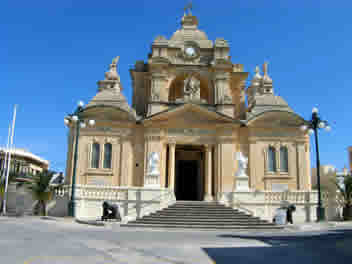
Basilica of SS Peter and Paul
The Basilica of SS Peter and Paul is a Roman Catholic minor basilica and parish church situated in Nadur, Gozo, Malta. Its construction spanned over a century, with significant embellishments in the early 20th century reflecting Italian Renaissance design, making it one of the most beautiful churches on the island.
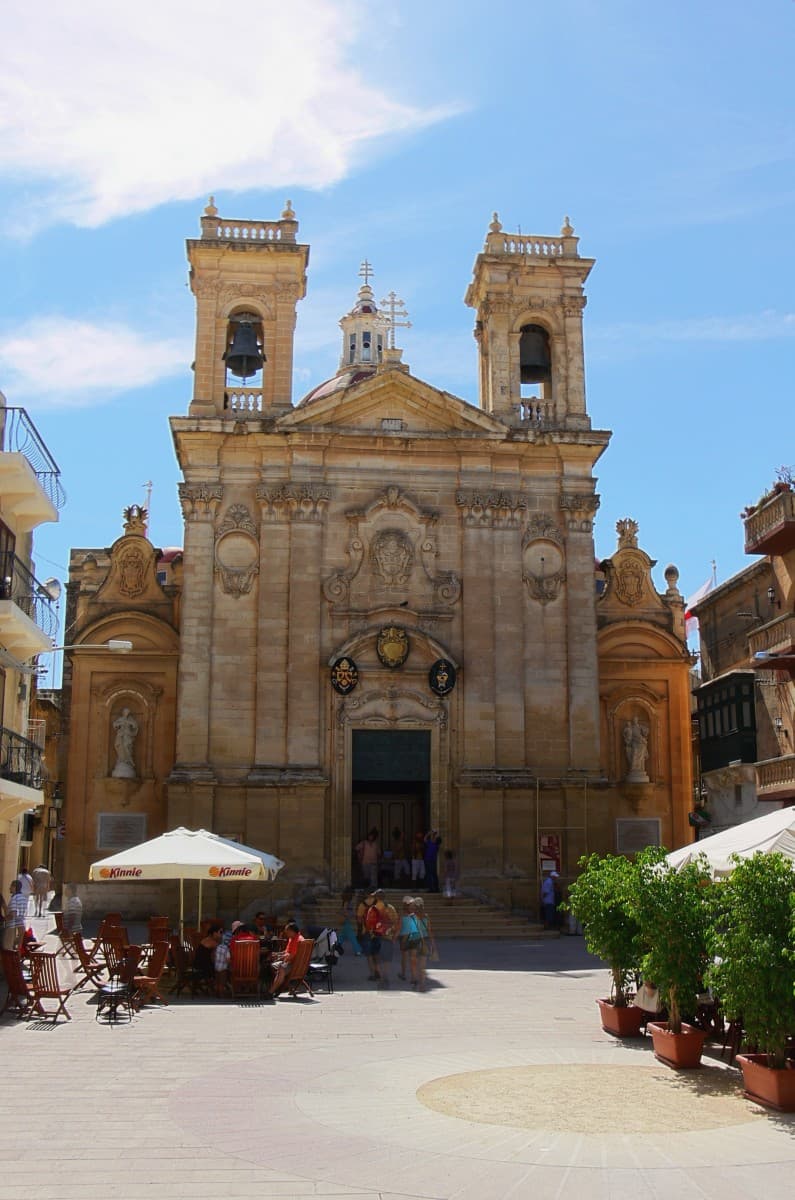
Basilica of St George Martyr
The Basilica of St George Martyr, also known as San Ġorġ, is a historic Baroque church located in Gozo, Malta. Originally a Roman pagan temple converted to a Christian church in the 4th century, it has undergone numerous reconstructions, with the present basilica built between 1672 and 1678. It is significant for its rich artistic heritage, including works by Mattia Preti, and its historical role as the last church on Gozo to celebrate the Byzantine Rite.