
Basilica of SS Peter and Paul
The Basilica of SS Peter and Paul is a Roman Catholic minor basilica and parish church situated in Nadur, Gozo, Malta. Its construction spanned over a century, with significant embellishments in the early 20th century reflecting Italian Renaissance design, making it one of the most beautiful churches on the island.
Key Facts
- ›The parish of Nadur was established on April 28, 1688.
- ›Construction of the present church began on September 28, 1760, and was completed on May 12, 1867.
- ›The design is attributed to Maltese architect Giuseppe Bonici.
- ›A refurbishment program in 1907 added aisles, a dome, and a façade in the Italian Renaissance style.
- ›The ceiling was painted by Maltese artist Lazzaro Pisani, and architectural decorations were done by Pio Cellini.
- ›It was designated a minor basilica on June 26, 1967.
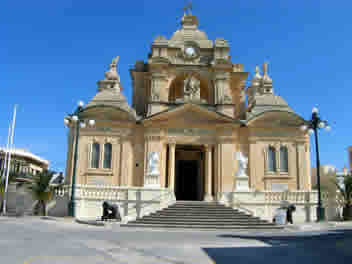
Italian Renaissance
Giuseppe Bonici, F.S. Sciortino
About Basilica of SS Peter and Paul
The Basilica of SS Peter and Paul is a significant Roman Catholic minor basilica and parish church located in Nadur, on the island of Gozo in Malta. Its history is marked by a long construction period and substantial artistic embellishments that have contributed to its reputation as one of the most beautiful churches in the region.
History and Construction
The parish of Nadur was officially established on April 28, 1688. The construction of the current church commenced on September 28, 1760, with the design being attributed to the Maltese architect Giuseppe Bonici. The building process was extensive, with the church's construction finally concluding on May 12, 1867. A notable refurbishment program took place in 1907, which significantly altered the church's appearance. This renovation included the construction of new aisles, a dome, and a façade, all designed in the Italian Renaissance style by Prof. F.S. Sciortino.
Artistic and Religious Significance
The interior of the Basilica of SS Peter and Paul is adorned with artistic masterpieces. The ceiling features a depiction of episodes related to Saints Peter and Paul, painted by the renowned Maltese artist Lazzaro Pisani. Furthermore, the architectural decorations within the basilica are the work of the Italian artist Pio Cellini. The driving force behind these extensive artistic and architectural projects was Archpriest Martin Camilleri.
The church's religious importance was further recognized when it was designated as a minor basilica on June 26, 1967. The third Collegiate chapter of Gozo was also established within its precincts on September 19, 1894, highlighting its central role in the local ecclesiastical structure.
Source: Wikipedia ↗
Frequently Asked Questions
When was the parish of Nadur established?
The parish of Nadur was established by the Bishop of Malta Davide Cocco Palmieri on April 28, 1688. Prior to the construction of the current church, the Immaculate Conception church in Qala served the spiritual needs of the parish.
Who designed the Basilica of SS Peter and Paul?
The design of the present church is attributed to the Maltese architect Giuseppe Bonici. Later additions and embellishments in the Italian Renaissance style were overseen by Prof. F.S. Sciortino.
What are some of the artistic features of the basilica?
The ceiling of the basilica depicts episodes connected with St Peter and Paul and was painted by the Maltese artist Lazzaro Pisani. The architectural decorations are the work of the Italian Pio Cellini.
When did the Basilica of SS Peter and Paul receive its basilica status?
The church was officially designated as a minor basilica on June 26, 1967. This followed significant refurbishment and artistic additions.
What is the architectural style of the basilica?
While the initial construction design is attributed to Giuseppe Bonici, a major refurbishment program in 1907 introduced Italian Renaissance design elements, particularly to the aisles, dome, and façade.
Related Basilicas
Basilica of St George Martyr
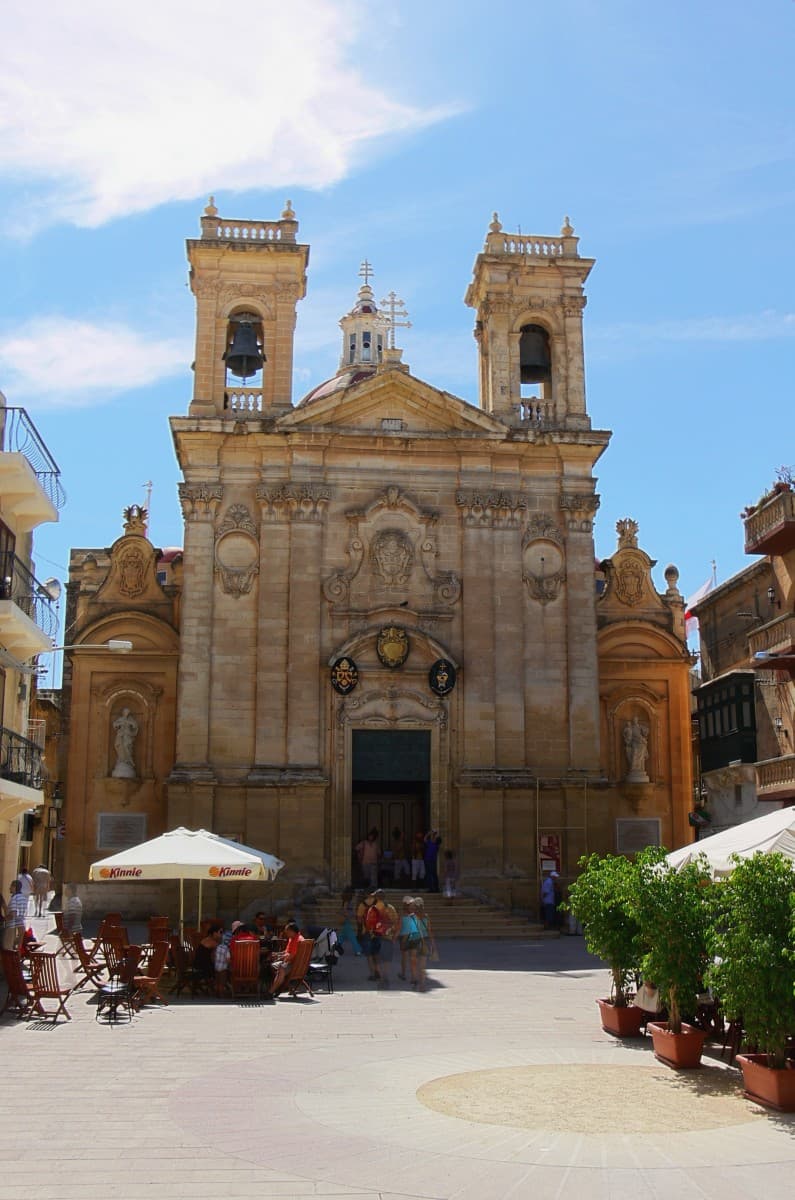
The Basilica of St George Martyr, also known as San Ġorġ, is a historic Baroque church located in Gozo, Malta. Originally a Roman pagan temple converted to a Christian church in the 4th century, it has undergone numerous reconstructions, with the present basilica built between 1672 and 1678. It is significant for its rich artistic heritage, including works by Mattia Preti, and its historical role as the last church on Gozo to celebrate the Byzantine Rite.

Basilica of Saints Peter and Paul
The Basilica of Saints Peter and Paul is a historic Catholic church located in Chattanooga, Tennessee, and is recognized on the National Register of Historic Places. It holds the distinction of being one of the oldest continuously operating parishes within the Diocese of Knoxville and was elevated to the status of a minor basilica by Pope Benedict XVI.

Basilica of St Peter and St Paul
The Basilica of Saints Peter and Paul in Kraków, Poland, is a significant example of Polish Baroque architecture, serving as the first structure in Kraków designed entirely in this style. Commissioned by King Sigismund III Vasa for the Jesuit order, it was constructed between 1597 and 1619 and later elevated to the rank of a Minor Basilica in 1960. It is notable for its impressive facade, dome, and interior decorations, and it houses the National Pantheon, a burial place for distinguished Poles.