
Basilica of St Willbrord, Echternach Abbey
Luxembourg·Echternach
The Abbey of Echternach, now a basilica, is a Benedictine monastery in Luxembourg founded in the 7th century by St. Willibrord. It was a significant center of learning and religious pilgrimage, particularly known for its scriptorium and the annual dancing procession honoring its founder. The abbey has undergone numerous reconstructions throughout its history, with the current structure dedicated in 1953.
Key Facts
- ›Founded in 698 by St. Willibrord, who also served as its first abbot.
- ›Became a 'royal abbey' in 751 and later an Imperial Abbey.
- ›Was a major center for manuscript production during the Carolingian Renaissance.
- ›Restored to Benedictine monks in 971, entering a second Golden Age.
- ›Granted the status of minor basilica by Pope Pius XII in 1939.
- ›Known for the annual dancing procession held every Whit Tuesday.

Romanesque, Neo-Roman
St. Willibrord's Tomb
Benedictine
About Basilica of St Willbrord, Echternach Abbey
The Basilica of St. Willibrord, Echternach Abbey
The Basilica of St. Willibrord, located in Echternach, Luxembourg, stands as a significant Benedictine monastery with a history stretching back to the 7th century. Founded by St. Willibrord, the Apostle to the Frisians and patron saint of Luxembourg, the abbey quickly rose to prominence, benefiting from royal patronage and becoming a powerful institution.
History and Religious Significance
The site of the abbey was originally a Roman villa before St. Willibrord established a monastery there in 698. He opened the first church in 700 with financial backing from Pepin of Herstal. The abbey was declared a 'royal abbey' in 751 and later an Imperial Abbey, underscoring its importance. St. Willibrord spent much of his life at Echternach and died there in 739, with his burial site becoming a place of pilgrimage.
Carolingian Renaissance and Scholarly Contributions
During the Carolingian Renaissance, the Abbey of Echternach was a vital center for manuscript production, boasting one of the most important scriptoria in the Frankish Empire. The monks produced notable works such as the Augsburg Gospels and the Codex Aureus of Echternach, contributing significantly to the development of Carolingian minuscule script. Despite periods of decline and the ejection of Benedictine monks, the order was restored in 971, ushering in a second Golden Age for the abbey.
Architectural Evolution and Modern Basilica Status
The abbey has seen numerous churches built on its site, with the first Romanesque church consecrated in 1031. The structure has undergone significant reconstructions, notably in the mid-19th century in a neo-Roman style, and again after wartime damage in 1944. The current basilica was re-consecrated in 1953, with its 8th-century crypt remaining largely intact. In recognition of its role as a national pilgrimage site, Pope Pius XII granted the abbey the status of a minor basilica in 1939.
The Dancing Procession
Today, the Abbey of Echternach is perhaps most famous for its annual dancing procession, held every Whit Tuesday. This unique tradition honors St. Willibrord and attracts tens of thousands of visitors, making it the last of its kind in Europe and a major cultural event.
Source: Wikipedia ↗
Frequently Asked Questions
When was the Abbey of Echternach founded?
The Abbey of Echternach was founded in 698 by St. Willibrord. He was granted land at Echternach to build a larger monastery, establishing it as a significant religious institution.
Who is St. Willibrord and why is he important to Echternach?
St. Willibrord was a Northumbrian missionary and the first abbot of Echternach. He is recognized as the patron saint of Luxembourg and is honored by an annual dancing procession held in his memory.
What is the significance of the dancing procession in Echternach?
The annual dancing procession, held every Whit Tuesday, is a unique tradition in honor of St. Willibrord and draws tens of thousands of visitors. It is recognized as the last traditional dancing procession in Europe.
What was the role of the Abbey of Echternach during the Carolingian Renaissance?
During the Carolingian Renaissance, the abbey's scriptorium was one of the most important in the Frankish Empire, producing significant manuscripts. Its work influenced the development of Carolingian minuscule.
Has the basilica been damaged and rebuilt?
Yes, the basilica has undergone multiple reconstructions due to fires and wartime damage. The current structure was rebuilt in the original Roman style after being damaged in 1944 and was re-consecrated in 1953.
What important relics or burials are associated with the Abbey of Echternach?
St. Willibrord himself is buried in the 8th-century crypt of the basilica, which has survived major damage. Henry IV, Count of Luxembourg, is also buried there.
Related Basilicas
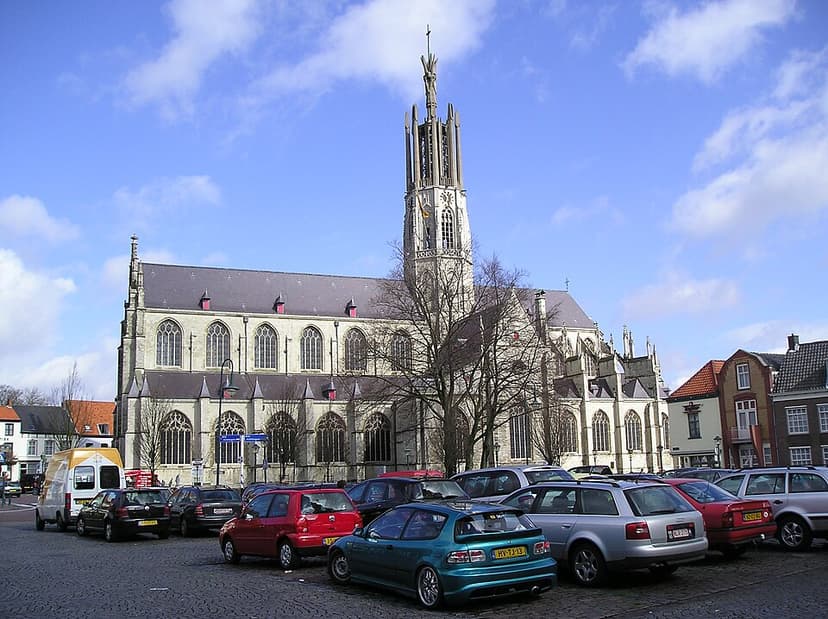
Basilica of St Willibrord
The Basilica of St. Willibrord is a historic Roman Catholic church located in Hulst, Netherlands. Dedicated to St. Willibrord, the apostle of the Benelux countries, the basilica showcases a significant architectural evolution from Romanesque to Brabantine Gothic styles. It holds religious importance as a place of worship and houses notable artistic works, including paintings and a historic organ.

Basilica of Saint Francis
The Basilica and Convent of San Francisco in Lima, Peru, is a significant religious and architectural complex, described as "the largest and noblest monument that the conquest erected in these prodigious lands." It is a prime example of viceregal-era architecture, featuring a blend of Baroque and Neoclassical styles, and forms part of the UNESCO World Heritage site of the Historic Centre of Lima.

Basilica of the Visitation
The Basilica of the Visitation is a baroque collegiate parish church situated in the village of Għarb on the island of Gozo, Malta. Established as a parish in 1679, the current church building was constructed between 1699 and 1729, featuring an elegant facade that draws comparisons to Roman baroque architecture. It holds the distinction of being a minor basilica, a status bestowed upon it in 1967.