
Cathedral Basilica of Saint Peter in Chains
United States·Cincinnati·Archdiocese of Cincinnati
The Cathedral Basilica of Saint Peter in Chains is a significant Roman Catholic cathedral in Cincinnati, Ohio, serving as the seat of the Archdiocese of Cincinnati. Originally consecrated in 1845 as the first large church west of the Allegheny Mountains, it underwent extensive restoration and expansion in the mid-20th century, regaining its cathedral status in 1957. It was designated a minor basilica by Pope Francis in 2020, recognizing its historical and religious importance.
Key Facts
- ›Cornerstone laid in 1841 by Bishop John Baptist Purcell, consecrated in 1845.
- ›Served as the first large church west of the Allegheny Mountains.
- ›Underwent major renovations and expansions in 1951-1957.
- ›Designated a minor basilica in 2020 by Pope Francis.
- ›Features a large Venetian glass mosaic in the apse depicting Christ and St. Peter.
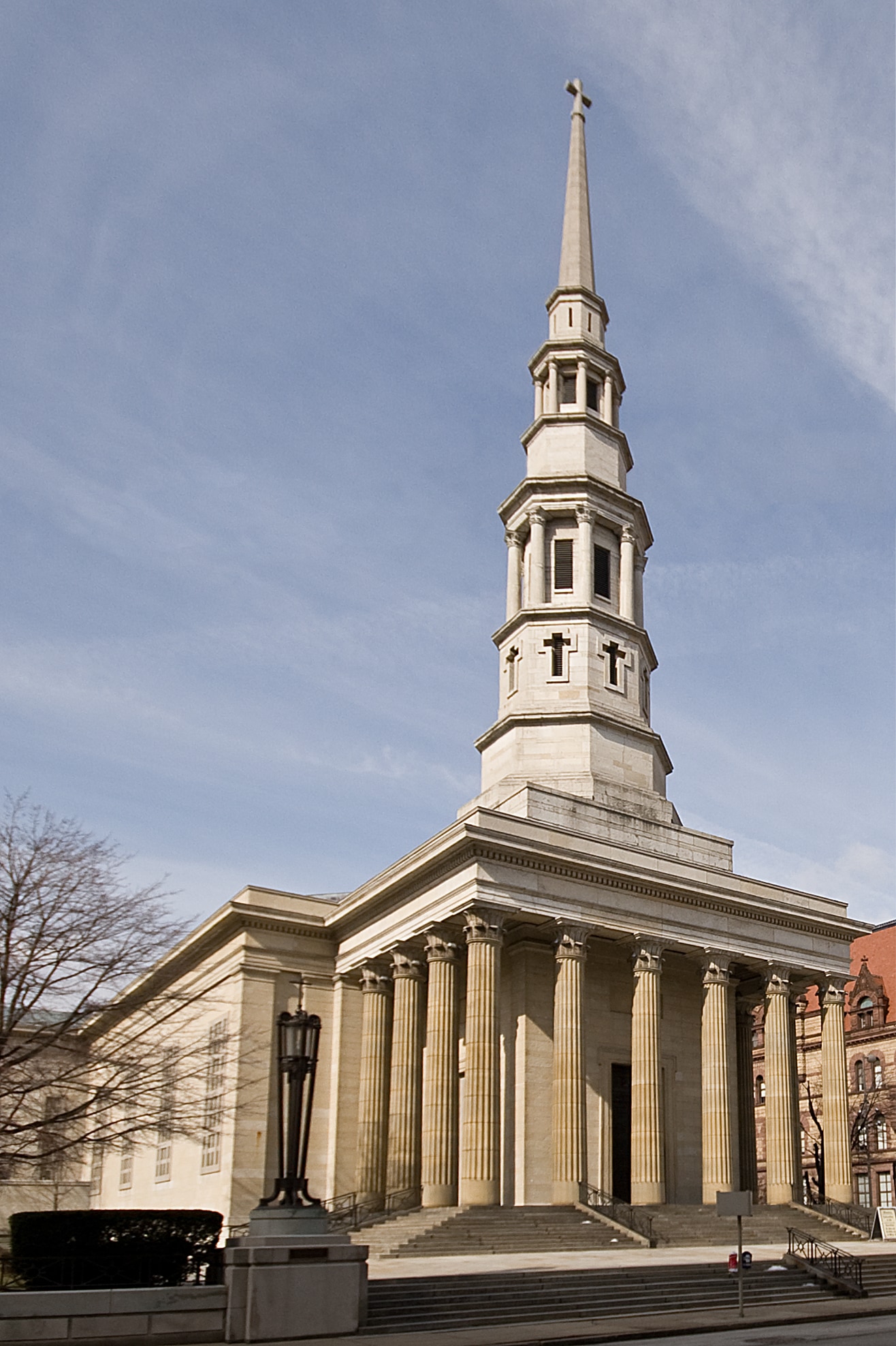
- ›Its exterior is characterized by a white limestone spire and tall Corinthian columns.
Greek Revival
Edward J. Schulte
About Cathedral Basilica of Saint Peter in Chains
Cathedral Basilica of Saint Peter in Chains (Cincinnati, Ohio)
The Cathedral Basilica of Saint Peter in Chains is a prominent Roman Catholic cathedral located in downtown Cincinnati, Ohio. It serves as the principal church of the Archdiocese of Cincinnati and is dedicated to the biblical account of Saint Peter's imprisonment and liberation in Rome.
History and Significance
The history of St. Peter in Chains in Cincinnati traces back to the early 19th century. The first St. Peter's Cathedral was dedicated in 1826, but by the 1840s, the growing Catholic population necessitated a larger structure. Bishop John Baptist Purcell purchased land for the current cathedral and laid its cornerstone in 1841. The new cathedral was consecrated in 1845, making it the first large church constructed west of the Allegheny Mountains.
Over the decades, the cathedral underwent numerous renovations and additions. These included the addition of a front portico and gas lighting in the 1850s, and major repairs and enhancements in the 1870s, such as enlarging the sanctuary and installing marble elements. The late 19th and early 20th centuries saw the installation of electric lights and a new organ, and the hosting of significant religious events.
By the mid-20th century, the cathedral required substantial restoration. From 1951 to 1957, architect Edward J. Schulte designed new transepts, a rectory, and other additions, culminating in Archbishop Karl Joseph Alter re-dedicating it as a cathedral in 1957. The building has also hosted memorial services for prominent figures like President John F. Kennedy and Dr. Martin Luther King Jr., and welcomed notable visitors such as Mother Teresa and future Pope John Paul II.
In 2020, Pope Francis officially designated the Cathedral Basilica of Saint Peter in Chains as a minor basilica, acknowledging its historical importance and religious significance.
Architecture and Art
The cathedral is a striking example of Greek Revival architecture. Its exterior is dominated by a 224-foot (68 m) white limestone spire, which for many years was the tallest structure in Cincinnati. The front portico features columns measuring 33 feet (10 m) high, a symbolic reference to the years of Jesus' life.
The interior is richly decorated. A massive mosaic, measuring 35 feet (11 m) high and 40 feet (12 m) wide, fills the apse. Crafted from Venetian glass by German artist Anton Wendling, it depicts Christ entrusting the keys of authority to Saint Peter, with scenes of Peter's imprisonment and liberation. The flooring is made of dark green and white Italian marble, and the columns surrounding the altar are fashioned from French blue marble.
The basilica also houses significant artworks, including a replica of Michelangelo's Pieta, a rare 15th or 16th-century Spanish missal stand once belonging to Cardinal Ximenes de Cisneros, and a processional cross with a corpus created by the renowned 16th-century goldsmith Benvenuto Cellini. Murals depicting the Stations of the Cross by American artist Carl Zimmerman adorn the nave walls.
Source: Wikipedia ↗
Frequently Asked Questions
When was the Cathedral Basilica of Saint Peter in Chains built?
The cornerstone for the current Cathedral Basilica of Saint Peter in Chains was laid in May 1841, and it was consecrated on November 2, 1845. Significant restoration and expansion occurred between 1951 and 1957.
What is the architectural style of the cathedral?
The cathedral is primarily a Greek Revival structure. Its exterior features a prominent white limestone spire and tall columns on its front portico, while the interior is adorned with marble and a large mosaic.
What notable artworks are housed in the basilica?
The basilica contains a massive Venetian glass mosaic in the apse depicting Christ granting keys to St. Peter, created by Anton Wendling. It also holds a replica of Michelangelo's Pieta, a 15th or 16th-century missal stand, and a processional cross with a corpus by Benvenuto Cellini.
Has the cathedral always been the seat of the Archdiocese of Cincinnati?
While it was initially built as St. Peter's Cathedral, it ceased to be the archdiocesan seat in 1938 due to its poor condition. After extensive restoration and expansion, it was re-dedicated as a cathedral in 1957.
When was it designated a minor basilica?
The Cathedral Basilica of Saint Peter in Chains was designated a minor basilica by Pope Francis in June 2020.
Related Basilicas
Archcathedral Basilica of SS Peter and Paul
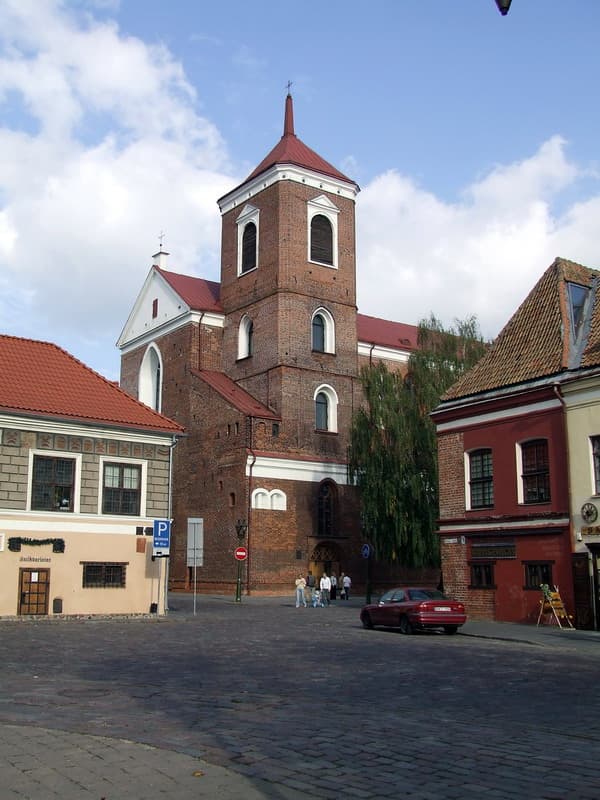
The Archcathedral Basilica of SS Peter and Paul in Kaunas, Lithuania, is the principal church of the Archdiocese of Kaunas and the largest Gothic church in Lithuania. Established by Vytautas the Great, its construction spanned centuries, with significant renovations and stylistic additions, including Gothic, Renaissance, and Rococo elements. It holds historical importance as a site of religious and cultural significance, housing the remains of notable Lithuanian figures.
Archcathedral Basilica of St Peter and St Paul
The Sts. Apostles Peter and Paul Archcathedral Basilica in Poznań is one of Poland's oldest churches and its oldest cathedral, with origins dating back to the 10th century. It holds significant historical importance as a center for the Christianization of Poland and has served as the burial site for early Polish rulers. The basilica showcases a remarkable evolution of architectural styles, reflecting centuries of rebuilding and renovation.

Primatial Cathedral Basilica of the Immaculate Conception
The Primatial Cathedral Basilica of the Immaculate Conception and Saint Peter of Bogotá, commonly known as the Metropolitan Cathedral Basilica of Bogotá, is a significant Neoclassical cathedral located in Bogotá, Colombia. It serves as the seat of the Metropolitan Archbishop of Bogotá and Primate of Colombia, a title bestowed by Pope Leo XIII. Recognized as a National Monument, it stands as a testament to the city's rich religious and architectural history, with its current structure dating from the early 19th century.