
Archcathedral Basilica of St Peter and St Paul
Poland·Poznań·Archdiocese of Poznań
The Sts. Apostles Peter and Paul Archcathedral Basilica in Poznań is one of Poland's oldest churches and its oldest cathedral, with origins dating back to the 10th century. It holds significant historical importance as a center for the Christianization of Poland and has served as the burial site for early Polish rulers. The basilica showcases a remarkable evolution of architectural styles, reflecting centuries of rebuilding and renovation.
Key Facts
- ›Construction began in the second half of the 10th century on Ostrów Tumski island.
- ›It was raised to the status of a cathedral in 968 when the first missionary Bishop, Jordan, arrived in Poland.
- ›The basilica has undergone significant architectural transformations, including Romanesque, Gothic, Baroque, Neo-Classical, and a return to Gothic styles.
- ›It is the burial place for several early Polish rulers, including Mieszko I and Boleslaus the Brave.
- ›Pope John XXIII bestowed the title of minor basilica upon the church in 1962.
- ›The basilica was heavily damaged during the Battle of Posen in 1945 and subsequently restored to a Gothic style.
Pre-Romanesque, Romanesque, Gothic, Baroque, Neo-Classical
About Archcathedral Basilica of St Peter and St Paul
Sts. Apostles Peter and Paul Archcathedral Basilica
The Sts. Apostles Peter and Paul Archcathedral Basilica in Poznań, Poland, stands as a monument of immense historical and religious significance, recognized as one of the oldest churches in the country and its oldest cathedral. Its origins trace back to the 10th century, making it the oldest historical monument in Poznań and a pivotal site in the early development of the Polish state and its Christianization.
History and Architectural Evolution
Originally constructed within the fortified settlement of Poznań on Ostrów Tumski, the basilica's site was near a ducal palace believed to have a chapel for Dobrawa, the Christian wife of Mieszko I. Mieszko I's baptism in 966, possibly in Poznań, marks a crucial moment in Poland's conversion to Christianity. The church was elevated to cathedral status in 968 with the arrival of the first missionary bishop, Jordan. Initially, the pre-Romanesque church measured approximately 48 meters in length, with remnants still visible in the basements.
Over the centuries, the basilica has been extensively rebuilt and renovated, resulting in a rich tapestry of architectural styles. After surviving around seventy years, the first church was damaged during a pagan reaction and a raid. It was subsequently rebuilt in the Romanesque style, elements of which are preserved in the southern tower. During the 14th and 15th centuries, significant alterations were made in the Gothic style, including the addition of a crown of chapels. A severe fire in 1622 necessitated a Baroque renovation, followed by another major fire in 1772 that led to a Neo-Classical reconstruction.
In 1821, Pope Pius VII elevated the cathedral to the status of a Metropolitan Archcathedral and added Saint Paul as a patron. The most recent devastating fire occurred on February 15, 1945, during the Battle of Posen. The extensive damage prompted conservators to restore the basilica to its Gothic form, using medieval elements revealed by the fire as a guide. The cathedral reopened on June 29, 1956. In recognition of its importance, Pope John XXIII bestowed the title of minor basilica upon the church in 1962.
Royal Necropolis
The Archcathedral Basilica of St Peter and St Paul holds profound historical importance as the burial site for several early Polish rulers. This distinguished list includes Mieszko I (died 992), Boleslaus the Brave (died 1025), Mieszko II (died 1034), Casimir the Restorer (died 1058), Ladislaus Odonic (died 1239), Przemysł I (died 1257), Boleslaus the Pious (died 1279), and Przemysł II (died 1296). The presence of these royal tombs underscores the basilica's central role in the establishment and continuity of the Polish monarchy.
Source: Wikipedia ↗
Frequently Asked Questions
When was the Archcathedral Basilica of St Peter and St Paul first built?
The basilica was originally built in the second half of the 10th century. It is considered one of the oldest churches in Poland and the oldest Polish cathedral.
What is the significance of this basilica in Polish history?
The basilica is significant as it was raised to cathedral status in 968, coinciding with the Christianization of Poland. It also served as the burial site for prominent early Polish rulers, solidifying its importance in the formation of the Polish state.
What architectural styles can be seen in the basilica?
The basilica displays a variety of architectural styles due to numerous rebuildings. These include pre-Romanesque, Romanesque, Gothic, Baroque, and Neo-Classical elements, with a post-war restoration emphasizing its Gothic heritage.
Who is buried in the Archcathedral Basilica of St Peter and St Paul?
The basilica is the resting place for several important Polish rulers from the 10th to the 13th centuries. Notable interments include Mieszko I, Boleslaus the Brave, Mieszko II, and Casimir the Restorer.
When did the basilica receive the title of minor basilica?
Pope John XXIII granted the church the title of minor basilica in 1962. This designation recognizes its special religious and historical importance.
Related Basilicas
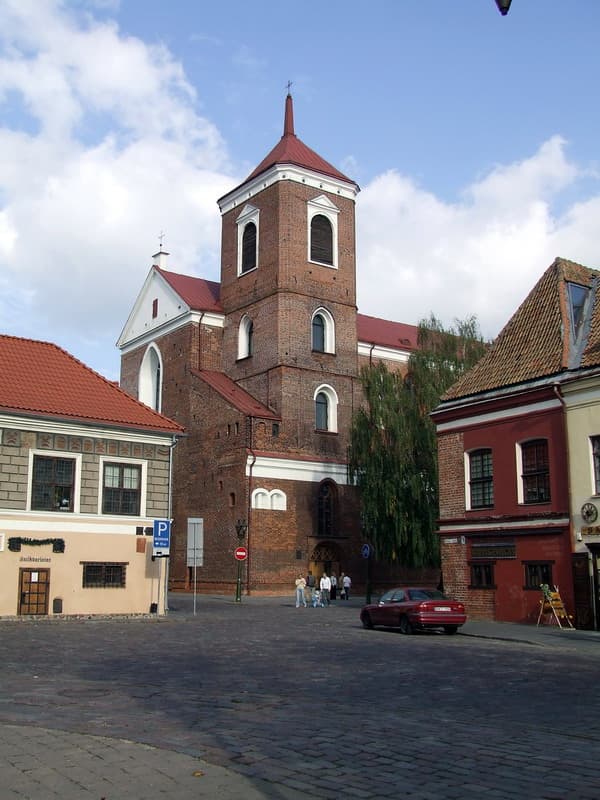
Archcathedral Basilica of SS Peter and Paul
The Archcathedral Basilica of SS Peter and Paul in Kaunas, Lithuania, is the principal church of the Archdiocese of Kaunas and the largest Gothic church in Lithuania. Established by Vytautas the Great, its construction spanned centuries, with significant renovations and stylistic additions, including Gothic, Renaissance, and Rococo elements. It holds historical importance as a site of religious and cultural significance, housing the remains of notable Lithuanian figures.

Archcathedral Basilica of St James the Apostle
The Archcathedral Basilica of St James the Apostle is a historic Gothic cathedral located in Szczecin, Poland, and serves as the seat of the Archdiocese of Szczecin-Kamień. Originally established in 1187, it has undergone numerous reconstructions and stylistic changes throughout its history, including Romanesque, Baroque, and later modern interventions, making it a significant landmark in the Szczecin Old Town.

Archcathedral Basilica of St John the Baptist
Archcathedral Basilica of St John the Baptist is a Catholic church located in Warsaw, Poland, serving as the mother church of the Archdiocese of Warsaw and a significant national pantheon. Originally built in the 14th century, it has undergone numerous modifications and destructions, most notably during World War II, before its post-war reconstruction. Its historical importance is underscored by its role as a coronation and burial site for Polish royalty and notable figures, and its inclusion as part of a UNESCO World Heritage Site.