
Basilica of the Visitation of the Blessed Virgin Mary
Lithuania·Trakai
The Basilica of the Visitation of the Blessed Virgin Mary, located in Trakai, Lithuania, is a significant Roman Catholic church with a rich history dating back to its founding by Vytautas the Great in 1409. Originally constructed in the Gothic style, it underwent substantial alterations during the Baroque period, which largely define its present architectural character. The basilica is renowned for housing the revered icon of Our Lady of Trakai within its main altarpiece.
Key Facts
- ›Founded by Vytautas the Great in 1409.
- ›Original construction was in the Gothic architectural style.
- ›Significantly altered during the Baroque period.
- ›Its current appearance is primarily shaped by Baroque alterations.
- ›Houses the icon of our Lady of Trakai in the main altarpiece.

Gothic, Baroque
Icon of Our Lady of Trakai
About Basilica of the Visitation of the Blessed Virgin Mary
The Basilica of the Visitation of the Blessed Virgin Mary, situated in Trakai, Lithuania, is a prominent Roman Catholic church with historical roots stretching back to its founding by Vytautas the Great in 1409. Its architectural journey began with construction in the Gothic style, reflecting the prevailing aesthetics of the era.
Architectural Evolution
Over time, the basilica experienced significant transformations, most notably during the Baroque period. These later alterations substantially reshaped its appearance, and the church's current visual character is largely attributed to these Baroque modifications. This blend of original Gothic structure with later Baroque embellishments gives the basilica a unique architectural profile.
Religious Significance
A key element of the basilica's religious importance is the presence of the icon of Our Lady of Trakai within its main altarpiece. This icon is a focal point for devotion and pilgrimage, drawing many faithful to the church. The basilica serves as an active center of worship and a testament to Lithuania's religious heritage.
Source: Wikipedia ↗
Frequently Asked Questions
When was the Basilica of the Visitation of the Blessed Virgin Mary founded?
The basilica was founded in 1409 by Vytautas the Great. This marked the beginning of its construction and establishment as a significant religious site.
What is the architectural style of the basilica?
The basilica was initially constructed in the Gothic style. However, it underwent significant alterations during the Baroque period, and its current appearance is largely defined by these later Baroque modifications.
What is notable about the main altarpiece?
The main altarpiece of the Basilica of the Visitation of the Blessed Virgin Mary contains the venerated icon of Our Lady of Trakai. This icon is a central element of devotion within the church.
Related Basilicas

Archcathedral Basilica of St Stanislaus and St Vladislav
The Archcathedral Basilica of St Stanislaus and St Vladislav, also known as Vilnius Cathedral, is the principal Catholic cathedral in Lithuania, serving as the heart of Catholic spiritual life. It has a long and complex history, with evidence of earlier pagan temples and multiple reconstructions, making it a significant historical and religious landmark in Vilnius Old Town.
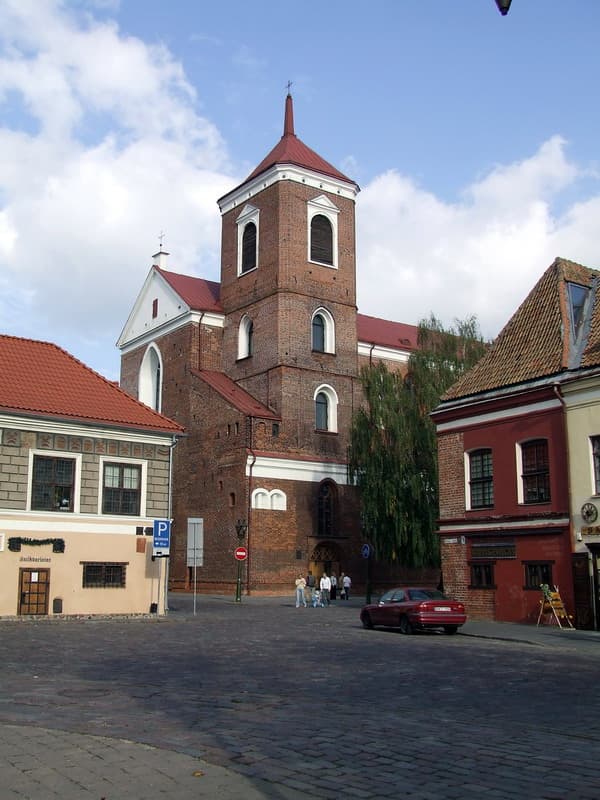
Archcathedral Basilica of SS Peter and Paul
The Archcathedral Basilica of SS Peter and Paul in Kaunas, Lithuania, is the principal church of the Archdiocese of Kaunas and the largest Gothic church in Lithuania. Established by Vytautas the Great, its construction spanned centuries, with significant renovations and stylistic additions, including Gothic, Renaissance, and Rococo elements. It holds historical importance as a site of religious and cultural significance, housing the remains of notable Lithuanian figures.
Basilica of the Resurrection
The Basilica of the Resurrection in Kaunas, Lithuania, is the largest basilical church in the Baltic states. Conceived as an expression of gratitude for Lithuania's regained independence, its construction spanned decades and faced numerous setbacks, including wartime suspension and repurposing as a factory. Today, it serves as a significant religious and community center, notable for its monumental scale and historical resilience.