
Archcathedral Basilica of St Stanislaus and St Vladislav
Lithuania·Vilnius·Archdiocese of Vilnius
The Archcathedral Basilica of St Stanislaus and St Vladislav, also known as Vilnius Cathedral, is the principal Catholic cathedral in Lithuania, serving as the heart of Catholic spiritual life. It has a long and complex history, with evidence of earlier pagan temples and multiple reconstructions, making it a significant historical and religious landmark in Vilnius Old Town.
Key Facts
- ›Originally built in 1387 as a Gothic cathedral, it has undergone numerous reconstructions and renovations.
- ›The site may have previously housed a temple dedicated to the Baltic pagan god Perkūnas.
- ›It served as the venue for the inauguration ceremonies of Lithuanian monarchs, including the placement of Gediminas' Cap.
- ›The crypts and catacombs contain the burials of many notable figures from Lithuanian and Polish history, including Saint Casimir.
- ›Significant architectural styles include Gothic, Renaissance, Baroque (notably the Chapel of Saint Casimir), and Neoclassical.
- ›During the Soviet occupation, the basilica was used as a warehouse before its status as a cathedral was restored in 1989.

Gothic, Renaissance, Baroque, Neoclassical
Saint Stanislaus, Saint Ladislaus
Heart of WłAdysłAw Iv Vasa
Constantino Tencalla, Laurynas GucevičIus
About Archcathedral Basilica of St Stanislaus and St Vladislav
The Archcathedral Basilica of St Stanislaus and St Vladislav, commonly known as Vilnius Cathedral, stands as the primary Catholic cathedral in Lithuania and is the spiritual nucleus of Catholic life in the nation. Situated in Vilnius Old Town, adjacent to Cathedral Square, this historic basilica is dedicated to Saints Stanislaus and Ladislaus. Its significance extends beyond religious services, having historically hosted the inauguration ceremonies of Lithuanian monarchs and, in modern times, serving as a venue for masses honoring newly elected Presidents of Lithuania.
History and Construction
The site of Vilnius Cathedral has a deep and layered history, with evidence suggesting earlier structures predating the current basilica. According to historical accounts, a temple dedicated to the Baltic pagan god Perkūnas may have occupied the location in the 13th century. The first stone church, potentially ordered by King Mindaugas around 1251 following his conversion to Christianity, has had its remains discovered beneath the present structure. This initial quadratic church with three naves and substantial buttresses points to early architectural endeavors.
Lithuania's official conversion to Christianity in 1387 marked the commencement of construction for a second, Gothic-style cathedral featuring five chapels. This edifice unfortunately succumbed to fire in 1419. During preparations for his coronation as King of Lithuania in 1429, Vytautas initiated the construction of a significantly larger Gothic cathedral, the foundational walls and pillars of which persist to this day. This third iteration featured three naves and four corner towers. Subsequent renovations and rebuilding efforts, particularly after fires in 1530 and 1610, introduced architectural elements associated with the Renaissance and added more chapels and crypts.
Architectural Evolution
The basilica's architectural journey reflects its numerous historical transformations. While the initial structures bore Gothic characteristics, later periods saw the incorporation of Renaissance styles. A notable Baroque addition is the Chapel of Saint Casimir, constructed between 1623 and 1636, renowned for its Swedish sandstone and ornate interior. The most significant stylistic shift occurred between 1779 and 1783 when Laurynas Gucevičius led a reconstruction that imbued the cathedral with a Neoclassical appearance, characterized by its strict quadrangular form and a facade adorned with sculptures by Tommaso Righi. Although criticized by some for not adhering strictly to Classical purity due to retained Baroque elements, its Neoclassical design remains its defining characteristic.
Religious and Royal Importance
Vilnius Cathedral has been a central site for both religious devotion and royal ceremony. It was within its walls that the coronations of the Grand Dukes of Lithuania took place, with Gediminas' Cap being placed on the monarch's head by the Bishop of Vilnius. The crypts and catacombs beneath the cathedral house the tombs of numerous distinguished figures from Lithuanian and Polish history, including Grand Duke Vytautas and his wife, Saint Casimir, and Polish kings. This interment of royalty and saints underscores the basilica's profound historical and spiritual standing.
Modern Era and Preservation
The cathedral endured periods of neglect, notably being converted into a warehouse during the Soviet occupation. Masses resumed in 1988, and its status as a cathedral was officially reinstated in 1989. Extensive renovations have been undertaken in recent decades, including thorough work from 2006 to 2008 that refreshed its facades. Further repairs to the tympanum, plinths, and roof have continued, ensuring the preservation of this vital national monument for future generations. Its inclusion as part of a UNESCO World Heritage Site highlights its global historical and cultural significance.
Source: Wikipedia ↗
Frequently Asked Questions
What is the historical significance of Vilnius Cathedral?
Vilnius Cathedral has been the main Catholic cathedral in Lithuania since its establishment. It was historically used for the inauguration ceremonies of Lithuanian monarchs and continues to be a venue for masses dedicated to elected Presidents of Lithuania after their inauguration.
What was on the site before the current cathedral?
According to 16th-century writings, a stone temple dedicated to the Baltic pagan god Perkūnas stood on the site in the 13th century. It's also postulated that the first cathedral was built by King Mindaugas in 1251 and may have later reverted to pagan worship after his death.
What architectural styles are present in Vilnius Cathedral?
The basilica exhibits several architectural styles due to its many reconstructions. These include Gothic, Renaissance, Baroque (particularly in the Chapel of Saint Casimir), and Neoclassical, with the latter defining its present appearance.
Who is buried in the crypts of Vilnius Cathedral?
The crypts and catacombs of Vilnius Cathedral are the resting place for many significant historical figures. This includes Grand Dukes of Lithuania like Vytautas and his family, Saint Casimir, and Polish kings such as Alexander Jagiellon and Władysław IV Vasa.
What happened to Vilnius Cathedral during the Soviet era?
During the Soviet occupation, Vilnius Cathedral was repurposed and used as a warehouse. Masses began to be celebrated again in 1988, and its status as a cathedral was officially restored in 1989.
What is notable about the Chapel of Saint Casimir?
The Chapel of Saint Casimir, built between 1623 and 1636, is a significant example of Baroque architecture. It features Swedish sandstone, intricate interiors with frescoes by Michelangelo Palloni, and houses an epitaph with Władysław IV Vasa's heart, symbolizing the Polish-Lithuanian union.
Related Basilicas
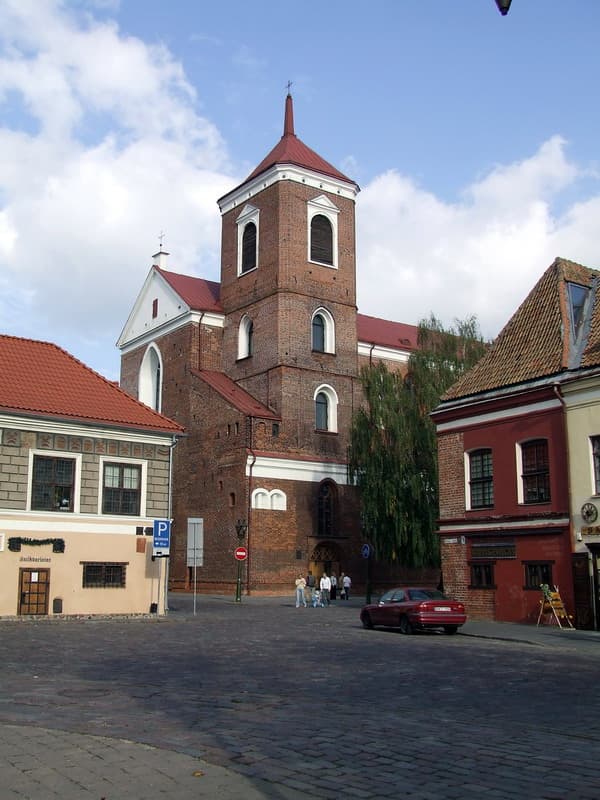
Archcathedral Basilica of SS Peter and Paul
The Archcathedral Basilica of SS Peter and Paul in Kaunas, Lithuania, is the principal church of the Archdiocese of Kaunas and the largest Gothic church in Lithuania. Established by Vytautas the Great, its construction spanned centuries, with significant renovations and stylistic additions, including Gothic, Renaissance, and Rococo elements. It holds historical importance as a site of religious and cultural significance, housing the remains of notable Lithuanian figures.

Archcathedral Basilica of St Stanislaus Bishop and Martyr and St Wenceslas (Wawel Cathedral)
The Archcathedral Basilica of Saint Stanislaus and Saint Wenceslaus, commonly known as Wawel Cathedral, is a near-1,000-year-old Catholic cathedral on Wawel Hill in Kraków, Poland. It has served as the coronation site for Polish monarchs and is a national sanctuary and the seat of the Archbishop of Kraków, symbolizing Polish statehood and faith.
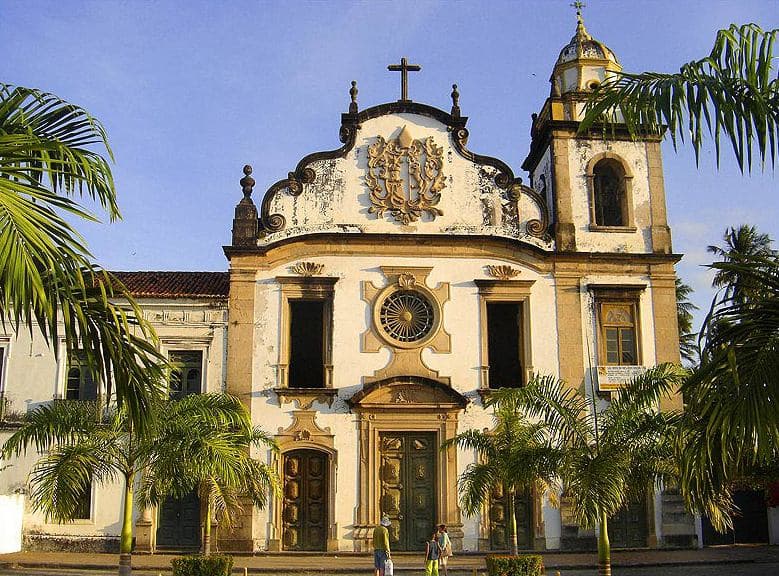
Abbatial Basilica of the Monastery of St Benedict
The Basilica and Monastery of St. Benedict is a significant Baroque architectural complex in Olinda, Pernambuco, Brazil. It is part of the historic center of the city, which is recognized as a UNESCO World Heritage Site. The basilica holds importance for its historical roots in Portuguese colonization and its elevated status as a Minor Basilica.