
Basilica of the Dormition of the Virgin Mary, Hagia Maria Sion Abbey
The Basilica of the Dormition of the Virgin Mary, Hagia Maria Sion Abbey is a Catholic abbey located in Jerusalem on Mount Zion, believed to mark the spot of Mary's earthly end. The current neo-Romanesque basilica was constructed between 1900 and 1910, built on the foundations of earlier Byzantine and Crusader churches, and serves as a significant pilgrimage site.
Key Facts
- ›The site is traditionally believed to be where Mary, mother of Jesus, ended her worldly existence, often referred to as her 'dormition' or 'falling asleep'.
- ›The current basilica, built in an ecclesiastical neo-Romanesque style, was consecrated in 1910.
- ›It stands near the traditional site of the Last Supper in the Cenacle.
- ›The abbey has faced multiple instances of vandalism and desecration by extremist nationalist groups.
- ›The Benedictine community has been present since 1906, enduring internment during various conflicts.
- ›The basilica is part of the foundation 'Hagia Maria Sion' which supports academic work.
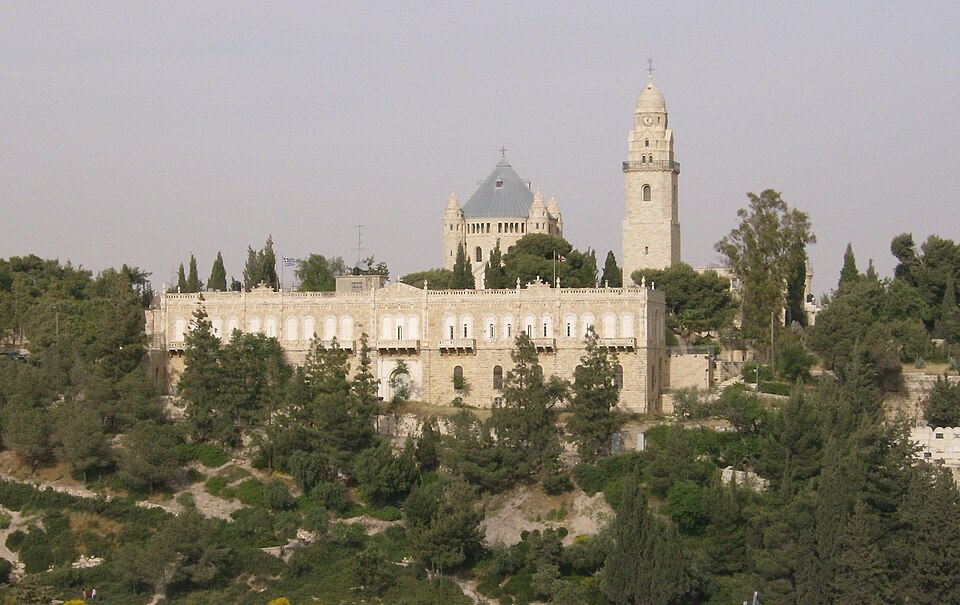
Neo-Romanesque
Relics Attributed To Saint Stephen
Benedictine Order, Beuron Congregation, Congregation of the Annunciation
Heinrich Renard, Theodor Sandel
About Basilica of the Dormition of the Virgin Mary, Hagia Maria Sion Abbey
The Basilica of the Dormition of the Virgin Mary, also known as Hagia Maria Sion Abbey, is a significant Catholic abbey situated in Jerusalem on Mount Zion. This sacred site is traditionally revered as the location where Mary, the mother of Jesus, concluded her earthly journey, an event referred to as her 'dormition' or 'falling asleep'. The current basilica, a striking example of ecclesiastical neo-Romanesque architecture, was constructed between 1900 and 1910.
History and Significance
The history of this site is deeply rooted, with evidence pointing to an earlier Byzantine basilica, Hagia Sion, built in the early 5th century, which housed relics attributed to Saint Stephen. This ancient church was depicted in the 6th-century Madaba Map but was later destroyed in the 7th century. Foundations of this early structure were rediscovered in the late 19th century. A monastic order, the Abbey of Our Lady of Mount Zion, was established here in the 12th century, with a church built on the ruins of the Byzantine structure, though this too was demolished in the 13th century.
The Modern Abbey
The impetus for the current building came when Kaiser Wilhelm II acquired the land in 1898. Architect Heinrich Renard developed the designs, with Theodor Sandel overseeing construction. The basilica was dedicated on April 10, 1910. The building is circular, featuring several altars and a choir, with spiral staircases leading to the crypt, believed to be the site of the Dormition, as well as to the organ loft. Special consideration was given to the proximity of David's Tomb, a sacred place for Jews and Muslims, ensuring the bell tower's shadow would not fall upon it.
Benedictine Community and Challenges
The Benedictine Order has maintained a presence here since 1906, with the community evolving and enduring periods of internment due to geopolitical conflicts. The abbey has also faced challenges from vandalism and desecration by extremist nationalist groups, with incidents of graffiti and damage reported in recent years. Despite these difficulties, the abbey continues its religious and academic work, hosting an ecumenical year of study for theology students.
Source: Wikipedia ↗
Frequently Asked Questions
Where is the Basilica of the Dormition located?
The Basilica of the Dormition is located in Jerusalem, on Mount Zion, just outside the walls of the Old City near the Zion Gate.
What is the significance of the Dormition Abbey?
It is believed to mark the spot where Mary, mother of Jesus, ended her earthly existence. The name 'Dormition' refers to this 'falling asleep' or death.
When was the current basilica built?
Construction of the present basilica was completed in ten years, with the cornerstone laid in 1900 and the dedication taking place on April 10, 1910.
What architectural style is the basilica?
The basilica was built in an ecclesiastical, neo-Romanesque style, which was prevalent in Imperial Germany at the time of its construction.
Has the abbey faced any security issues?
Yes, in recent years the church has been a target for vandalism and desecration by extremist nationalist Israelis, with graffiti and damage reported on several occasions.
What is the history of the site before the current basilica?
The site previously hosted a Byzantine basilica known as Hagia Sion, built in the early 5th century, which was destroyed in 614. A 12th-century church was also built on its ruins before being destroyed in the 13th century.
Related Basilicas

Basilica of the Holy Sepulchre
The Basilica of the Holy Sepulchre, also known as the Church of the Resurrection, is a fourth-century church in Jerusalem believed by Christians to contain the sites of Jesus's crucifixion, burial, and resurrection. It is one of Christianity's holiest sites and has been a major pilgrimage destination since its construction. The church's control is shared among multiple Christian denominations under a complex agreement known as the Status Quo.

Basilica of the Agony (Church of All Nations)
The Basilica of the Agony, also known as the Church of All Nations or Church of Gethsemane, is a Catholic church on the Mount of Olives in East Jerusalem. It is significant for enshrining the bedrock where Jesus is said to have prayed before his arrest and was constructed between 1919 and 1924 with international donations. The church incorporates elements from earlier Byzantine and Crusader structures on the site.

St Anne's Church
The Church of Saint Anne is a French Catholic church located in the Muslim Quarter of Jerusalem's Old City, near the Lions' Gate and the start of the Via Dolorosa. Built between 1131 and 1138, it stands as a significant example of Romanesque architecture and is believed by tradition to be the site of the childhood home of the Virgin Mary. It is part of the French national domain in the Holy Land.