
St Anne's Church
The Church of Saint Anne is a French Catholic church located in the Muslim Quarter of Jerusalem's Old City, near the Lions' Gate and the start of the Via Dolorosa. Built between 1131 and 1138, it stands as a significant example of Romanesque architecture and is believed by tradition to be the site of the childhood home of the Virgin Mary. It is part of the French national domain in the Holy Land.
Key Facts
- ›The current Church of Saint Anne was constructed between 1131 and 1138.
- ›It is built near the remains of a 5th-century Byzantine basilica.
- ›The church is considered an excellent example of Romanesque architecture.
- ›After Saladin's conquest in 1187, the building was converted into an Islamic educational institution (madrasa) in 1192.
- ›In 1856, the Ottoman sultan presented the church to Napoleon III, leading to its restoration by the French government.
- ›Since 1878, it has been administered by the Missionaries of Africa (White Fathers).

Romanesque
Anne, Joachim
- Grotto Believed To Be the Birthplace of the Virgin Mary
Missionaries of Africa
Christophe-Edouard Mauss
About St Anne's Church
The Church of Saint Anne in Jerusalem
The Church of Saint Anne, known in French as Église Sainte-Anne, is a significant French Catholic church situated in the Muslim Quarter of Jerusalem's Old City. Its location is notable, being near the Lions' Gate and at the commencement of the Via Dolorosa, a path of Christian pilgrimage. The site is also recognized as al-Madrasa as-Salahiyya, reflecting its historical use as Saladin's madrasa.
History and Tradition
The grounds where the church stands have a long and layered history. During the Roman era, a pagan shrine dedicated to a god of healing was present. This was followed by a Byzantine basilica constructed in the 5th century, which, despite partial destruction by the Persians in 614, was later restored. In the 12th century, during the Crusader period, a smaller church known as the Moustier was built over the ruins of the Byzantine structure. The current Church of St Anne was erected between 1131 and 1138, during the reign of Queen Melisende. It was built near the remnants of the Byzantine basilica, over a grotto that Crusaders believed to be the childhood home of the Virgin Mary. The church is dedicated to Saint Anne and Joachim, the traditionally recognized parents of the Virgin Mary.
Architectural Significance and Later History
The church is an exemplary specimen of Romanesque architecture, characterized by its three-aisled basilica design, cross-vaulted ceilings, and pillars. Its interior is known for its clear lines and relatively unadorned aesthetic. Unlike many other Crusader churches, St. Anne's was not demolished after Saladin's conquest of Jerusalem in 1187. Instead, in 1192, Saladin converted the building into an Islamic educational institution, the madrasa known as al-Madrasa as-Salahiyya. For centuries, particularly during Ottoman rule, Christian pilgrims could only access the grotto after paying a fee, and the building eventually fell into disrepair.
In 1856, in recognition of French support during the Crimean War, the Ottoman Sultan presented the church to Napoleon III. The French government dispatched architect Christophe-Edouard Mauss in 1862 to oversee its restoration. During these renovations in 1873, Mauss also uncovered the nearby Pools of Bethesda. Since 1878, the church has been administered by the Missionaries of Africa, also known as the 'White Fathers.' The site also served as a seminary for Greek-Catholic priests between 1882 and 1946.
Acoustics and Property Status
The acoustics of the Church of Saint Anne are particularly renowned for their suitability to Gregorian chant, making it a significant site for choirs and soloists. The church is officially listed as one of four French government properties in the Holy Land, forming part of the French national domain. France's stance on East Jerusalem, which it considers occupied territory, has led to diplomatic incidents involving French presidents at the church, underscoring its unique political and historical status.
Source: Wikipedia ↗
Frequently Asked Questions
Where is the Church of Saint Anne located?
The Church of Saint Anne is located in the Muslim Quarter of the Old City of Jerusalem, near the Lions' Gate and close to the beginning of the Via Dolorosa. It is part of the French national domain in the Holy Land.
What is the historical significance of the Church of Saint Anne?
The site has a long history, with a pagan shrine from the Roman period and a Byzantine basilica. During the Crusader period, a church was built here, believed to be over the grotto where the Virgin Mary spent her childhood. Later, it was converted into an Islamic madrasa before being restored by the French.
What architectural style is the Church of Saint Anne?
The Church of Saint Anne is an excellent example of Romanesque architecture. It features a three-aisled basilica design with cross-vaulted ceilings, pillars, and clear, unadorned lines.
Who administers the Church of Saint Anne today?
Since 1878, the Church of Saint Anne has been administered by the Missionaries of Africa, a Catholic order commonly known as the 'White Fathers'.
What is special about the acoustics of the church?
The church's acoustics are particularly well-suited for Gregorian chant. This makes it a pilgrimage destination for soloists and choirs interested in this form of music.
Related Basilicas
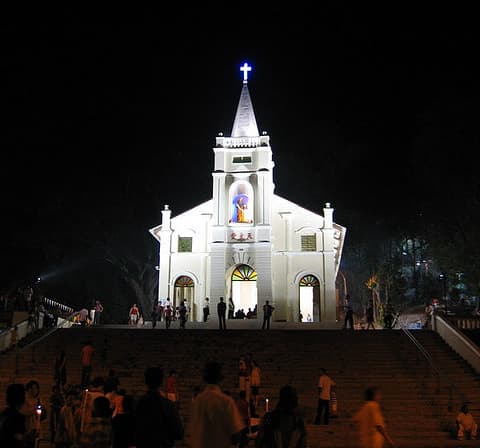
Church of Saint Anne
The Minor Basilica of St. Anne is a significant Roman Catholic church located in Bukit Mertajam, Penang, Malaysia. It is a major pilgrimage site, drawing over 100,000 visitors annually for the feast of St. Anne, and was officially designated as a Minor Basilica by Pope Francis in 2019.

Basilica of the Agony (Church of All Nations)
The Basilica of the Agony, also known as the Church of All Nations or Church of Gethsemane, is a Catholic church on the Mount of Olives in East Jerusalem. It is significant for enshrining the bedrock where Jesus is said to have prayed before his arrest and was constructed between 1919 and 1924 with international donations. The church incorporates elements from earlier Byzantine and Crusader structures on the site.
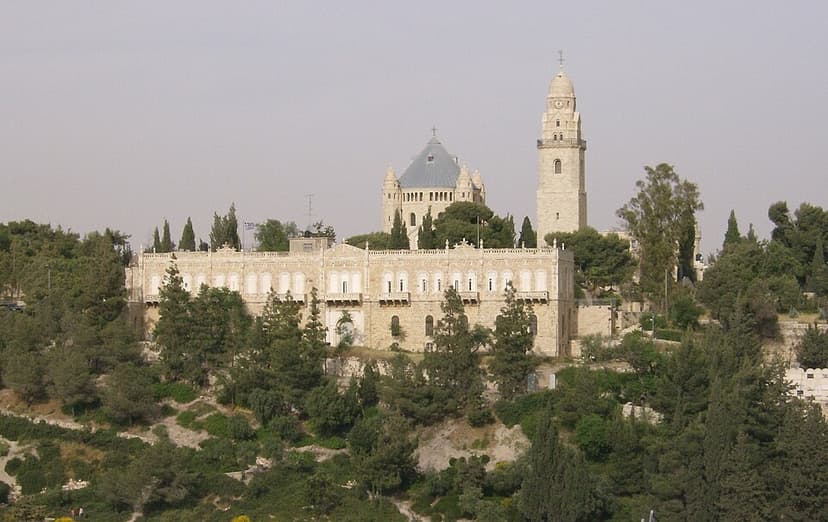
Basilica of the Dormition of the Virgin Mary, Hagia Maria Sion Abbey
The Basilica of the Dormition of the Virgin Mary, Hagia Maria Sion Abbey is a Catholic abbey located in Jerusalem on Mount Zion, believed to mark the spot of Mary's earthly end. The current neo-Romanesque basilica was constructed between 1900 and 1910, built on the foundations of earlier Byzantine and Crusader churches, and serves as a significant pilgrimage site.