
Basilica of the Annunciation
Israel·Nazareth
The Basilica of the Annunciation is a Catholic church located in Nazareth, Israel, venerated as the site of the Annunciation, where the Angel Gabriel announced to the Virgin Mary that she would conceive Jesus. It is built over what Catholic tradition holds to be the house of Mary and is the largest Christian church building in the Middle East. The current structure, completed in 1969, stands on the foundations of earlier churches dating back to the Byzantine and Crusader periods.
Key Facts
- ›Catholic tradition identifies the site as the home of the Virgin Mary and the location of the Annunciation.
- ›The current basilica was built between 1960 and 1969, designed by Italian architect Giovanni Muzio.
- ›It stands on the ruins of earlier Byzantine and Crusader churches, with parts of these older structures incorporated into the design.
- ›The lower level features the Grotto of the Annunciation, believed to be part of Mary's original home.
- ›The upper level displays mosaics of the Virgin Mary contributed by Catholic communities from various countries.
- ›The basilica is the largest Christian church building in the Middle East and is under the supervision of the Congregation for the Oriental Churches.

Italian Brutalism
House of the Virgin Mary
Franciscans
Giovanni Muzio
About Basilica of the Annunciation
Overview
The Basilica of the Annunciation is a Roman Catholic church located in Nazareth, Israel, revered as the site where the Angel Gabriel announced to the Virgin Mary that she would conceive Jesus. This tradition holds that the basilica is built over the very house where Mary lived. It is considered one of the most sacred sites in Christianity, particularly for Catholics, and is one of two churches claiming the site of the Annunciation, the other being the Greek Orthodox Church of the Annunciation.
History and Significance
Christian tradition suggests that a shrine was established at the site as early as the time of Emperor Constantine I, with some form of the church known to exist around 570 AD. During the Crusades, a larger church was built over the Byzantine ruins, which was expanded in the 1170s but never fully completed. This Crusader church was destroyed in 1260 by the Mamluk army. Following periods of Franciscan presence and expulsion, a small structure enclosing the holy grotto was built in 1620. A new church was permitted in 1730 and enlarged in 1877.
The current basilica, designed by Italian architect Giovanni Muzio, was constructed between 1960 and 1969, replacing the older church demolished in 1954. It is built in a style sometimes characterized as Italian Brutalism and is the largest Christian church building in the Middle East. The basilica remains under the control of the Franciscans and is used by the Latin parish. It has been visited by several Popes, including Paul VI in 1964 and John Paul II in 2000.
Description and Features
The modern basilica is a two-story building completed in 1969. The lower level houses the Grotto of the Annunciation, believed to be the remnants of Mary's childhood home. The upper level is adorned with numerous images of Mary, primarily mosaics contributed by Catholic communities from various countries. The courtyard features a gallery of icons representing important Marian devotions from around the world.
Ecclesiastical Rank
Under Canon Law, the Church of the Annunciation holds the status of a minor basilica. It attracts a significant number of Catholic, Anglican, and Eastern Orthodox Christian visitors annually, making it a historically significant site for Christian pilgrimage.
Source: Wikipedia ↗
Frequently Asked Questions
What is the significance of the Basilica of the Annunciation?
The basilica is significant as it is traditionally believed to be built over the house of the Virgin Mary and the site where the Angel Gabriel announced Jesus's conception. It is a major pilgrimage site for Catholics and other Christians.
When was the current Basilica of the Annunciation built?
The current basilica was constructed between 1960 and 1969, replacing an older church that was demolished in 1954. It was designed by Italian architect Giovanni Muzio.
What is located in the lower church of the Basilica?
The lower level of the basilica contains the Grotto of the Annunciation, which is believed by many Christians to be the remnants of the original childhood home of the Virgin Mary.
What can be seen in the upper church and courtyard of the Basilica?
The upper level of the basilica features numerous images of Mary, primarily mosaics, each representing a different country with a significant Catholic population. The courtyard gallery also showcases icons of important Marian devotions from various nations.
Does the Basilica of the Annunciation have any special ecclesiastical status?
Yes, under Canon Law, the Church of the Annunciation holds the status of a minor basilica. It is also the largest Christian church building in the Middle East.
Related Basilicas
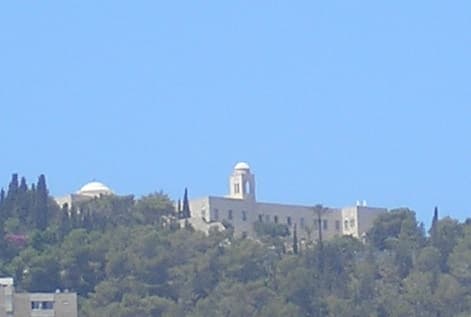
Basilica of Our Lady, Star of the Sea, Stella Maris Carmelite Monastery
The Basilica of Our Lady, Star of the Sea, Stella Maris Carmelite Monastery, also known as the Monastery of Our Lady of Mount Carmel, is a significant Catholic pilgrimage site located on Mount Carmel in Haifa, Israel. It is renowned for housing the Cave of Elijah, a grotto traditionally associated with the prophet Elijah, and serves as a spiritual center for Discalced Carmelite friars.
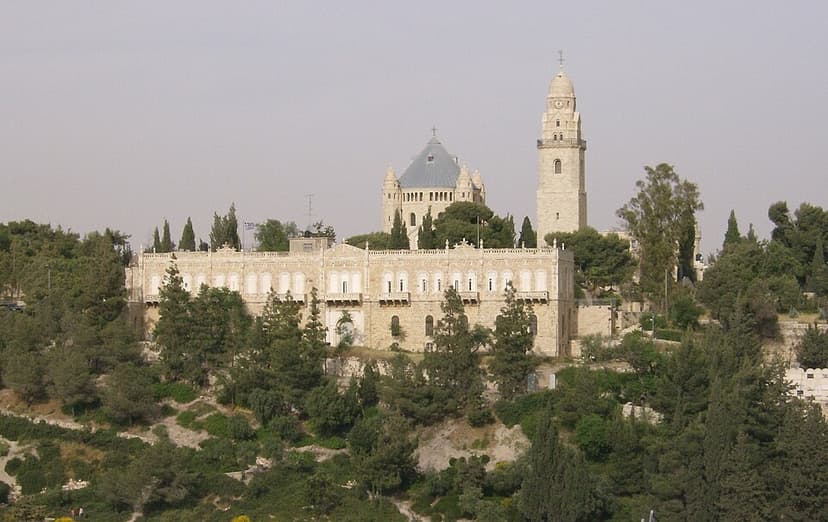
Basilica of the Dormition of the Virgin Mary, Hagia Maria Sion Abbey
The Basilica of the Dormition of the Virgin Mary, Hagia Maria Sion Abbey is a Catholic abbey located in Jerusalem on Mount Zion, believed to mark the spot of Mary's earthly end. The current neo-Romanesque basilica was constructed between 1900 and 1910, built on the foundations of earlier Byzantine and Crusader churches, and serves as a significant pilgrimage site.

Basilica of the Holy Sepulchre
The Basilica of the Holy Sepulchre, also known as the Church of the Resurrection, is a fourth-century church in Jerusalem believed by Christians to contain the sites of Jesus's crucifixion, burial, and resurrection. It is one of Christianity's holiest sites and has been a major pilgrimage destination since its construction. The church's control is shared among multiple Christian denominations under a complex agreement known as the Status Quo.