
Basilica of St Mary of Guadalupe, Royal Monastery of St Mary of Guadalupe
Spain·Guadalupe
The Royal Monastery of Saint Mary of Guadalupe is a significant Roman Catholic monastic establishment in Guadalupe, Extremadura, Spain, with origins in the late 13th century. It served as a principal house for the Hieronymite monks and later the Franciscan Order, playing a crucial role in Spanish history and developing a rich association with the New World, most notably as a pilgrimage site for Christopher Columbus. Declared a UNESCO World Heritage Site in 1993 and a Minor Papal Basilica in 1955, it remains an important religious and historical monument.
Key Facts
- ›The monastery's origins trace back to the discovery of a statue of the Blessed Virgin in the late 13th century.
- ›King Alfonso XI declared the church a royal sanctuary and initiated extensive rebuilding after a victory attributed to the Virgin's intercession.
- ›The Hieronymite monks took over the monastery in 1389, continuing construction and establishing it as their principal house.
- ›Christopher Columbus made his first pilgrimage to the monastery after discovering America in 1492.
- ›Pope Pius XII declared the shrine a 'Minor Papal Basilica' in 1955.
- ›The monastery was declared a UNESCO World Heritage Site in 1993.

MudéJar, Gothic, Baroque, Plateresque
Statue of the Madonna, Ivory Christ Attributed To Michelangelo
Hieronymites, Franciscan Order
Egas Cueman
About Basilica of St Mary of Guadalupe, Royal Monastery of St Mary of Guadalupe
Royal Monastery of Saint Mary of Guadalupe
The Royal Monastery of Saint Mary of Guadalupe, known in Spanish as Real Monasterio de Santa María de Guadalupe, is a historic Roman Catholic monastic complex situated in Guadalupe, Extremadura, Spain. Its origins date to the late 13th century, stemming from the discovery of a statue of the Blessed Virgin by a shepherd. The site gained royal patronage under King Alfonso XI, who initiated significant rebuilding efforts after attributing a military victory to the Virgin's intercession.
History and Development
In 1389, the Hieronymite monks took stewardship of the monastery, making it their primary establishment and continuing extensive construction. The monastery became a significant royal sanctuary and a center of religious life. It holds a notable connection to the Age of Discovery, as Christopher Columbus made his first pilgrimage to the site in 1492 following his successful voyages to the Americas. Even after the founding of the more proximate Monastery of El Escorial, Santa María de Guadalupe retained its royal favor. It remained one of Spain's most important monastic institutions until the confiscation of monasteries in 1835. In the 20th century, the Franciscan Order revived the monastery, and in 1955, Pope Pius XII conferred upon the shrine the status of a Minor Papal Basilica.
Architectural Significance
The monastery's architecture is a testament to its centuries of development, featuring a blend of styles. The main church, the Templo Mayor, was constructed by Alfonso XI and his successors during the 14th and 15th centuries. The complex includes the 15th-century chapel of Santa Catalina, a baroque sacristy dating from 1638–1647 adorned with paintings by Zurbarán, and the octagonal baroque Camarin de la Virgen (1687–1696) featuring works by Luca Giordano. Notable cloisters include the Mudéjar cloister (1389–1405) and a later Gothic cloister. The monastery also houses museums displaying liturgical vestments, ancient books, paintings by masters like Goya and El Greco, and sculptures.
Recognition
In recognition of its historical and cultural importance, the Royal Monastery of Saint Mary of Guadalupe was declared a UNESCO World Heritage Site in 1993. It continues to be an active religious site and a significant monument, attracting visitors interested in its history, art, and spiritual heritage.
Source: Wikipedia ↗
Frequently Asked Questions
What is the historical significance of the Royal Monastery of Saint Mary of Guadalupe?
The monastery was a major religious and cultural center in Spain for over four centuries, serving as a royal sanctuary and a principal house for the Hieronymite monks. It also holds significance for the New World, as Christopher Columbus made his first pilgrimage there after discovering America.
When was the Royal Monastery of Saint Mary of Guadalupe built?
Construction of the monastery began in the 14th century, with significant additions and developments occurring throughout the following centuries. Key structures like the Templo Mayor were built in the 14th and 15th centuries.
What architectural styles can be found at the monastery?
The monastery exhibits a range of architectural styles reflecting its long construction history, including Romanesque (in its origins), Gothic, Mudéjar, and Baroque elements. Notable examples include the Mudéjar cloister and the Baroque sacristy and Camarin de la Virgen.
Is the Royal Monastery of Saint Mary of Guadalupe a UNESCO World Heritage Site?
Yes, UNESCO declared the Royal Monastery of Saint Mary of Guadalupe a World Heritage Site in 1993, recognizing its outstanding universal value.
What important religious relics or artworks are housed in the monastery?
The monastery houses the statue of the Madonna that gave it its name, and its museums contain liturgical vestments, ancient manuscripts, and notable paintings by artists like Zurbarán, Goya, and El Greco. There is also an ivory Christ attributed to Michelangelo.
Related Basilicas

Basilica of the Assumption of the Blessed Virgin Mary Queen of Poland (St Mary's Basilica)
The Basilica of the Assumption of the Blessed Virgin Mary Queen of Poland, commonly known as St. Mary's Basilica, is a historic Roman Catholic parish church in Kraków, Poland. It is a prime example of Brick Gothic architecture, renowned for its 14th-century wooden altarpiece by Veit Stoss and its hourly trumpet signal, the Hejnał mariacki. The basilica holds significant religious and cultural importance, serving as a model for Polish diaspora churches and recognized as a UNESCO World Heritage Site.
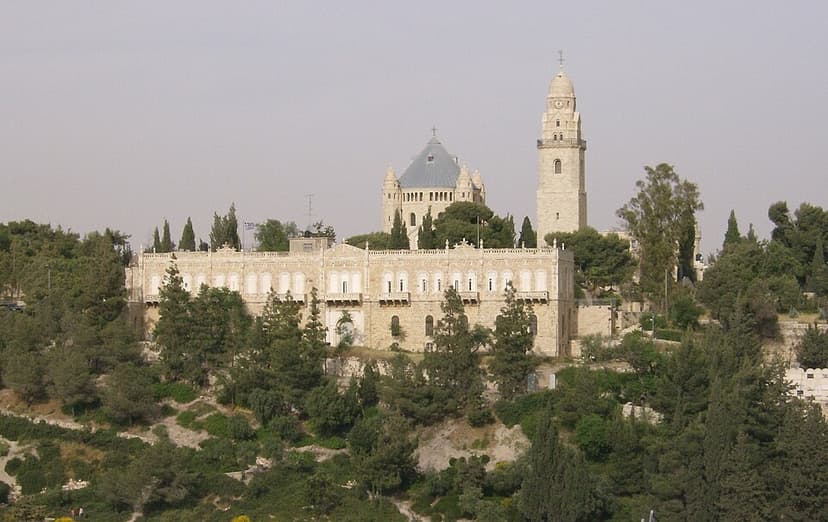
Basilica of the Dormition of the Virgin Mary, Hagia Maria Sion Abbey
The Basilica of the Dormition of the Virgin Mary, Hagia Maria Sion Abbey is a Catholic abbey located in Jerusalem on Mount Zion, believed to mark the spot of Mary's earthly end. The current neo-Romanesque basilica was constructed between 1900 and 1910, built on the foundations of earlier Byzantine and Crusader churches, and serves as a significant pilgrimage site.

Our Lady of Victories Basilica, Camberwell
Our Lady of Victories Basilica in Camberwell, Melbourne, is a prominent Roman Catholic church distinguished by its Romanesque Revival architecture and a striking copper-clad dome topped with a statue of the Blessed Virgin Mary. It holds the significant status of a Minor Basilica, making it one of only five such churches in Australia.