
Basilica of St Lawrence, El Escorial
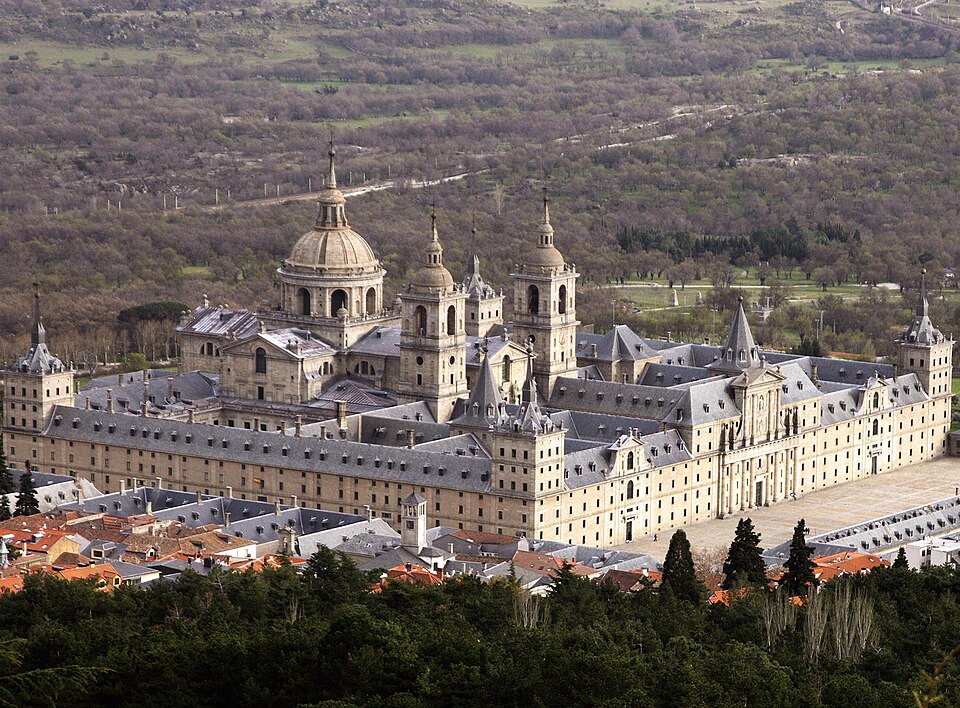
The Royal Site of San Lorenzo de El Escorial, commonly known as El Escorial, is a vast historical complex in Spain that includes a basilica, royal palace, monastery, and pantheon. Commissioned by King Philip II and built between 1563 and 1584, it was designed as a monument to Spain's role as a center of the Christian world and a royal necropolis. Its unique grid-like architecture, inspired by various historical models including the Temple of Solomon, established a new architectural style known as Herrerian.
Key Facts
- ›Built between 1563 and 1584 by order of King Philip II of Spain.
- ›Serves as a monastery, basilica, royal palace, pantheon, library, museum, university, school, and hospital.
- ›Its grid-like floor plan is traditionally believed to honor Saint Lawrence, who was martyred on a grill.
- ›The design is also thought to be influenced by descriptions of the Temple of Solomon.
- ›It is the burial site for most Spanish kings of the last five centuries.
- ›Declared a UNESCO World Heritage Site in 1984.
Renaissance, Herrerian
Saint Lawrence
Hieronymites, Order of Saint Augustine
Juan Bautista De Toledo, Juan De Herrera
About Basilica of St Lawrence, El Escorial
The Royal Site of San Lorenzo de El Escorial
The Royal Site of San Lorenzo de El Escorial, commonly referred to as El Escorial, is a monumental historical complex located in San Lorenzo de El Escorial, Spain, northwest of Madrid. Built between 1563 and 1584 by order of King Philip II, El Escorial is a vast structure that encompasses a basilica, a royal palace, a monastery, a royal pantheon, a library, a museum, a university, a school, and a hospital. It was conceived as a tribute to Spain's dominance in the Christian world and as a royal necropolis for the Spanish monarchs and their families.
Conception and Design
King Philip II commissioned the construction of El Escorial to commemorate the Spanish victory at the Battle of St. Quentin in 1557. The austere location at the foot of Mount Abantos was chosen for its isolation, and the design was intended to be architecturally distinct from contemporary buildings, reflecting Philip II's dual aspirations of being both a monk and a monarch. The complex's imposing, orthogonal, stronghold-like structure features a grid-like floor plan, which is traditionally believed to be an homage to Saint Lawrence, martyred on a grill. However, contemporary theories suggest influences from classical and Eastern architectural designs, particularly the descriptions of the Temple of Solomon by Flavius Josephus, lending further weight to its symbolic significance.
Architecture and Features
The architectural style that emerged from El Escorial is known as Herrerian, named after its principal architect, Juan de Herrera. The building is constructed primarily from locally quarried gray granite, characterized by its square, sparsely ornamented, and austere exterior, giving it a fortress-like appearance. The basilica, the central edifice, was initially planned as a Latin cross but was modified by Herrera to a Greek cross form, topped by a large dome. The basilica houses significant artworks, including frescoes by Luca Giordano and paintings by masters such as Velázquez and Titian. The Royal Pantheon, located beneath the basilica, is an octagonal Baroque mausoleum where most Spanish monarchs from Charles I onwards are interred, alongside the Pantheon of the Princes for other royal family members.
Legacy and Significance
El Escorial has served as the burial site for Spanish royalty for over five centuries and remains a significant symbol of Spanish history, power, and religious devotion. Its vast collection of art, including works by Titian, El Greco, and Velázquez, makes it an important repository of European art. In recognition of its historical and cultural importance, the Royal Site of San Lorenzo de El Escorial was declared a UNESCO World Heritage Site in 1984. It continues to attract over 500,000 visitors annually, serving as a popular tourist attraction and a testament to the grandeur of the Spanish Empire.
Source: Wikipedia ↗
Frequently Asked Questions
What is El Escorial?
El Escorial is a historical royal site in Spain that encompasses a monastery, basilica, royal palace, and pantheon. It was built by King Philip II to commemorate a Spanish victory and serve as a monument to Spain's Christian identity.
When was El Escorial built?
Construction of El Escorial began on April 23, 1563, and was completed in 1584, taking slightly less than 21 years. The project was overseen by architects Juan Bautista de Toledo and later Juan de Herrera.
What is the architectural style of El Escorial?
El Escorial is primarily built in the Renaissance style, but its unique design, characterized by its austere, fortress-like appearance and grid-like layout, established a distinct Spanish Renaissance architectural style known as Herrerian.
What is the significance of the grid-like floor plan?
The gridiron floor plan is traditionally attributed to an honorific tribute to Saint Lawrence, who was martyred by being roasted on a grill. However, the design's origins are debated, with theories suggesting influences from Byzantine, Arab, and ancient Jewish architecture, particularly the Temple of Solomon.
Who is buried at El Escorial?
El Escorial serves as the necropolis for most Spanish monarchs of the last five centuries, including the Habsburg and Bourbon dynasties, from Charles I to Alfonso XIII. It also houses the Pantheon of the Princes for other royal family members.
Is El Escorial a UNESCO World Heritage Site?
Yes, the Royal Site of San Lorenzo de El Escorial was declared a UNESCO World Heritage Site on November 2, 1984. This designation recognizes its immense historical and cultural significance.
Related Basilicas

Basilica of the Holy Cross, Valle de los Caídos
The Basilica of the Holy Cross, Valle de los Caídos, also known as the Valley of Cuelgamuros, is a monumental memorial site in Spain dedicated to the memory of those who died in the Spanish Civil War. Commissioned by dictator Francisco Franco and constructed between 1940 and 1958, it features a massive basilica hewn into a granite ridge and the world's tallest memorial cross. The site has been a subject of controversy due to its association with Franco's regime and its use of convict labor.
Basilica of St Mary of Poblet, Royal Monastery of Poblet
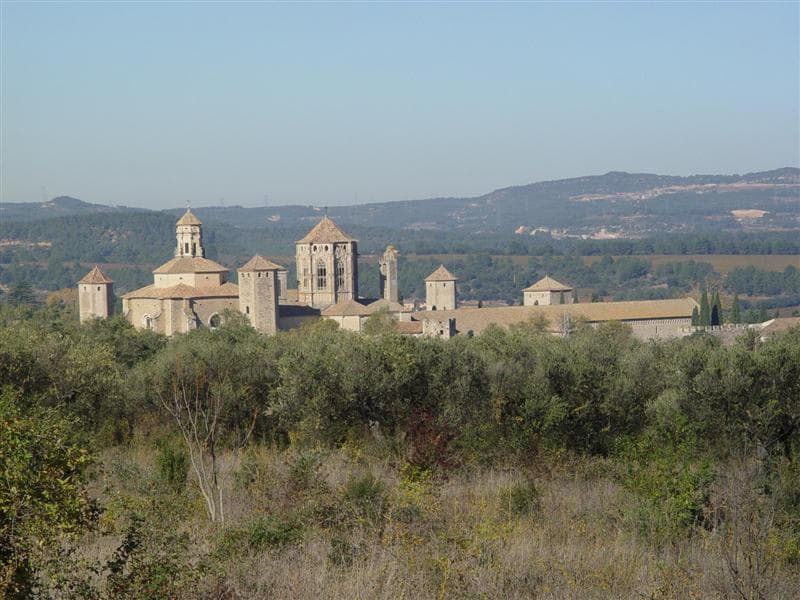
The Royal Abbey of Santa Maria de Poblet, commonly known as Poblet Abbey, is a significant Cistercian monastery in Catalonia, Spain, founded in 1151. It served as a royal pantheon for the kings of the Crown of Aragon and was a major religious and economic center, housing over 300 monks at its peak. Despite periods of ruin and rebuilding, it remains a UNESCO World Heritage Site and an active monastic community.

Metropolitan Cathedral Basilica of St James of Compostela
The Metropolitan Cathedral Basilica of St James of Compostela is a renowned Romanesque cathedral in Galicia, Spain, serving as a pivotal site for Christian pilgrimage on the Way of St James. It is famed as the reputed burial place of Saint James the Great, one of Jesus Christ's apostles, making it one of the few churches globally built over an apostle's tomb.