
Metropolitan Cathedral Basilica of St James of Compostela
Spain·Santiago de Compostela·Metropolitan Archdiocese of Santiago de Compostela
The Metropolitan Cathedral Basilica of St James of Compostela is a renowned Romanesque cathedral in Galicia, Spain, serving as a pivotal site for Christian pilgrimage on the Way of St James. It is famed as the reputed burial place of Saint James the Great, one of Jesus Christ's apostles, making it one of the few churches globally built over an apostle's tomb.
Key Facts
- ›Reputed burial place of Saint James the Great, an apostle of Jesus Christ.
- ›A significant site for Christian pilgrimage on the Way of St James since the Early Middle Ages.
- ›Primarily a Romanesque structure, with notable Gothic and Baroque additions.
- ›Construction of the present cathedral began in 1075 and was consecrated in 1211.
- ›Houses the Pórtico da Gloria, a masterpiece of Romanesque sculpture completed by Master Mateo in 1188.
- ›Integral component of the Santiago de Compostela World Heritage Site.

Romanesque, Gothic, Baroque
Reputed Tomb of Saint James the Great
Bernard the Elder, Robertus Galperinus, Esteban, Bernard the Younger, Master Mateo, Fernando De Casas Novoa, Lucas Ferro Caaveiro, Domingo Lois Monteagudo, Clemente FernáNdez Sarela, José De Vega Y Verdugo, José De La PeñA De Toro, Domingo De Andrade
About Metropolitan Cathedral Basilica of St James of Compostela
The Metropolitan Cathedral Basilica of St James of Compostela, also known as the Santiago de Compostela Archcathedral Basilica, stands as a paramount religious and architectural landmark in Galicia, Spain. It is an integral component of the Santiago de Compostela World Heritage Site and holds immense significance as the reputed burial place of Saint James the Great, one of the twelve apostles of Jesus Christ. This makes it one of the few churches globally constructed over the tomb of an apostle, placing it in a unique category alongside sites like St. Peter's Basilica in Vatican City.
History and Pilgrimage
For centuries, the cathedral has been a central destination for Christian pilgrims undertaking the Way of St James, marking the traditional end point of this ancient pilgrimage route. The legend of the tomb's rediscovery in AD 814 by Pelagius the Hermit, guided by celestial lights, initiated the site's development. Early chapels and churches were erected, with a pre-Romanesque church ordered by King Alfonso III of León in AD 899 significantly contributing to its growth as a pilgrimage center.
Despite the destruction of an earlier church by Al-Mansur Ibn Abi Aamir in 997, Saint James's tomb and relics remained undisturbed. The current cathedral's construction commenced in 1075 under King Alfonso VI of Castile and Bishop Diego Peláez, following a plan similar to the Romanesque church of Saint-Sernin in Toulouse. Built predominantly in granite, its construction saw contributions from master architects like Bernard the elder and Master Mateo. The cathedral was consecrated in 1211, with King Alfonso IX of León in attendance. Over subsequent centuries, it was expanded and embellished with Gothic and Baroque additions, reflecting evolving architectural tastes and the growing importance of the site.
Architectural Significance
The cathedral is a remarkable example of Romanesque architecture, characterized by its cruciform plan, barrel-vaulted nave, and radiating chapels. It is recognized as the largest Romanesque church in Spain and one of the most extensive in Europe. The edifice showcases a complex layering of styles, with notable Gothic elements and elaborate Baroque façades added during 16th, 17th, and 18th-century renovations.
Key architectural features include the Pórtico da Gloria, a masterpiece of Romanesque sculpture completed by Master Mateo in 1188, which serves as the western entrance. Other significant façades include the southern das Pratarías, the northern da Acibecharía (with a Romanesque portal rebuilt in Baroque and Neoclassical styles), and the eastern da Quintana, featuring the Royal Gate and the Holy Door. The cathedral also boasts imposing bell towers and the distinctive Clock Tower, also known as Torre da Trindade or Berenguela.
Notable Features
The interior of the cathedral is noted for its original Romanesque layout, comprising a nave, two aisles, a wide transept, and a choir with chapels. While initially presenting an impression of austerity, further exploration reveals magnificent elements like the organ. The Pórtico da Gloria, in particular, is celebrated for its intricate sculptural program, depicting Christ in Majesty, the Tetramorph, the Elders of the Apocalypse, and the Tree of Jesse. The mullion of the central arch features a depiction of Saint James himself, and at its base, a figure popularly known as Santo dos Croques represents Master Mateo, the architect.
The Porta Santa, or Holy Door, on the Quintana façade is a significant feature, opened only during Jacobean Holy Years. Pilgrims entering through this door can receive a plenary indulgence. The Berenguela Tower's lantern is illuminated throughout these holy years, acting as a beacon for pilgrims.
The cathedral's dimensions are substantial, measuring 97 meters in length and 22 meters in height for the nave. Its enduring status as a pilgrimage destination and its rich architectural and historical heritage solidify its importance in both religious and cultural spheres.
Source: Wikipedia ↗
Frequently Asked Questions
Where is the Metropolitan Cathedral Basilica of St James of Compostela located?
The cathedral is located in Santiago de Compostela, within the autonomous community of Galicia, Spain.
What is the historical significance of this basilica?
It is historically significant as the reputed burial place of Saint James the Great and has been a major Christian pilgrimage destination on the Way of St James since the Early Middle Ages.
What architectural styles are present in the cathedral?
The cathedral is primarily a Romanesque structure, but it also features significant Gothic and Baroque additions and modifications from later centuries.
When was the current cathedral consecrated?
The present cathedral was consecrated in 1211, with construction having begun in 1075.
What is the Pórtico da Gloria?
The Pórtico da Gloria is a celebrated Romanesque portico of the cathedral, created by Master Mateo and his workshop and completed in 1188. It is renowned for its intricate sculptures depicting biblical scenes and figures.
Can pilgrims enter the cathedral through a special gate?
Yes, during a Jacobean Holy Year, pilgrims can enter through the Porta Santa (Holy Door) to gain a plenary indulgence.
Related Basilicas

Cathedral of St James
The Cathedral of St. James in Šibenik, Croatia, is a significant architectural monument of the Renaissance and a UNESCO World Heritage Site. Constructed entirely of stone between 1431 and 1536, it is renowned for its innovative construction techniques, monumental stone dome, and the unique frieze of carved human heads encircling its apses, which are believed to be individual portraits of people from Dalmatia at the time.

Basilica and Expiatory Church of the Holy Family
The Basilica and Expiatory Church of the Holy Family (Sagrada Família) is a Roman Catholic church in Barcelona, Spain, renowned for its complex and unique design by Antoni Gaudí. Construction began in 1882, and Gaudí dedicated his life to the project, transforming it with a blend of Gothic and Art Nouveau styles. It is the tallest church in the world, with its central tower reaching 172.5 meters, and parts of it have been designated a UNESCO World Heritage Site.
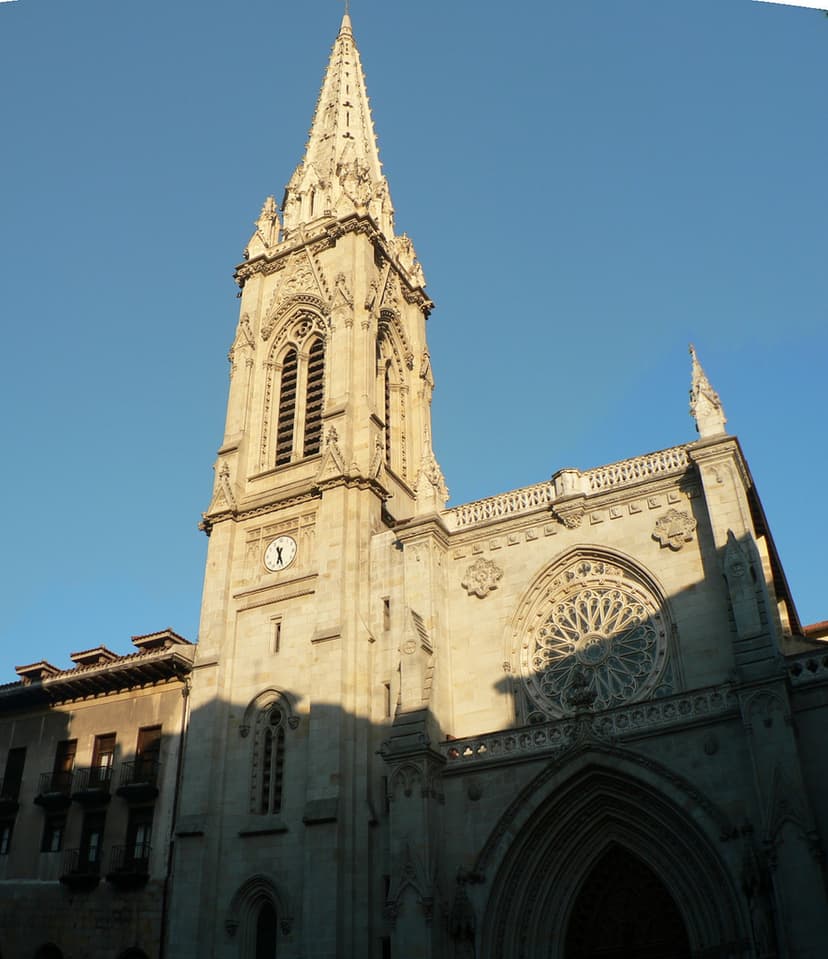
Cathedral of St James the Apostlel (Santiago Cathedral)
The Cathedral Basilica of Saint James in Bilbao, Spain, is a Catholic cathedral dedicated to the apostle James the Great. It holds significance as a transit point for pilgrims on the Northern Way of the Camino de Santiago and was designated a UNESCO World Heritage Site in 2015. Originally the city's main parish church, construction began in the 14th century, making it one of Bilbao's oldest surviving buildings.