
Basilica of St Felix
Spain·Girona·Girona
The Collegiate Church of St. Felix, also known as Sant Feliu, is a prominent basilica in Girona, Spain, dedicated to Saint Felix. It served as Girona's principal church before the cathedral and boasts a rich architectural history, spanning Romanesque, Gothic, and Baroque styles. The basilica is particularly significant for its collection of ancient sarcophagi and the tomb of Narcissus of Girona.
Key Facts
- ›Construction of the basilica spanned from the 12th century to the 17th century.
- ›It retains significant elements of Romanesque construction, with later additions of a Gothic nave and Baroque facade.
- ›The basilica houses eight Roman and early Christian sarcophagi dating from the 3rd and 4th centuries.
- ›It contains the Gothic tomb of Narcissus of Girona, traditionally considered an early bishop of the see.
- ›Sant Feliu was the main church of Girona before the construction of the Girona Cathedral.
- ›It is located in the Roman Catholic Diocese of Girona.
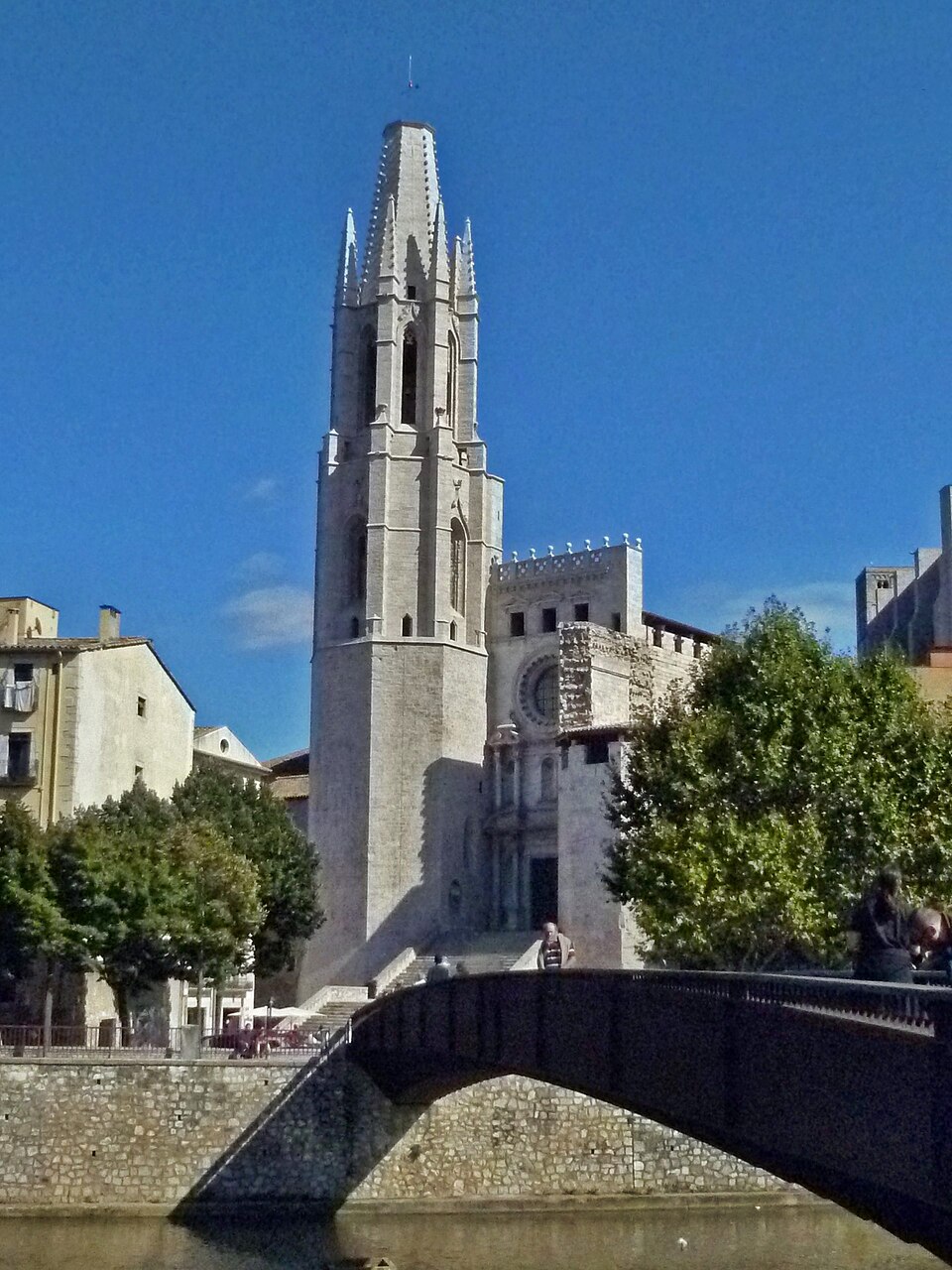
Romanesque, Gothic, Baroque
Felix of Girona
Eight Roman and Early Christian Sarcophagi, Gothic Tomb of Narcissus of Girona
About Basilica of St Felix
Collegiate Church of St. Felix
The Collegiate Church of St. Felix, known in Catalan as Col·legiata de Sant Feliu, is a significant basilica located in the city of Girona, Spain. Dedicated to Saint Felix of Girona, the church has roots reaching back to the early days of Christianity in the region. For a considerable period, it served as the main church of Girona, holding precedence before the construction of the Girona Cathedral.
Architectural Evolution
The construction of Sant Feliu, undertaken in honor of Felix of Girona, commenced in the 12th century and continued through to the 17th century. This extended building period has resulted in a rich tapestry of architectural styles. The basilica retains substantial elements of its original Romanesque construction. Later phases of development saw the addition of a Gothic nave, and the structure is crowned with a covered Baroque facade, showcasing a remarkable evolution over centuries.
Historical and Religious Significance
Beyond its architectural merit, the Collegiate Church of St. Felix is renowned for its important historical and religious artifacts. It houses eight sarcophagi, dating from the 3rd and 4th centuries, which are of both Roman and early Christian origin. These ancient stone coffins offer valuable insights into funerary practices and the early Christian community in Girona. Additionally, the basilica contains the Gothic tomb of Narcissus of Girona, a figure traditionally recognized as one of the early bishops of the see. The church currently houses the offices of the Parish of Sant Feliu and belongs to the Roman Catholic Diocese of Girona.
Source: Wikipedia ↗
Frequently Asked Questions
What is the Basilica of St Felix known for?
The Basilica of St Felix is known for its significant architectural evolution, incorporating Romanesque, Gothic, and Baroque styles. It is also notable for housing eight ancient sarcophagi from the Roman and early Christian periods and the Gothic tomb of Narcissus of Girona.
When was the Basilica of St Felix built?
Construction of the Basilica of St Felix began in the 12th century and continued until the 17th century, showcasing a long period of development and stylistic layering.
What historical periods are represented in the basilica's architecture?
The basilica exhibits a blend of architectural styles, with much of its original Romanesque construction still present. It was later enhanced with a Gothic nave and a covered Baroque facade.
What ancient artifacts are housed in the Basilica of St Felix?
The basilica is home to eight Roman and early Christian sarcophagi that date back to the 3rd and 4th centuries. These artifacts provide a glimpse into the early Christian history of the region.
What is the significance of Narcissus of Girona in relation to the basilica?
The Basilica of St Felix contains the Gothic tomb of Narcissus of Girona. According to tradition, he was one of the early bishops of the see, making his tomb a significant relic within the church.
What was the role of the Basilica of St Felix in Girona's history?
The Basilica of St Felix was historically the main church of Girona. It held this primary ecclesiastical position before the construction of the current Girona Cathedral.
Related Basilicas

Basilica of St Mary of the Pine
The Basilica of St Mary of the Pine, known in Catalan as Santa Maria del Pi, is a significant 15th-century Gothic church located in Barcelona, Spain. It stands as a prominent example of Catalan Gothic architecture, characterized by its single nave and minimal ornamentation. The basilica has a long history marked by damage from earthquakes, wars, and fires, necessitating several reconstructions and restorations throughout the centuries.
Basilica of St Mary of the Sea
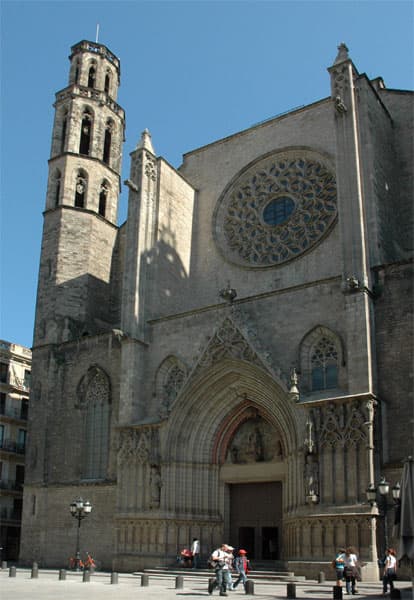
The Basilica of St Mary of the Sea, known in Catalan as Santa Maria del Mar, is a prominent church in Barcelona, Spain, constructed between 1329 and 1383. It stands as a remarkable example of Catalan Gothic architecture, distinguished by its stylistic purity and unity. The basilica holds significance as a testament to the maritime and mercantile power of the Principality of Catalonia during the medieval period, and notably, its construction was supported by the common people rather than the nobility.

Basilica of St Mary the Royal
The Basilica of St Mary the Royal, officially known as Basílica de Santa María la Real de Covadonga, is a Neo-Romanesque Catholic church located in Covadonga, Asturias, Spain. Designated a basilica in 1901, it serves as a monumental sanctuary built to replace an older temple destroyed by fire in 1777, and is dedicated to Our Lady of Covadonga.