
Basilica of Santa Maria, Alicante
Spain·Alicante
The Basilica of Santa Maria is the oldest active church in Alicante, Spain, and a significant example of Valencian Gothic architecture. It was constructed between the 14th and 16th centuries on the site of a former mosque, and in 2007, it was elevated to the status of a basilica by the Holy See.
Key Facts
- ›The basilica is the oldest active church in Alicante, Spain.
- ›It was built in the Valencian Gothic style.
- ›Construction took place between the 14th and 16th centuries.
- ›It was erected over the remains of a mosque.
- ›The church was promoted to the rank of basilica in 2007.
- ›It features a single nave with six side chapels.

Valencian Gothic
About Basilica of Santa Maria, Alicante
The Basilica of Santa Maria in Alicante, Spain, stands as the city's oldest active church and is a prominent example of Valencian Gothic architecture. Its construction spanned from the 14th to the 16th centuries, a period during which it was built over the foundations and remains of a mosque, reflecting a deep historical layering of religious sites.
Architectural Features and History
The basilica's design is characterized by a single nave, which is flanked by six side chapels ingeniously situated between the buttresses. This layout is typical of Gothic ecclesiastical architecture, adapted here with regional Valencian stylistic elements. The church served its community for centuries before receiving a significant ecclesiastical distinction.
Designation as a Basilica
In 2007, the church was elevated to the rank of basilica by the Holy See. This promotion followed a formal request made by the city of Alicante, acknowledging its historical importance, architectural merit, and continued role as a significant religious center.
Source: Wikipedia ↗
Frequently Asked Questions
What is the Basilica of Santa Maria known for?
The Basilica of Santa Maria is notable as the oldest active church in Alicante, Spain, and for its architecture in the Valencian Gothic style. It also holds historical significance as it was built on the site of a former mosque.
When was the Basilica of Santa Maria built?
Construction of the Basilica of Santa Maria took place over an extended period, spanning from the 14th century through the 16th century.
What architectural style is the Basilica of Santa Maria?
The basilica is constructed in the Valencian Gothic style, a distinctive regional variation of Gothic architecture.
What is the historical significance of the site of the Basilica of Santa Maria?
The basilica was built on the foundations and remains of a mosque, indicating a long history of religious use at this location.
When did the Basilica of Santa Maria receive its basilica status?
The church was officially promoted to the rank of basilica in 2007, following a request made by the city of Alicante to the Holy See.
Related Basilicas
Basilica of St Mary of the Sea
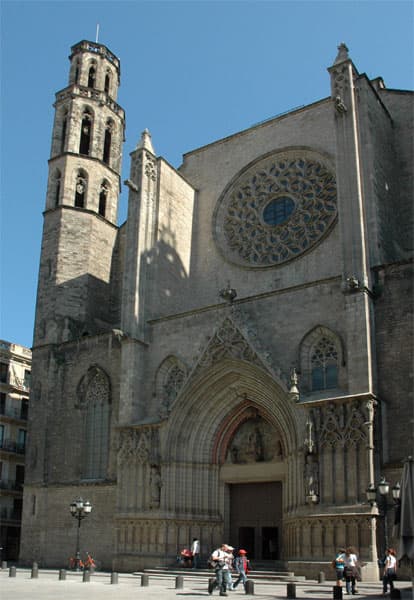
The Basilica of St Mary of the Sea, known in Catalan as Santa Maria del Mar, is a prominent church in Barcelona, Spain, constructed between 1329 and 1383. It stands as a remarkable example of Catalan Gothic architecture, distinguished by its stylistic purity and unity. The basilica holds significance as a testament to the maritime and mercantile power of the Principality of Catalonia during the medieval period, and notably, its construction was supported by the common people rather than the nobility.

Basilica of St Mary the Royal
The Basilica of St Mary the Royal, officially known as Basílica de Santa María la Real de Covadonga, is a Neo-Romanesque Catholic church located in Covadonga, Asturias, Spain. Designated a basilica in 1901, it serves as a monumental sanctuary built to replace an older temple destroyed by fire in 1777, and is dedicated to Our Lady of Covadonga.

Basilica Co-cathedral of St. Mary
The Co-Cathedral of Saint Mary of Vigo, also known locally as A Colexiata, is a Spanish Baroque/Neoclassical Catholic temple serving as a co-cathedral for the Diocese of Tui-Vigo. Its current structure was largely rebuilt in the 19th century following damage from historical events, including an explosion in 1809, and it was designated a basilica by the Vatican in 2020.