
Azazel
Azazel is a figure primarily known from Jewish traditions, initially as a desolate place associated with the scapegoat ritual on Yom Kippur. Later interpretations, particularly in the Book of Enoch, portray Azazel as a fallen angel responsible for teaching humanity forbidden knowledge and corrupting them. This depiction as a fallen angel has influenced Christian and Islamic traditions, where he is often seen as a source of sin and temptation.
Key Facts
- ›Initially referred to as a desolate place in Leviticus, associated with the scapegoat ritual for Yom Kippur.
- ›In later Jewish texts like the Book of Enoch, Azazel is depicted as a fallen angel.
- ›As a fallen angel, Azazel is credited with teaching humans forbidden knowledge, including warfare and cosmetics.
- ›He is described as being bound and imprisoned in the desert until the Day of Judgment.
- ›In some Islamic traditions, Azazel is linked to the story of Harut and Marut, though he is often depicted as repenting.
- ›The name Azazel is sometimes interpreted as 'rugged God' or 'the averter'.
Azaziʿil (Mandaean)
Introducer of Forbidden Knowledge, Corrupter of Humanity, Faller From Grace
Desert, Wilderness, Fire
Scapegoat, Chains, Darkness, Unclean Bird
Leviticus 16, Book of Enoch, Apocalypse of Abraham, Quran
Raphael, Michael, Gabriel, Uriel, Harut and Marut, Watchers, Samael, Aza, Azzaya
- Depicted As An Unclean Bird In the Apocalypse of Abraham.
- Compared To Prometheus In Relation To Teaching Forbidden Knowledge.
- Mentioned In Mandaean Texts As An Uthra.
About Azazel
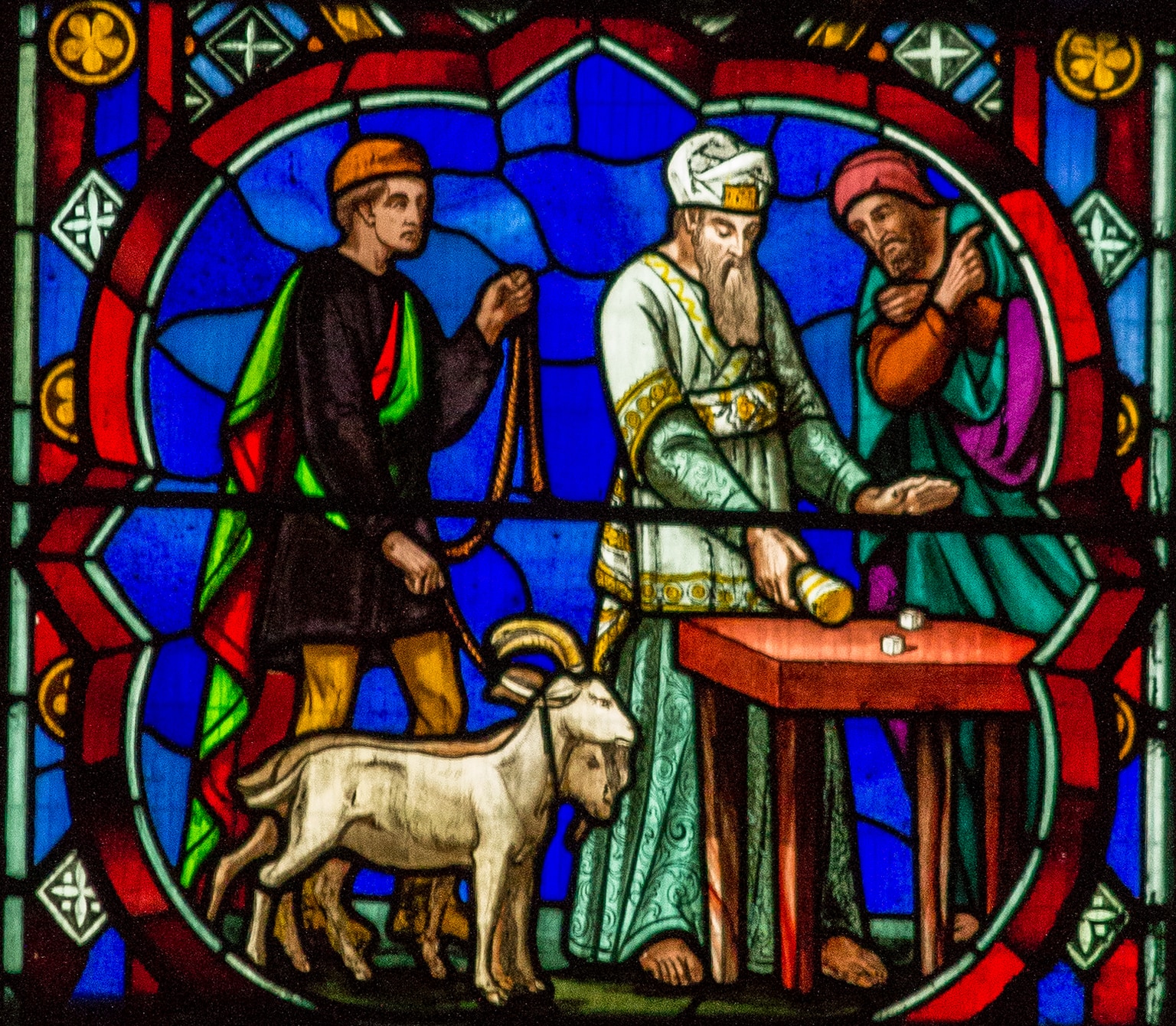
Azazel is a complex figure whose understanding has evolved significantly across various religious and textual traditions, originating primarily within Jewish thought. Initially, in the Hebrew Bible, the name Azazel referred to a desolate place or a concept associated with the scapegoat ritual performed on Yom Kippur. This ritual involved sending a goat into the wilderness to symbolically carry away the sins of the Israelite people.
Evolution in Jewish Tradition
During the late Second Temple period, particularly in the extra-biblical Book of Enoch, Azazel's role transformed dramatically. He came to be known as a fallen angel, one of the leaders of the Grigori or Watchers. In this capacity, Azazel is depicted as corrupting humanity by teaching them forbidden knowledge, including the arts of warfare, metalworking, and the use of cosmetics. This introduction of sin and violence led to the widespread corruption of the earth.
According to Enochic literature, Azazel was ultimately punished for his transgressions. He was bound and chained by the archangel Raphael, then cast into a dark, desolate region in the desert, where he remains imprisoned until the final Day of Judgment, after which he is to be consumed by fire. The Book of Enoch explicitly states that "the whole earth has been corrupted through the works that were taught by Azazel; to him ascribe all sin."
Medieval Jewish commentators like Nachmanides further explored Azazel's nature, sometimes identifying him with Samael and viewing him as a personification of wickedness or a demon of the desert, rather than a deity to be worshipped. Maimonides, however, emphasized the symbolic nature of the scapegoat ritual as a means to impress upon people the idea of discarding their sins.
Influence in Other Traditions
The concept of Azazel as a fallen angel has also influenced Christian and Islamic traditions. In some Christian interpretations, Azazel has been identified with Satan. In Islam, Azazel is sometimes linked to the story of the angels Harut and Marut. According to certain exegetes, Azazel was one of the angels who chose to descend to Earth to prove they could resist temptation better than humans. While the other two angels failed and became Harut and Marut, Azazel is said to have repented and been permitted to return to heaven.
The Apocalypse of Abraham presents Azazel as an unclean bird that descended upon Abraham's sacrifice, symbolizing disgrace and associated with the serpent and hell, possessing a monstrous form with multiple heads and wings. Despite these varied roles, Azazel remains a significant figure representing the introduction of sin, corruption, and rebellion against divine order.
Source: Wikipedia ↗
Frequently Asked Questions
What is the origin of the name Azazel?
The origin of the name Azazel is debated. Some interpretations suggest it means 'rugged God' or 'the averter,' potentially referring to a deity or an idol. However, the root 'ʿzl' is not clearly attested in this context.
How was Azazel first described in the Hebrew Bible?
In the Hebrew Bible, specifically in Leviticus, Azazel is first mentioned as a desolate place to which a scapegoat bearing the sins of the Israelites was sent during the Yom Kippur ritual. The term appears three times in the Book of Leviticus.
What is Azazel's role in the Book of Enoch?
In the Book of Enoch, Azazel is portrayed as a prominent fallen angel among the Watchers. He is depicted as teaching humanity forbidden knowledge, such as the creation of weapons, armor, and cosmetics, leading to widespread corruption and sin.
What was Azazel's punishment according to the Book of Enoch?
According to the Book of Enoch, Azazel was bound hand and foot by the archangel Raphael and cast into a dark, desolate place in the desert, to remain chained to rough rocks until the Day of Judgment, when he will be cast into fire.
How is Azazel depicted in Islamic tradition?
In Islam, Azazel is sometimes associated with the story of Harut and Marut. In some narratives, he was one of the angels who descended to Earth, but he repented and was allowed to return to heaven, while others failed the test.
Are there any connections between Azazel and the scapegoat ritual?
Yes, the name Azazel is directly linked to the scapegoat ritual in Leviticus. The goat designated 'for Azazel' was sent into the wilderness, symbolizing the removal of the people's sins. Later interpretations saw this ritual as a symbolic sending of sins to the demon Azazel.
Related Angels
Ananiel
Ananiel is recognized as the 14th Watcher among the 20 leaders of the 200 fallen angels mentioned in the ancient Jewish text, the Book of Enoch. His name is often interpreted as "cloud of God" or "Rain of God," and he was entrusted by God with dominion over atmospheric phenomena and the trees of the earth. In some traditions, Ananiel is also revered as one of the seven holy archangels.
Arakiel
Arakiel is identified as a fallen angel and a leader among the Watchers in the Book of Enoch. His name is often translated as 'earth of God,' and he is noted for teaching humans 'signs of the earth,' which may refer to practices like geomancy. Despite his association with a rebellion, some traditions also list him as a holy angel guiding souls to judgment.
Chazaqiel
Chazaqiel is identified as the 8th Watcher among the 20 leaders of the 200 fallen angels described in The Book of Enoch. His name, meaning "cloud of God," is associated with the knowledge of clouds and meteorology, and he is also translated as "Shooting star of God." Chazaqiel's role within this ancient text places him among figures who imparted forbidden or hidden knowledge.