
Samael
Samael is an archangel in Jewish tradition, often identified as the accuser, seducer, and angel of death. While his functions can resemble the Christian Satan, he is not necessarily portrayed as purely evil, as his destructive roles can also lead to good outcomes. He plays a significant role in narratives concerning the Garden of Eden and is depicted as a powerful figure in both Jewish and Gnostic cosmologies.
Key Facts
- ›Samael is an archangel in Talmudic and post-Talmudic Jewish tradition.
- ›He is often identified as the accuser, seducer, and the primary angel of death.
- ›In some traditions, he is considered the head of the satans.
- ›Samael is associated with engineering the fall of Adam and Eve in the Garden of Eden.
- ›In Gnostic texts, he is identified with the Demiurge, the creator of the material world.
- ›He is sometimes depicted as the guardian angel of Esau and a patron of Edom, representing Rome.
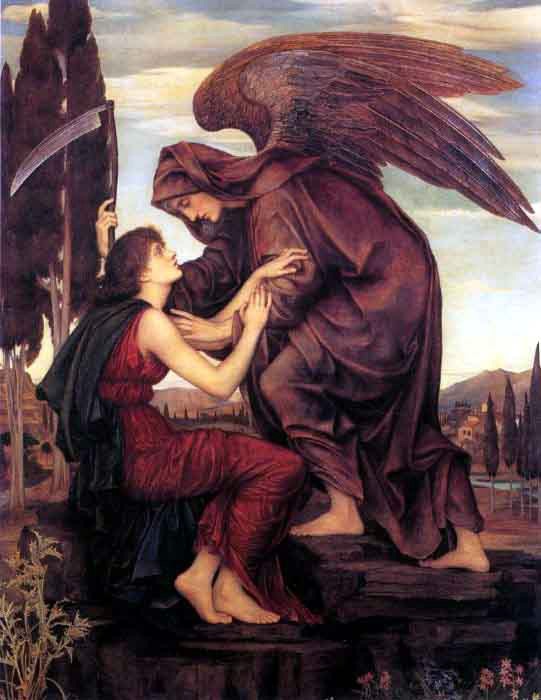
Smil, Samil, Samiel, Samsamāʾīl, Sammāʾil, Sāmāʾīl, Melkira, Malkira, Malchira, Belkira, Bechira, Belial, Satan, Yaldabaoth, Saklas
Accuser, Seducer, Destroying Angel, Angel of Death, Head of Satans, Guardian Angel
Serpent
Book of Job, Book of Exodus, Book of Enoch, Greek Apocalypse of Baruch, Ascension of Isaiah, Apocryphon of John, On the Origin of the World, Hypostasis of the Archons
Lilith, Adam, Eve, Cain, Jacob, Esau, Rome, Michael, Metatron, Samyaza, Iblis, Azazel, Ouza, Azrael, Asmodeus, Lucifer Morningstar, Beelzebub
Carl Maria Von Weber's Opera Der FreischüTz, the Wheel of Time, Megami Tensei Video Game Franchise, the Sandman Comic Book Series, Lucifer Television Series, Darksiders Video Game Franchise, Record of Ragnarok Anime, Corto Maltese Comic Book Series, Helltaker Puzzle Game
About Samael
Samael: The Venom of God
Samael is a significant archangel within Talmudic and post-Talmudic Jewish tradition, widely recognized for his multifaceted and often paradoxical roles. His name, derived from the Hebrew "Sammāʾēl," translates to "Venom of God," hinting at his potent and sometimes destructive nature. While many of his functions align with the Christian concept of Satan—acting as an accuser, seducer, and a destroying angel—he is not always portrayed as inherently evil. Instead, his actions are sometimes understood as divinely ordained, leading to beneficial outcomes such as the punishment of sinners.
Roles and Associations
In Jewish lore, Samael holds a prominent position as the primary angel of death and the head of the satans. He is intricately linked to the narrative of the Garden of Eden, where he is credited with engineering the fall of Adam and Eve, though the serpent is described as a beast he rode rather than a form he assumed. Later traditions associate him with the paternity of Cain and as a partner to Lilith, a primordial demon. In some texts, he is identified with the accuser in the heavenly court, opposing figures like Michael.
Development and Interpretations
Samael's character evolved through different periods of Jewish thought. During the Second Temple period, he appeared in texts like the Book of Enoch as one of the rebellious Watchers. By the medieval period, his role as an agent of evil became more pronounced. In Kabbalistic thought, he is described as representing the "severity of God" and is a key figure within the qlippoth, the realms of demonic forces. His association with Rome, stemming from his role as the guardian angel of Esau, further solidified his adversarial stance against Israel.
Gnostic and Other Traditions
Beyond mainstream Judaism, Samael's influence extends into Gnostic cosmologies. Here, he is identified with the Demiurge, the creator of the material world, and is given names such as Yaldabaoth and Saklas. This Gnostic portrayal often characterizes him as a "blind god," ignorant of higher realities, and a source of spiritual blindness for humanity. Anthroposophy also lists Samael as one of the seven archangels, each assigned to a specific "time-spirit" role.
Cultural Resonance
Samael's complex character has resonated in various forms of popular culture, appearing in literature, opera, video games, and comic books. These depictions often explore his thematic connections to rebellion, temptation, and the darker aspects of divine power, sometimes reinterpreting him as a fallen angel or a powerful demon lord.
Source: Wikipedia ↗
Frequently Asked Questions
What does Samael's name mean?
Samael's name in Hebrew is "סַמָּאֵל" (Sammāʾēl), which literally translates to 'Venom of God'.
What are Samael's primary roles?
Samael is primarily known as the accuser, seducer, and the angel of death. He is also considered the head of satans in some traditions and has been linked to the fall of Adam and Eve.
Is Samael considered evil?
While many of his functions resemble those of the Christian Satan, Samael is not necessarily depicted as purely evil. His destructive roles are sometimes seen as ultimately leading to good, such as the destruction of sinners.
What is Samael's role in Gnosticism?
In some Gnostic cosmologies, Samael's role as a source of evil leads to his identification with the Demiurge, the creator of the material world. He is also called Yaldabaoth and Saklas in these traditions.
How is Samael depicted in Jewish texts like the Talmud and Midrash?
In Talmudic and Midrashic literature, Samael's role as an agent of evil becomes more prominent over time. He is depicted as the accuser in the heavenly court and is identified with Satan, acting as the angel of death and leader of satans.
What is Samael's connection to Lilith?
In Kabbalah, Samael is often depicted as the partner or spouse of Lilith. Together, they are seen as a demonic counterpart to Adam and Eve, and are said to have produced demonic offspring.
Is Samael mentioned in the Book of Enoch?
Yes, Samael is mentioned in the Book of Enoch as one of the Watchers who descended to Earth to copulate with human women. However, he is not identified as their leader in that text.
Related Angels
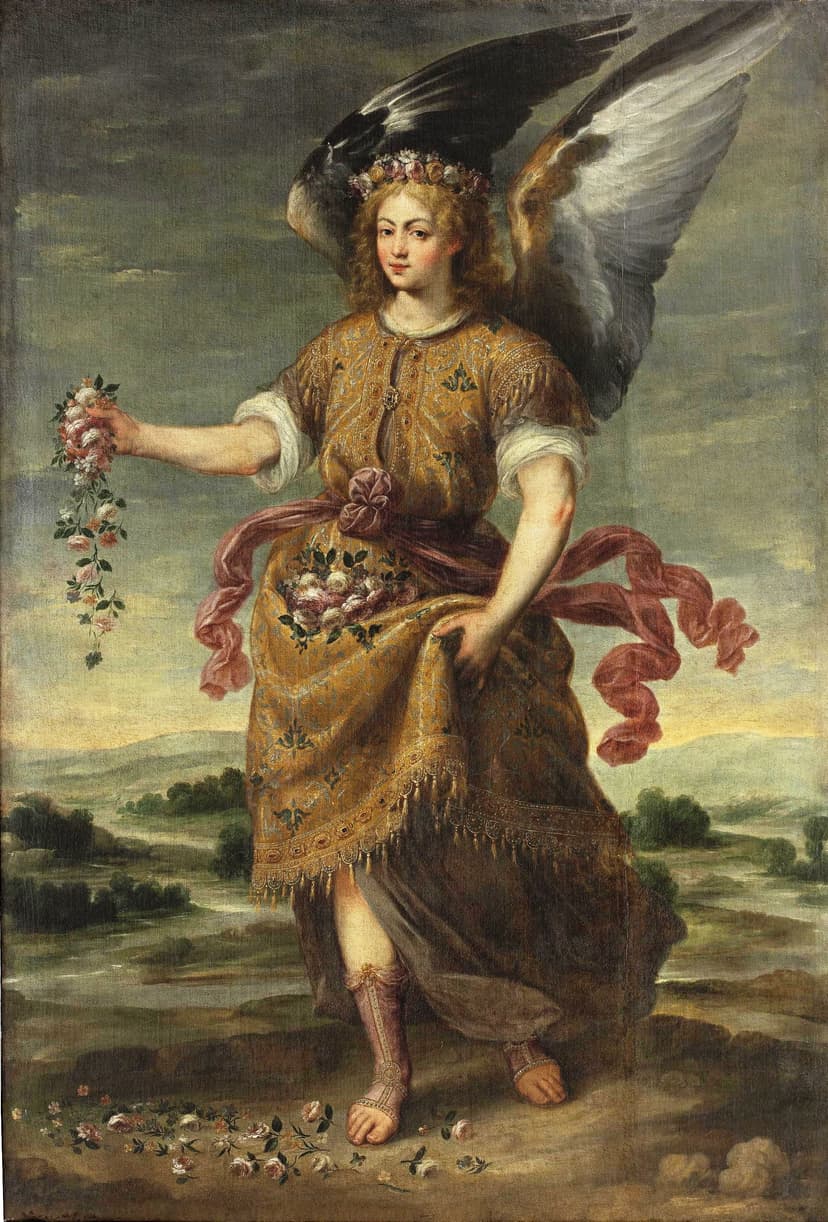
Barachiel
Barachiel, meaning "God has blessed," is an Archangel revered in Judaism, Byzantine Catholic, and Eastern Orthodox traditions. He is primarily known as the Archangel of Blessings and is associated with bestowing divine favor, particularly upon families and converts. Iconographically, he is often depicted with symbols of blessing, such as roses or a bread basket.
Cassiel
Cassiel is an angel venerated in extracanonical Jewish, Christian, and Islamic mystical traditions. He is often identified as one of the Seven Archangels and is associated with the planet Saturn. Cassiel's roles include guardian, angel of death, and presider over the deaths of young men, wielding powerful weapons against those unfit to behold the divine.
Nuriel
Nuriel is an angel in Jewish tradition, often associated with hailstorms and fire, whose name signifies "El/God is my fire" or "El/God is my light." He is considered an archangel, sometimes identified with Uriel, and is known for his role in judgment and as a powerful protective charm. Nuriel is depicted as a towering figure with an army of angelic beings.