
Raphael
Raphael, born Raffaello Sanzio da Urbino, was a celebrated Italian painter and architect of the High Renaissance, renowned for his mastery of form, composition, and the depiction of human grandeur. Alongside Leonardo da Vinci and Michelangelo, he is considered one of the three great masters of his era. His career spanned distinct phases in Urbino, Florence, and Rome, leaving behind a prolific body of work that significantly influenced subsequent generations of artists.
Key Facts
- ›Raphael was a leading figure of the High Renaissance, known for his clarity of form and visual achievement of Neoplatonic ideals.
- ›He trained under Pietro Perugino and absorbed influences from Leonardo da Vinci and Michelangelo, developing his own distinct style.
- ›His most significant works in Rome include the frescoed Raphael Rooms in the Apostolic Palace at the Vatican, particularly 'the School of Athens'.
- ›Raphael also had a notable career as an architect, being named architect of the new St. Peter's Basilica after Bramante's death.
- ›He ran a large workshop, producing a prolific output despite his early death at the age of 37.
- ›His work was highly influential during his lifetime and experienced a resurgence in appreciation in the 18th and 19th centuries.
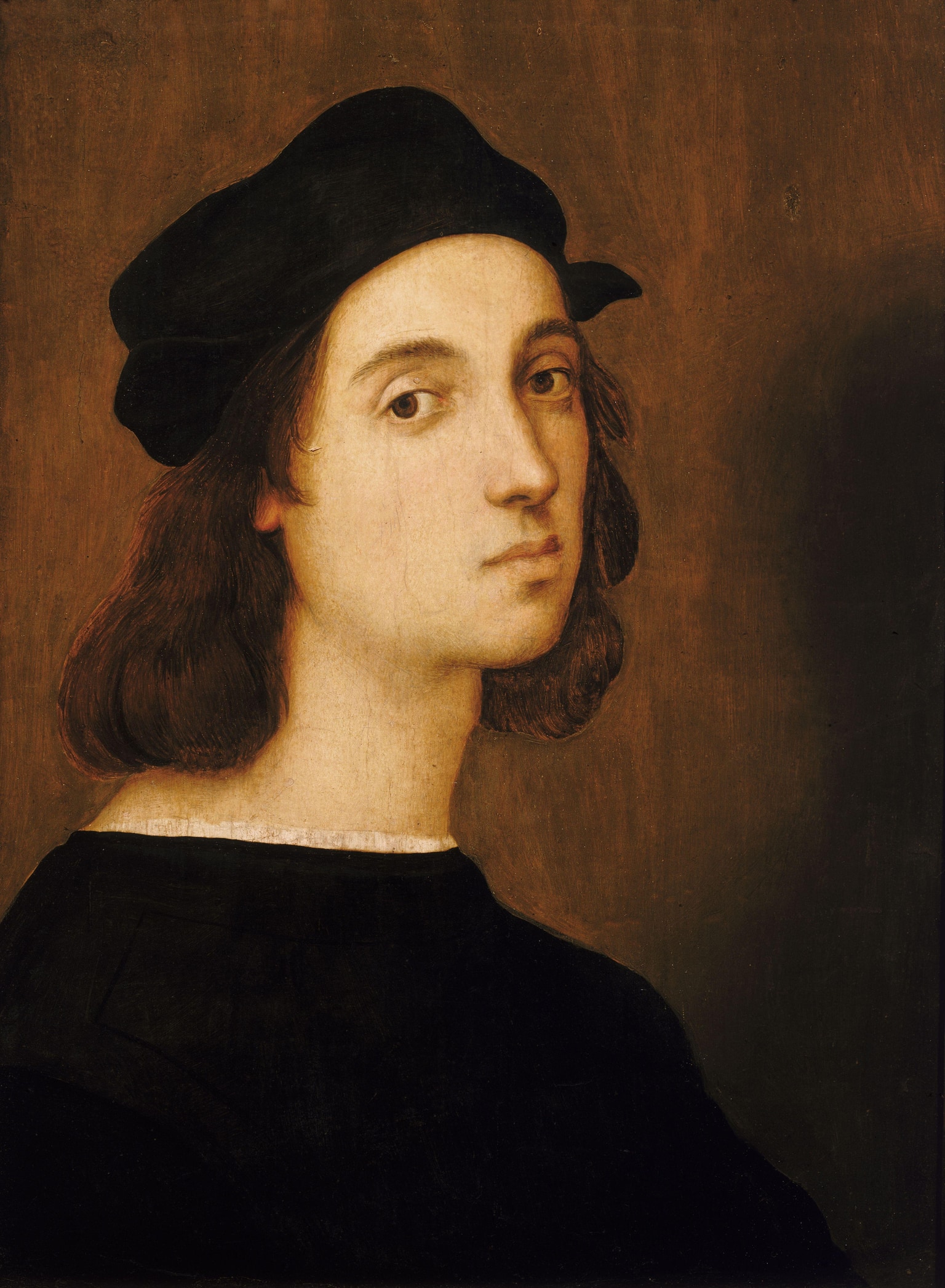
Raffaello Sanzio da Urbino
Painter, Architect
Clarity of Form, Ease of Composition, Human Grandeur, Serenity, Harmony
Leonardo Da Vinci, Michelangelo, Pietro Perugino, Pope Julius Ii, Pope Leo X, Donato Bramante, Giovanni Santi, Federico Da Montefeltro, Guidobaldo Da Montefeltro, Elisabetta Gonzaga, Baldassare Castiglione, Pietro Bibbiena, Pietro Bembo, Fra Bartolomeo, Cardinal Giulio De' Medici, Antonio Da Sangallo the Younger, Palladio
the School of Athens, Raphael Rooms
About Raphael
Raphael (Raffaello Sanzio da Urbino)
Raphael, born Raffaello Sanzio da Urbino in 1483, stands as one of the preeminent masters of the High Renaissance in Italy. His artistic legacy is defined by a remarkable synthesis of technical skill, harmonious composition, and an idealized depiction of human form and grandeur. Alongside Leonardo da Vinci and Michelangelo, Raphael forms the traditional trinity of great artists who shaped the artistic landscape of the 16th century.
Early Life and Training
Born in Urbino, a culturally rich city, Raphael's father, Giovanni Santi, was a court painter. After his father's death when Raphael was eleven, he likely managed the family workshop. He is believed to have trained under Pietro Perugino, a prominent Umbrian master, from whom he absorbed foundational techniques and stylistic elements. Early in his career, Raphael worked in various northern Italian cities, demonstrating a talent for large altarpieces and intimate cabinet paintings. He also visited Florence, where he was profoundly influenced by the innovations of Leonardo da Vinci and the monumental style of Fra Bartolomeo.
The Roman Period and Vatican Masterpieces
In 1508, at the invitation of Pope Julius II, Raphael moved to Rome, a pivotal moment that marked the zenith of his career. He was commissioned to fresco the papal apartments in the Vatican Palace, now famously known as the Raphael Rooms. These vast and complex works, including 'The School of Athens,' 'The Parnassus,' and 'The Disputation of the Holy Sacrament,' are considered masterpieces of High Renaissance art. They exemplify his ability to integrate diverse figures and philosophical concepts into cohesive and dynamic compositions, characterized by their clarity, grace, and an idealized representation of human intellect and spirit. His association with Pope Leo X continued this prolific period, with his workshop increasingly executing works from his designs.
Architectural Contributions
Beyond painting, Raphael also established a significant career as an architect. Following the death of Donato Bramante in 1514, Raphael was appointed chief architect of the new St. Peter's Basilica. Although many of his architectural designs were altered or not fully realized, he contributed to the design of several important buildings in Rome, including the Villa Madama and the Palazzo Branconio dell'Aquila. His architectural work reflected the same sense of order, proportion, and classical inspiration evident in his paintings.
Legacy
Raphael's prolific output and his ability to synthesize artistic influences into a distinct and influential style cemented his reputation as a master. Despite his untimely death at the age of 37 in 1520, his work continued to be highly regarded. His serene, harmonious qualities were particularly celebrated from the 18th century onwards, influencing movements such as Neoclassicism. Raphael's art remains a cornerstone of Western art history, revered for its beauty, technical perfection, and profound humanism.
Source: Wikipedia ↗
Frequently Asked Questions
Who was Raphael and why is he famous?
Raphael was an Italian painter and architect of the High Renaissance, celebrated for his harmonious compositions and graceful figures. He is considered one of the great masters of the period, alongside Leonardo da Vinci and Michelangelo, and is renowned for his frescoes in the Vatican and his easel paintings.
What are Raphael's most famous works?
His most celebrated works include the fresco cycle in the Raphael Rooms at the Vatican Palace, with 'The School of Athens' being a particular highlight. Other notable works include 'The Marriage of the Virgin' and various Madonnas and portraits.
Where did Raphael train and develop his style?
Raphael likely trained in the workshop of Pietro Perugino in Umbria. He later spent time in Florence, where he absorbed influences from Leonardo da Vinci and Michelangelo, before moving to Rome where his mature style flourished.
What was Raphael's role in architecture?
Raphael was appointed architect of the new St. Peter's Basilica after the death of Donato Bramante. He also designed several other significant buildings in Rome, including the Palazzo Branconio dell'Aquila and the Villa Madama.
How did Raphael influence other artists?
Raphael's work was enormously influential during his lifetime, and his harmonious qualities were highly regarded in later centuries. His frescoes in the Vatican were considered supreme examples of High Renaissance art and served as models for generations of painters.
When and where was Raphael born and when did he die?
Raphael was born in Urbino, Italy, on March 28 or April 6, 1483. He died on his 37th birthday, April 6, 1520, in Rome.
Related Angels
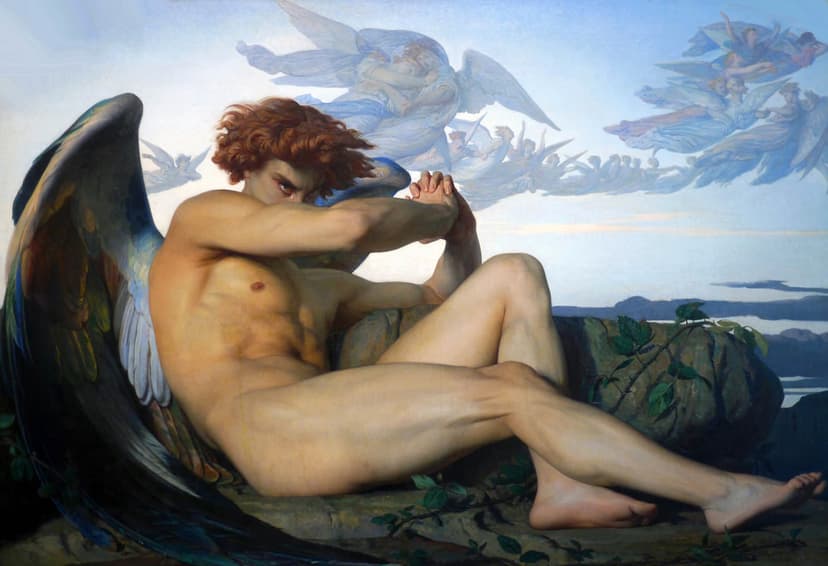
Lucifer
Lucifer, whose name means "light-bringer" in Latin, is a figure deeply rooted in Roman mythology as the personification of the planet Venus. In Christian theology, Lucifer is understood as a fallen angel, often identified with the Devil, who was cast out of heaven for his pride and rebellion against God. This transformation from a celestial being to a symbol of evil has influenced various religious and cultural interpretations.
Phanuel
Phanuel, also known as Penuel, is a figure mentioned once in the New Testament's Book of Luke as the father of Anna the Prophetess. Belonging to the Tribe of Asher, his name carries the significant meaning of "Face of God." While his active presence during his daughter's encounter with the infant Jesus is unlikely due to Anna's advanced age, his lineage and name connect him to a lineage of spiritual significance.