
Tripura Sundari Temple
Bengali Ek-ratna·16th century·India
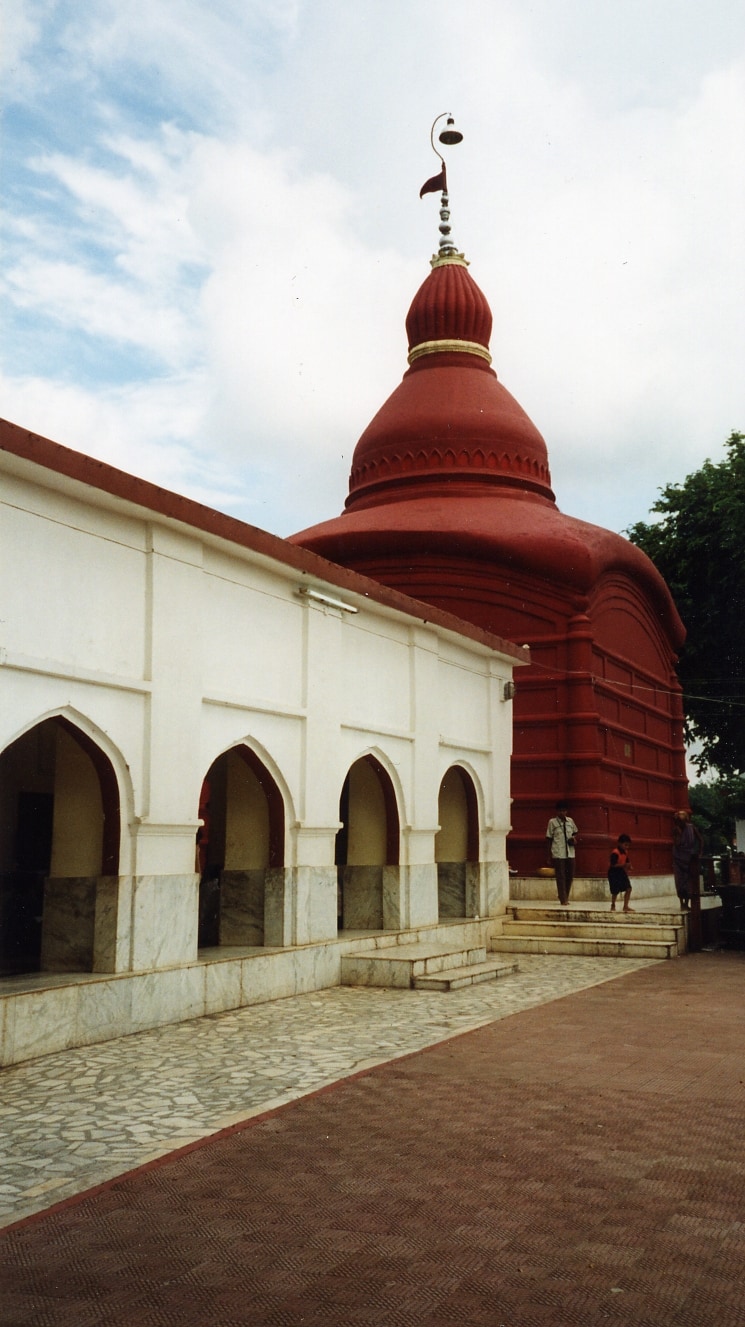
The Tripura Sundari Temple, also known as Matabari, is a significant Hindu shrine dedicated to Goddess Tripura Sundari. Located in Udaipur, Tripura, it is considered one of the holiest Shakti temples in Northeast India and is named after the state itself. The temple is built in the Bengali Ek-ratna style and is situated on a hillock resembling a tortoise's hump, a shape considered auspicious for Shakti worship.
Key Facts
- ›Dedicated to Goddess Tripura Sundari, a form of Parvati.
- ›Considered one of the 51 Shakta Pithas, with a legend of Sati's right foot falling here.
- ›Constructed in 1501 CE by Maharaja Dhanya Manikya.
- ›The temple features two black stone idols of the Goddess, one of Tripura Sundari and a smaller one of Goddess Chandi.
- ›The state of Tripura is named after this temple.
- ›A large Mela (fair) is held annually during Diwali, attracting over 200,000 pilgrims.
Tripura Sundari, Parvati, Chandi
- Holist Hindu shrine in Northeast India
- One of the 51 Shakta Pithas
- The state of Tripura is named after the temple
- Site of an annual Diwali Mela attracting large crowds
- Important pilgrimage destination
Manikya Dynasty
Diwali
Black Stone
Maharaja Dhanya Manikya
Kalyan Sagar
About Tripura Sundari Temple
The Tripura Sundari Temple, affectionately known as Matabari, is a prominent Hindu temple dedicated to Goddess Tripura Sundari, a significant manifestation of Goddess Parvati. Located in the ancient city of Udaipur in Tripura, India, it is recognized as one of the most sacred Hindu shrines in Northeast India and is a major pilgrimage site. The state of Tripura itself derives its name from this revered temple.
Historical and Religious Context
Legend holds that the temple was established around 1501 CE by Maharaja Dhanya Manikya of the Manikya dynasty. According to tradition, the Goddess appeared to the king in a dream, instructing him to initiate her worship on the hilltop where the temple now stands. The site is particularly significant as it is believed to be one of the 51 Shakta Pithas, sacred places where parts of the body of Goddess Sati are said to have fallen. Specifically, it is believed that a portion of Sati's right foot, including the big toe, landed here, making it a potent center for Shakti worship.
Architectural Features and Iconography
The temple is constructed in the Bengali Ek-ratna architectural style, characterized by its cubical edifice and a distinctive three-tier roof topped with a finial. The shrine is situated on a hillock that resembles the hump of a tortoise, a shape known as Kurmapṛṣṭhākṛti, which is considered highly auspicious for Shakti temples and gives the site the name "Kurma Pīṭha." Inside the sanctum sanctorum, there are two black stone idols of the Goddess. The larger, more prominent idol stands five feet tall and represents Goddess Tripura Sundari, while a smaller, two-foot idol, known as Chhoto-Ma (Little Mother), represents Goddess Chandi. Historical accounts suggest the smaller idol was historically carried by the kings of Tripura into battle and on hunting expeditions.
Associated Water Body and Rituals
Adjacent to the temple is Kalyan Sagar, a large lake that enhances the beauty of the temple complex. This lake is home to rare Bostami turtles, which are considered sacred by devotees. The turtles, along with various fish species, are part of the temple's spiritual landscape. Devotees often feed the turtles and fish, a practice that has been ongoing for years. The lake's association with the tortoise-shaped hillock also links it to the Kurma avatar of Vishnu, further deepening its sacred significance.
Cultural Significance and Festivals
The Tripura Sundari Temple is a major attraction for both pilgrims and tourists, witnessing a high volume of visitors, particularly after the Kamakhya Temple in Assam. Annually, during the festival of Diwali, a large fair (Mela) is held near the temple, drawing over 200,000 pilgrims and visitors. The temple continues to be an active center of worship, preserving ancient traditions and serving as a vital spiritual and cultural landmark in Northeast India.
Source: Wikipedia ↗
Frequently Asked Questions
Where is the Tripura Sundari Temple located?
The Tripura Sundari Temple is situated in the ancient city of Udaipur in Tripura, India. It is approximately 55 km from Agartala, the capital of Tripura, and is accessible by train and road.
What is the significance of the temple's location on a hillock?
The temple is built on a small hillock that resembles the hump of a tortoise (Kurma). This shape, known as Kurmapṛṣṭhākṛti, is considered the holiest possible site for a Shakti temple, leading to the temple also being known as Kurma Pīṭha.
What are Shakta Pithas and why is this temple one of them?
Shakta Pithas are sacred shrines believed to enshrine the presence of Shakti due to the falling of body parts of the corpse of Sati Devi. The Tripura Sundari Temple is considered one of the 51 Shakta Pithas because legend states that a part of Sati's right foot, including the big toe, fell at this location.
What is the architectural style of the Tripura Sundari Temple?
The main shrine of the temple is a cubical edifice with a three-tier roof and a finial. It was constructed in the Bengali Ek-ratna style, a style characterized by a single dormer window on each side of the roof.
Are there any special rituals or customs at the temple?
Animal sacrifices were a custom at the temple, though they were temporarily banned and later resumed. Devotees also feed the rare Bostami turtles in the adjacent Kalyan Sagar lake, which are considered sacred.
What is Kalyan Sagar and its connection to the temple?
Kalyan Sagar is a large lake located to the east of the temple. It is home to rare Bostami turtles and various fish species. The lake is considered sacred, and the turtles are revered due to the temple's tortoise-shaped hillock and its association with Vishnu avatars.
Related Temples (Hindu)

Trilokpur Temple
The Trilokpur Temple complex in Himachal Pradesh, India, is a significant Hindu pilgrimage site dedicated to Goddess Durga in her form as Mahamaya Bala Sundri. Legend states its origin in 1570 CE when a sacred stone representing the goddess appeared in a salt bag, leading to the construction of the main temple. The site is known for its amalgam of Indo-Persian architectural styles and attracts millions of devotees annually.

Hari Parbat
Hari Parbat is a significant hill overlooking Srinagar, Jammu and Kashmir, India, renowned for its historical fort and religious sites. It features a Hindu temple dedicated to Goddess Sharika (Parvati), identified with the sacred pebble of local mythology, alongside Muslim shrines and Sikh Gurdwaras.

Gavi Gangadhareshwara Temple
The Gavi Gangadhareshwara Temple is a 16th-century rock-cut temple in Bengaluru, India, dedicated to Lord Shiva. It is renowned for its unique architectural planning that allows sunlight to illuminate the lingam during specific times of the year, drawing large numbers of devotees.