
Trilokpur Temple
Indo-Persian·16th century·India
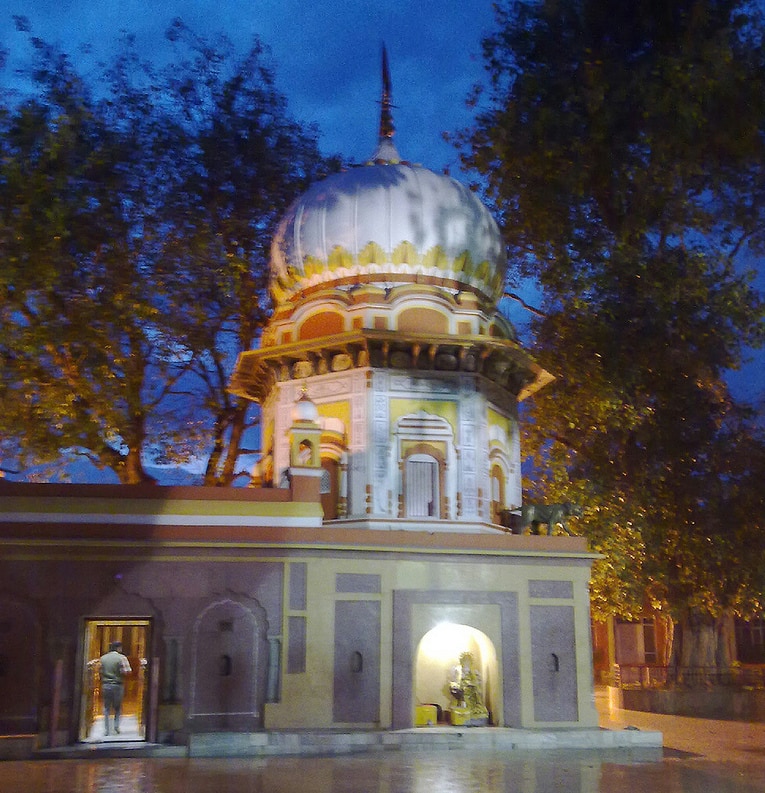
The Trilokpur Temple complex in Himachal Pradesh, India, is a significant Hindu pilgrimage site dedicated to Goddess Durga in her form as Mahamaya Bala Sundri. Legend states its origin in 1570 CE when a sacred stone representing the goddess appeared in a salt bag, leading to the construction of the main temple. The site is known for its amalgam of Indo-Persian architectural styles and attracts millions of devotees annually.
Key Facts
- ›The main temple is dedicated to Bhagwati Tripur Mahamaya Bala Sundri, a childhood image of Durga.
- ›According to legend, the temple's origin dates back to 1570 CE with the appearance of a sacred stone.
- ›The temple's architecture is an amalgam of Indo-Persian styles.
- ›It is considered the childhood place of Maa Vaishno Devi.
- ›The temple attracts over 3.2 million devotees annually, especially during two major fairs held in Chaitra and Ashvina.
- ›The temple is run by a Temple Trust headed by the Deputy Commissioner of Sirmour.
Durga, Mahamaya Bala Sundri, Bhagwati Tripur Mahamaya Bala Sundri, Bhagwati Lalita Devi, Jwala Ji, Shiva
- Significant Hindu Pilgrimage Site
- Shakti Peeth of North India
- Considered the Childhood Place of Maa Vaishno Devi
- Attracts Millions of Devotees Annually
- Site of Important Annual Fairs
Sirmour State
Chaitra Fair, Ashvina Fair
Marble
Sh Ram Dass, Ruler of Sirmour State, Maharaja Fateh Prakash, Maharaja Raghubir Prakash
About Trilokpur Temple
Trilokpur Temple is a prominent Hindu temple site located on a hillock in Himachal Pradesh, India, approximately 24 km southwest of Nahan. The name "Trilok Pur" signifies a triangle of three Shakti Temples in the vicinity, each representing a different aspect of Goddess Durga. The principal shrine is dedicated to Bhagwati Tripur Mahamaya Bala Sundri, which features an image of Durga as a child. Additionally, the complex includes the Bhagwati Lalita Devi Temple and other associated shrines.
History and Construction
According to local legend, the temple's foundation dates back to 1570 CE. It is said that a sacred stone, or pindi, representing the goddess, miraculously appeared in a bag of salt purchased by a local trader, Sh Ram Dass. The goddess is believed to have appeared in Ram Dass's dream, instructing him to build a temple at Trilokpur to enshrine her pindi. Lacking personal funds, Ram Dass sought assistance from the ruler of Sirmour state. With royal patronage, artisans from Jaipur were commissioned to construct the marble temple, which was completed and consecrated in 1573 CE. The royal family subsequently began worshipping Goddess Bala Sundri.
The temple underwent renovations in 1823 and again in 1851, undertaken by Maharaja Fateh Prakash and Maharaja Raghubir Prakash, respectively.
Current Operations and Significance
Trilokpur Temple is a highly active place of worship, attracting over 3.2 million devotees annually. The temple is managed by a Temple Trust, overseen by the Deputy Commissioner of Sirmour, which has been involved in developmental work in the Trilokpur village. The traditional priests of the temple belong to the business community and are Vaish by caste, with the descendants of Lala Ram Dass continuing to perform the main puja since the temple's inception.
Considered a childhood manifestation of Maa Vaishno Devi, Trilokpur holds immense religious significance. It is a major Shakti Peeth in Northern India. Two important fairs are held annually, in the months of Chaitra and Ashvina, drawing massive crowds, particularly on the eighth and fourteenth days of the bright half of the lunar month. Mata Bala Sundri is revered as the Kul Devi (family deity) for numerous castes across Haryana, including Kshatriyas, Brahmans, Baniyas, Jats, and Kamboj.
Associated Shrines
Within the Trilokpur complex, the Dhyanu Bhagat Temple is a notable attraction, believed by locals to house the Hindu Goddess Jwala Ji. Adjacent to it is the Shiva Mandir Temple, dedicated to Lord Shiva. The Lalita Mata Temple is also situated on the road leading to the main temple, and is frequently visited by pilgrims.
Source: Wikipedia ↗
Frequently Asked Questions
What is the origin story of the Trilokpur Temple?
Legend has it that in 1570 CE, a sacred stone representing the goddess appeared in a bag of salt purchased by a local trader named Sh Ram Dass. The goddess then appeared in his dream, instructing him to build a temple at Trilokpur to establish her sacred stone form.
Who is the primary deity worshipped at Trilokpur Temple?
The main temple is dedicated to Bhagwati Tripur Mahamaya Bala Sundri, which depicts a childhood image of Goddess Durga. Another temple within the complex is dedicated to Bhagwati Lalita Devi.
What is the architectural style of the Trilokpur Temple?
The temple is described as an amalgam of Indo-Persian styles of architecture. Artisans from Jaipur were invited in 1570 CE to create the marble temple.
How many devotees visit Trilokpur Temple annually?
Every year, over 3.2 million devotees visit the temple of Bhagwati Bala Sundri. Mammoth gatherings are seen during the fairs held in the months of Chaitra and Ashvina.
Are there other temples within the Trilokpur complex?
Yes, besides the main temple of Bhagwati Bala Sundri, there is also the Dhyanu Bhagat Temple, believed to house Goddess Jwala Ji, and the Shiva Mandir Temple dedicated to Lord Shiva. The Lalita Mata Temple is also located nearby.
What is the significance of Trilokpur Temple?
Trilokpur is a place of great religious importance and is considered the childhood place of Maa Vaishno Devi. It is a significant Shakti Peeth in North India and attracts pilgrims from all over Northern India.
Related Temples (Hindu)

Hari Parbat
Hari Parbat is a significant hill overlooking Srinagar, Jammu and Kashmir, India, renowned for its historical fort and religious sites. It features a Hindu temple dedicated to Goddess Sharika (Parvati), identified with the sacred pebble of local mythology, alongside Muslim shrines and Sikh Gurdwaras.

Gavi Gangadhareshwara Temple
The Gavi Gangadhareshwara Temple is a 16th-century rock-cut temple in Bengaluru, India, dedicated to Lord Shiva. It is renowned for its unique architectural planning that allows sunlight to illuminate the lingam during specific times of the year, drawing large numbers of devotees.

Thirunakkara Mahadevar Temple
Thirunakkara Mahadevar Temple is a significant Hindu temple located in Kottayam, Kerala, India, dedicated to Lord Shiva. It is recognized as one of the 108 revered Shivalayas in Kerala and is believed to have been built by the Maharaja of Thekkumkur approximately 500 years ago. The temple is known for its traditional Kerala-style architecture, preserving numerous sculptures and murals of various Hindu deities.