
Swaminarayan Temple, Ahmedabad
Blends local, regional, and British styles·19th century·India
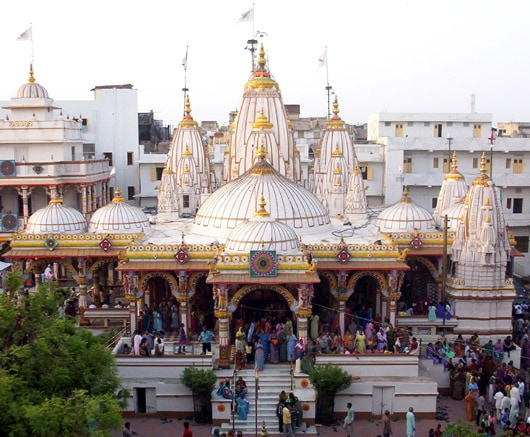
The Shree Swaminarayan Mandir in Kalupur, Ahmedabad, is the first temple of the Swaminarayan Sampraday, a Hindu sect founded by Swaminarayan. Constructed on land granted by British officials, it serves as the headquarters for the Narnarayan Dev Gadi and is renowned for its intricate wooden architecture and rich sculptural depictions.
Key Facts
- ›It is the first temple established by the Swaminarayan Sampraday.
- ›The temple was built on land granted by British officials in the early 19th century.
- ›It is the headquarters of the Narnarayan Dev Gadi, one of two administrative seats of the Swaminarayan Sampraday.
- ›The architecture features opulent carvings, blending local, regional, and British styles.
- ›The Nar Narayan Temple within the complex houses central deities of Narnarayan Dev, Radhakrishna Dev, Dharmadev, Bhakti Mata, and Harikrishna.
- ›The temple complex includes Akshar Bhavan, Rang Mahol, and Haveli mansions, showcasing Swaminarayan's personal items and intricate wooden art.
Swaminarayan, Narnarayan Dev, Radhakrishna Dev, Ghanshyam Maharaj
- First Temple of the Swaminarayan Sampraday
- Headquarters of the Narnarayan Dev Gadi
- Valuable Cultural Heritage In the Socio-Religious History of Gujarat and India
- Starting Point For Ahmedabad's Heritage Walk
- Architectural Significance For Its Intricate Wooden Carvings and Blended Styles
Wood, Stone
Swaminarayan, Eron Saheb, John Andrew Dunlop, Anandanand Swami
- Depictions of Deities' Episodes, Auspicious Symbols, and Religious Icons
- Sculptures On the North Gateway Depicting Marathi and Rajasthani Folk Cultures
- Wooden Sculptures In Haveli Including Flying Hanuman, Ganesha, Soldiers, and Scenes From the 1857 Uprising
- Ardh-Murt Relief Sculpture of Flowers and Creepers On Wooden Pillars
- Giant Size Madal-Shilp Sculptures On Pillars In Haveli
- Sculptures of Lions, Elephants, Peacocks, and Parrots
About Swaminarayan Temple, Ahmedabad
Shree Swaminarayan Mandir, Kalupur
The Shree Swaminarayan Mandir in Kalupur, located in Ahmedabad, Gujarat, holds the distinction of being the first temple established by the Swaminarayan Sampraday, a prominent Hindu sect. Founded on the directives of Swaminarayan, the sect's spiritual leader, this temple serves as the central administrative headquarters for the NarNarayan Dev Gadi, one of two primary seats of the Swaminarayan Sampraday.
History and Construction
The temple's history dates back to the early 19th century. In 1817, a British official named 'Eron Saheb' invited Swaminarayan and offered land for a residence. This was followed by further discussions with John Andrew Dunlop, the first British collector of Ahmedabad, who facilitated the granting of a plot of land in Kalupur for the construction of a mandir. After receiving approval from England, Dunlop conveyed the order to Swaminarayan. The construction was overseen by Anandanand Swami, a disciple of Swaminarayan. The temple was officially inaugurated on February 24, 1822, in the presence of an estimated 50,000 devotees.
Architecture and Key Features
The architectural style of the Shree Swaminarayan Mandir is celebrated for its intricate wooden carvings and a unique blend of local, regional, and British influences. The temple is described as resembling a fairytale with its vibrant colors and opulent embellishments on every wooden bracket, column, and arch. The central gateway is particularly noteworthy, incorporating elements from Marathi, Rajasthani folk cultures, and Mughal architecture, with columns featuring Corinthian order detailing.
Within the complex, the Nar Narayan Temple is considered the heart, constructed according to scriptural norms with detailed carvings in Burma-teak. It houses the central deities of Narnarayan Dev, with Radhakrishna Dev to the right, and Dharmadev, Bhakti Mata, and Harikrishna to the left. Other significant areas include Akshar Bhavan, which displays personal items of Swaminarayan and houses an idol of Ghanshyam Maharaj; Rang Mahol, a place where Swaminarayan stayed and features a life-size wooden idol; and various Haveli mansions. These mansions, such as the Haveli (North), are adorned with elaborate wooden sculptures depicting mythological scenes, historical events, and natural motifs, showcasing exceptional craftsmanship.
Cultural and Community Significance
The temple complex also includes facilities such as a multi-story guesthouse, a medical clinic, and a Sanskrit and music school. The Haveli to the west was formerly the residence of the Acharya and now accommodates celibate women devoted to the temple. The temple's location in the Kalupur area, historically a Muslim-dominated neighborhood, has also been a site of communal harmony, notably during the 2001 Gujarat earthquake. Furthermore, the Shree Swaminarayan Mandir serves as the starting point for the well-known Heritage Walk of Ahmedabad, a cultural initiative that promotes the city's historical and architectural landmarks.
Source: Wikipedia ↗
Frequently Asked Questions
When was the Swaminarayan Temple in Kalupur built?
The Swaminarayan Temple in Kalupur was inaugurated on February 24, 1822, by Swaminarayan himself. Its construction was initiated following land being granted by British officials in Ahmedabad.
Who was instrumental in granting land for the temple's construction?
A British official named 'Eron Saheb' invited Swaminarayan and promised land for a residence and later a temple in Ahmedabad. John Andrew Dunlop, the first British collector of Ahmedabad, also played a role in securing the land after receiving approval from England.
What is the architectural style of the Swaminarayan Temple, Ahmedabad?
The temple's architecture is characterized by opulent carvings that embellish wooden brackets, columns, and arches. The central gateway specifically blends local, regional, and British styles, with influences from Marathi, Rajasthani, and Mughal architecture, and Corinthian order columns.
What deities are worshipped at the Swaminarayan Temple, Ahmedabad?
The main deities worshipped in the Nar Narayan Temple are Narnarayan Dev in the center, Radhakrishna Dev on the right, and Dharmadev, Bhakti Mata, and Harikrishna on the left. An idol of Ghanshyam Maharaj, in the form of a child, is also installed in Akshar Bhavan and Rang Mahol.
What is the significance of the Haveli (North) building?
The three-storey Haveli (North), constructed in 1871, is notable for its elaborate wooden pillars featuring relief sculptures. These sculptures depict various scenes, including mythological figures, soldiers, and potentially events from the 1857 uprising, offering artistic and historical insights.
Is the Swaminarayan Temple part of Ahmedabad's Heritage Walk?
Yes, the Shree Swaminarayan Mandir in Kalupur is the starting point for the Heritage Walk of Ahmedabad city. This walk, initiated in 1997, tours 18 sites and concludes at the Jama Masjid.
Related Temples (Hindu)

Satyanarayana Temple, Annavaram
The Satyanarayana Temple in Annavaram, Andhra Pradesh, is a prominent Hindu pilgrimage site dedicated to Lord Satyanarayana Swamy, an incarnation of Lord Vishnu. Situated atop Ratnagiri Hill, the temple is renowned for attracting thousands of devotees daily, particularly for the Satyanarayana Vratham, and is considered one of the wealthiest and most visited religious sites in the state.

Jhandewalan Temple
The Jhandewalan Temple in Delhi, dedicated to Vaishno Devi, was founded in the 19th century by Badri Bhagat. Originally located near a spring where Bhagat discovered an idol, the temple gained its name from a large flag (jhanda) hoisted to mark the site. It remains a significant religious center, particularly during the Navratri festival, and is known for its extensive charitable work.

Mata Mansa Devi Mandir
Mata Mansa Devi Mandir is a significant Hindu temple dedicated to Goddess Mansa Devi, a form of Shakti, located in the Panchkula district of Haryana, India. The temple complex, spread across 100 acres in the Shivalik foothills, was established in its current form between 1811 and 1815 by Maharaja Gopal Das Singh of Mani Majra and has been managed by the Shri Mata Mansa Devi Shrine Board since 1991.