
Shri Mahaveer Hanuman Mandir Khushala
Shri Mahaveer Hanuman Mandir Khushala, also known as Thakurdwara, is a Hindu temple located in Khushala village, Himachal Pradesh, India. Dedicated to Lord Hanuman, the temple is renowned for its two massive statues of the deity facing different directions and its historical significance, with legends tracing its origins back to the Treta Yuga.
Key Facts
- ›The temple is dedicated to Lord Hanuman and is also known as Thakurdwara.
- ›It is located in Khushala village, Shoghi region, Shimla, Himachal Pradesh, India.
- ›Legends suggest the temple was established after Lord Hanuman stopped at the site during his journey to Lanka.
- ›The temple features intricate paintings in the Pahari and Kangra styles.
- ›Two large statues of Lord Hanuman are installed, facing West and South respectively.
- ›The temple premises contain the Samadhis (tombs) of several saints, leading to another name, 'Derajamatiya'.
Hanuman
Religious Pilgrimage, Historical Legends, Artistic Heritage, Spiritual Center For Saints
Bhandara
Baba Jankidas
Paintings In Pahari and Kangra Style, Two Massive Statues of Shri Mahaveer Hanuman
About Shri Mahaveer Hanuman Mandir Khushala
Shri Mahaveer Hanuman Mandir Khushala, also recognized by locals as Thakurdwara, is a significant Hindu temple situated in the picturesque Khushala village within the Shoghi region of Shimla, Himachal Pradesh, India. This temple is a popular destination for both local devotees and tourists, drawing visitors with its spiritual ambiance and historical legends.
History and Legends
The temple's origins are steeped in ancient lore, with traditions suggesting its establishment around 2,500 years ago. Originally consecrated as a Radha Krishna temple, evidenced by the presence of ancient metal idols of the deities, it was known as 'Thakurdwara'. A prominent legend recounts that during the Treta Yuga, Lord Hanuman paused at the site while en route to Lanka with the Sanjivani herb. During his brief stop, his immense strength caused the mountain peak to shift, creating a trench. It is said that Baba Jankidas, a meditating sage at the time, witnessed Lord Hanuman and implored him to remain at the site in idol form to bless devotees. Lord Hanuman accepted this heartfelt request, leading to the temple's dedication to him and the village gaining the name 'Khushala', signifying efficiency.
Beliefs and Devotion
Central to the temple are two imposing statues of Shri Mahaveer Hanuman, each facing a different cardinal direction—one West and the other South. The temple complex also serves as a spiritual retreat, housing the Samadhis of numerous saints, which has earned it the moniker 'Derajamatiya', meaning 'encampment of saints'. Devotees hold a profound faith in Lord Hanuman's protective powers, believing he safeguards them from evils and resolves their life's difficulties. A testament to this devotion is the practice of offering the first harvest from their fields, especially during the months of Jyeshtha and Kartika. The temple actively engages in community service by organizing Bhandara (community feasts) on auspicious occasions, Sundays, and festivals.
Artistic and Architectural Features
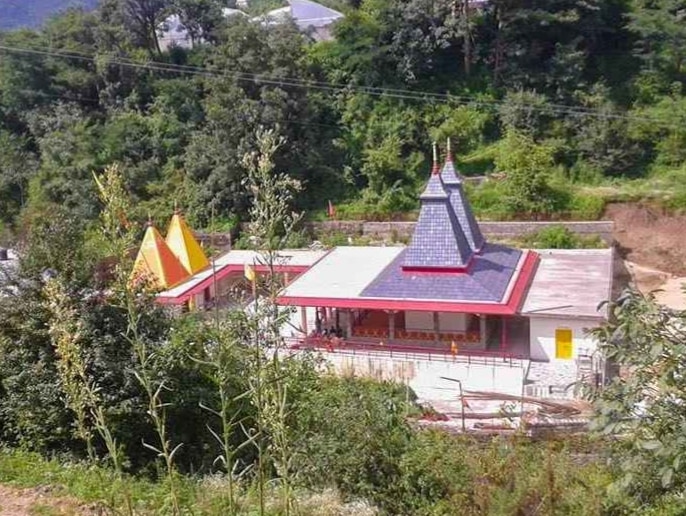
The temple showcases a rich artistic heritage through its numerous paintings rendered in the traditional Pahari and Kangra styles. These artworks have remarkably preserved their original detail, offering a glimpse into the region's cultural past. Architecturally, the temple is characterized by its dome-styled design, a distinctive feature that adds to its aesthetic appeal.
Location and Accessibility
Nestled in a serene valley on the Lagroo road, Shri Mahaveer Hanuman Mandir Khushala is located less than five kilometers from Shoghi and approximately eleven kilometers from Shimla's Welcome Gate at Taradevi. The temple is easily accessible via public transportation like buses and taxis, as well as private vehicles, with ample parking available near its entrance. The surrounding environment, characterized by lush green trees and natural beauty, enhances the tranquil experience for visitors.
Source: Wikipedia ↗
Frequently Asked Questions
What is the origin of the name Shri Mahaveer Hanuman Mandir Khushala?
The temple is named Khushala (meaning efficiency) because of a legend where Lord Hanuman accepted the prayer of Baba Jankidas to be enthroned in idol form at the site, making the lives of devotees meaningful and efficient. It was originally established as a Radha Krishna temple called Thakurdwara.
What is the historical significance of the temple?
According to legend, the temple's origins trace back to the Treta Yuga when Lord Hanuman paused at the peak while carrying the Sanjivani herb. The temple is said to have been built around 2,500 years ago and houses ancient idols of Radha Krishna.
What are the notable features of the temple's architecture and art?
The temple features dome-styled architecture and is adorned with numerous paintings in the Pahari and Kangra painting styles, which have retained their artwork over time and showcase the temple's cultural heritage.
What is the belief associated with the statues of Lord Hanuman at the temple?
Two massive statues of Shri Mahaveer Hanuman are installed at the temple, facing in opposite directions (West and South). Devotees believe that Lord Hanuman protects them from all evils and helps them overcome life's problems.
Why is the temple also known as 'Derajamatiya'?
The temple is also known as 'Derajamatiya', which translates to 'encampment of saints'. This name comes from the presence of numerous Samadhis of saints within the temple premises, indicating its importance for spiritual practitioners.
What offerings do devotees make at Shri Mahaveer Hanuman Mandir Khushala?
Devotees exhibit deep faith by visiting from afar and presenting their first crop from harvest as offerings to Lord Hanuman, particularly during the months of Jyeshtha and Kartika. Bhandara (community feast) is also organized on Sundays and auspicious occasions.
Related Temples (Hindu)

Rukmini Devi Temple
The Rukmini Devi Temple, located in Dwarka, Gujarat, India, is dedicated to Goddess Rukmini, the chief queen of Krishna and an incarnation of Lakshmi. While believed to date back to the 5th century BC, its present structure is thought to originate from the 12th century and was rebuilt in the 19th century. The temple is renowned for its intricate carvings and its significance in local tradition, where a pilgrimage to Dwarka is considered incomplete without paying respects here.

Taraknath Temple
The Taraknath Temple, located in Tarakeswar, West Bengal, India, is a significant Hindu pilgrimage site dedicated to Lord Shiva, worshiped here as Tarakanatha. Constructed in 1729, it features a distinct Bengal architectural style with an 'atchala' structure and an adjacent 'natmandir'. The temple is renowned for its belief that a dip in the nearby Dudhpukur tank fulfills prayers and is considered one of the 64 Jyotirlingas.

Tanot Mata Temple
The Tanot Mata Temple is a significant Hindu shrine located in the Jaisalmer district of Rajasthan, India, near the Pakistan border. Revered as a form of Goddess Hinglaj Mata, the temple is famously associated with the Indian victories in the Indo-Pakistani Wars of 1965 and 1971, with local folklore attributing the successful outcomes to divine intervention. The Border Security Force of India now manages the temple complex, which also includes a victory tower and a war museum.