
Shree Swaminarayan Temple Mumbai
Shikharband·19th century·India
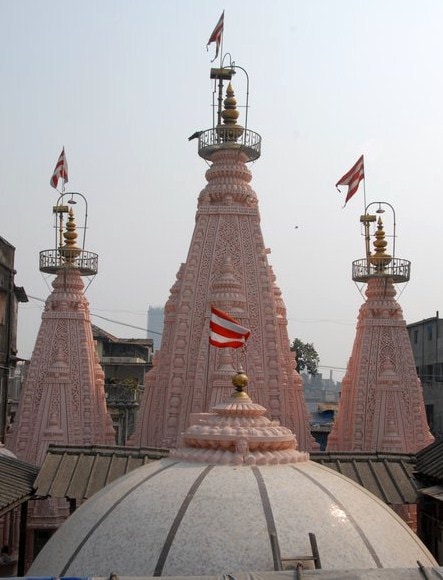
Shree Swaminarayan Temple Mumbai, also known as Shri Swaminarayan Mandir, is a historic Hindu temple located in the Bhuleshwar area of Mumbai. It is the oldest Swaminarayan temple in the city, over a century old, and features a distinctive tri-spire structure.
Key Facts
- ›The temple is the oldest Swaminarayan Mandir in Mumbai, established over a hundred years ago.
- ›It features a tri-spire architectural design.
- ›The primary deities worshipped include Laxminarayan Dev with Ghanshyam Maharaj, and Radha Krishna Dev with Hari Krishna Maharaj.
- ›The temple is part of the Swaminarayan Sampraday and comes under the Laxminarayan Dev Gadi (Vadtal).
- ›It is located in the Bhuleshwar area, which is known for its flower market (Phool Galli) due to the temple's demand for flowers.
- ›The present structure was built in 1903, with significant contributions from Rao Bahadur Sheth Curumsey Damjee and Shree Mathurdas Vaishnav.
Laxminarayan Dev, Ghanshyam Maharaj, Radha Krishna Dev, Hari Krishna Maharaj
Oldest Swaminarayan Temple In Mumbai, Historic Religious Site, Center For Swaminarayan Sampraday
Ram Navami/Swaminarayan Jayanti, Janmashtami, Vaman Jayanti, Nrisinha Jayanti, Mahashivratri, Ganesh Chaturthi, Hindola
Ranchhoddas Pranjeevandas, Rao Bahadur Sheth Curumsey Damjee, Shree Mathurdas Vaishnav
Scenes From Krishnalila Painted On the Dome
About Shree Swaminarayan Temple Mumbai
Shree Swaminarayan Temple Mumbai, also known as Shri Swaminarayan Mandir, is a significant Hindu temple situated in the bustling Bhuleshwar area of Mumbai. It holds the distinction of being the oldest Swaminarayan Mandir in the city, with a history spanning over a hundred years. The temple is an integral part of the Swaminarayan Sampraday and falls under the Laxminarayan Dev Gadi of Vadtal.
History and Construction
The foundation of the first Shree Swaminarayan temple in Mumbai was laid in 1868 by Ranchhoddas Pranjeevandas, who repurposed his own residence for the sacred structure. The deities of Hari Krishna Maharaj, Gaulokvihari, and Radhika were installed by Acharya Maharaj Bhagwatprasadji Maharaj. The present tri-spire temple was consecrated in 1903, with Acharya Maharaj Lakshmiprasadji Maharaj presiding over the installation of deities, including Ghanshyam Maharaj and Lakshminarayan Dev. Notable individuals like Rao Bahadur Sheth Curumsey Damjee and Shree Mathurdas Vaishnav played crucial roles in the temple's reconstruction, contributing significant resources.
Architecture and Structure
The temple is characterized by its elaborate and visually appealing carved frontage, which stands out amidst its surroundings. A flight of twenty-five steps leads to the Sabhamandap (audience hall), adorned with shrines dedicated to Lord Ganesha and Lord Hanuman on either side. The main sanctuary houses three distinct shrines: one on the east with idols of Hari Krishna Maharaj, Gaulokvihari, and Radhika; a central shrine with idols of Ghanashyam Maharaj, Narayan, and Laxmi; and a western shrine designated as a resting place for the deities. A dome, painted with scenes from the Krishnalila (Sports of Krishna), crowns the Sabhamandap, supported by fifty-four pillars. The first floor features a large audience hall frequently used for religious discourses.
Religious Significance and Festivals
Shree Swaminarayan Temple Mumbai is a pilgrimage site for followers of the Swaminarayan tradition. The temple is a center for worship and spiritual activities, celebrating various important Hindu festivals. These include Ram Navami/Swaminarayan Jayanti, Janmashtami, Vaman Jayanti, Nrisinha Jayanti, Mahashivratri, and Ganesh Chaturthi. Additionally, the festival of Hindola is a notable celebration during the Indian month of Shravan.
The temple's presence in Bhuleshwar has also contributed to the local landscape, notably leading to the emergence of Phool Galli (flower market) due to the consistent demand for flowers for temple rituals and decorations.
Source: Wikipedia ↗
Frequently Asked Questions
When was the first Shree Swaminarayan temple built in Mumbai?
The first Shree Swaminarayan temple in Mumbai was built in 1868 by Ranchhoddas Pranjeevandas, who rebuilt his own residence for this purpose. The deities of Hari Krishna Maharaj, Gaulokvihari, and Radhika were consecrated at that time.
What is the architectural style of the present Shree Swaminarayan Temple Mumbai?
The present structure of the Shree Swaminarayan Temple Mumbai features a tri-spire design. It is classified as a Shikharband Mandir, indicating a temple with a spire.
Who are the main deities worshipped at Shree Swaminarayan Temple Mumbai?
The primary deities installed at the temple are Laxminarayan Dev with Ghanshyam Maharaj, and Radha Krishna Dev with Hari Krishna Maharaj. Radha Krishna are specifically worshipped in the form of Radha Golokvihari.
What are some of the major festivals celebrated at the temple?
The temple celebrates a variety of Hindu festivals, including Ram Navami/Swaminarayan Jayanti, Janmashtami, Vaman Jayanti, Nrisinha Jayanti, Mahashivratri, and Ganesh Chaturthi. The festival of Hindola is also observed during the month of Shravan.
What is the significance of the Bhuleshwar area in relation to the temple?
The Shree Swaminarayan Temple is located in the Bhuleshwar area of Mumbai. The high demand for flowers for temple offerings contributed to the development of the famous Phool Galli (flower market) in this vicinity.
Related Temples (Hindu)

Satyanarayana Temple, Annavaram
The Satyanarayana Temple in Annavaram, Andhra Pradesh, is a prominent Hindu pilgrimage site dedicated to Lord Satyanarayana Swamy, an incarnation of Lord Vishnu. Situated atop Ratnagiri Hill, the temple is renowned for attracting thousands of devotees daily, particularly for the Satyanarayana Vratham, and is considered one of the wealthiest and most visited religious sites in the state.

Jhandewalan Temple
The Jhandewalan Temple in Delhi, dedicated to Vaishno Devi, was founded in the 19th century by Badri Bhagat. Originally located near a spring where Bhagat discovered an idol, the temple gained its name from a large flag (jhanda) hoisted to mark the site. It remains a significant religious center, particularly during the Navratri festival, and is known for its extensive charitable work.

Mata Mansa Devi Mandir
Mata Mansa Devi Mandir is a significant Hindu temple dedicated to Goddess Mansa Devi, a form of Shakti, located in the Panchkula district of Haryana, India. The temple complex, spread across 100 acres in the Shivalik foothills, was established in its current form between 1811 and 1815 by Maharaja Gopal Das Singh of Mani Majra and has been managed by the Shri Mata Mansa Devi Shrine Board since 1991.