
Patali Srikhetra
Patali Srikhetra is a historically significant religious site in Odisha, India, particularly important to the Subarnapur district. It is associated with Shaktism, Buddhism, and Vaishnavism, and widely believed to have sheltered the idols of Lord Jagannath, Balabhadra, and Devi Subhadra during invasions.
Key Facts
- ›Located at the foot of Trikut Hill in Kotsamalai, Subarnapur district, Odisha.
- ›Associated with Shaktism, Buddhism, and Vaishnavism.
- ›Believed to be a hiding place for Lord Jagannath, Balabhadra, and Devi Subhadra for 144 years.
- ›Historical accounts mention King Sovanadeva hiding the idols here during Raktavahu's invasion.
- ›Archaeological Survey of India has testified its linkage with Srikhetra (Puri).
- ›Archaeological properties of pre-historic importance have been found at the site.
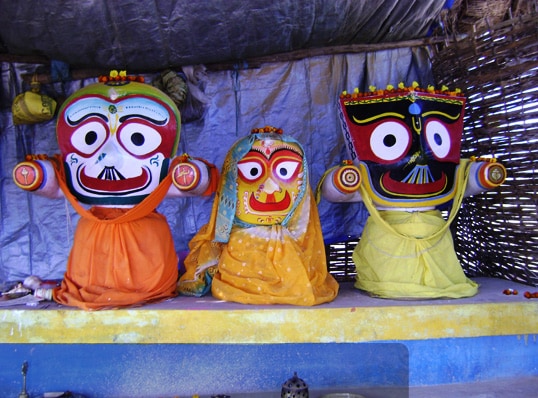
Jagannath, Balabhadra, Subhadra
- Historical Importance For Subarnapur District and Odisha
- Association With Shaktism, Buddhism, and Vaishnavism
- Believed Hiding Place For Jagannath Idols During Raktavahu's Invasion
- Archaeological Linkage With Srikhetra
- Presence of Pre-Historic Archaeological Properties
Somavamsi Dynasty
King Sovanadeva, King Yayati Keshari
About Patali Srikhetra
Patali Srikhetra is a site of considerable historical and religious importance located in the Subarnapur district of Odisha, India. Situated at the foot of Trikut Hill in Kotsamalai, within the Birmaharajpur subdivision, it is recognized for its deep connections to multiple religious traditions, including Shaktism, Buddhism, and Vaishnavism.
Historical Significance and Legends
The site's most prominent legend is its role as a sanctuary for the idols of Lord Jagannath, Balabhadra, and Devi Subhadra. According to traditional accounts, particularly from the Madalapanji, these deities were hidden in the caves of Trikut Hill for a period of 144 years. This occurred during the invasion of Raktavahu, when King Sovanadeva of Odisha is said to have escaped with the images and buried them at a location called Sonepur-Gopali, which is identified with Patali Srikhetra. Centuries later, King Yayati Keshari of the Somavamsi dynasty is credited with recovering the idols and establishing new images, eventually leading to their enshrinement in Puri.
Archaeological Evidence
The historical claims surrounding Patali Srikhetra have been subject to archaeological investigation. Teams from the Archaeological Survey of India, led by figures such as Dimiri, and the State Archaeology, under B. K. Ratha, have visited the site. These investigations have reportedly testified to the linkage between Patali Srikhetra and the famous pilgrimage center of Srikhetra (Puri). Furthermore, archaeological discoveries at the site have yielded properties of pre-historic importance, underscoring its long history of human habitation and religious activity.
Source: Wikipedia ↗
Frequently Asked Questions
What is Patali Srikhetra and why is it significant?
Patali Srikhetra is a significant religious and historical site in Odisha, India, renowned for its association with the deities Jagannath, Balabhadra, and Subhadra. It is believed that the idols of these deities were hidden in its caves for 144 years to protect them from invasion.
What religious traditions are associated with Patali Srikhetra?
The site holds importance for multiple religious traditions, including Shaktism, Buddhism, and Vaishnavism. This indicates a historical confluence of different spiritual practices at this location.
What historical events are linked to Patali Srikhetra?
According to historical accounts like the Madalapanji, King Sovanadeva of Odisha escaped with the images of Lord Jagannath, Balabhadra, and Devi Subhadra during the invasion of Raktavahu and hid them at Patali Srikhetra. Later, King Yayati Keshari of the Somavamsi dynasty recovered them.
Has the historical significance of Patali Srikhetra been archaeologically verified?
Yes, teams from the Archaeological Survey of India and the State Archaeology have visited Patali Srikhetra. They have testified its linkage with Srikhetra (Puri) and discovered archaeological findings of pre-historic importance.
Related Temples (Hindu)

Thiruchendur Murugan Temple
The Thiruchendur Murugan Temple, situated in the Thoothukudi district of Tamil Nadu, is a prominent Hindu temple dedicated to Lord Murugan. It is recognized as one of the Six Abodes of Murugan and holds significant mythological importance, recounting Murugan's victory over the asura Surapadman.

Kapila Theertham
Kapila Theertham is a Shaivite temple located at the foot of the Tirumala hills in Andhra Pradesh, India. The temple is dedicated to Lord Shiva, referred to as Kapileswara, and is believed to have been installed by Sage Kapila. It is situated at the entrance of a mountain cave, with a temple tank fed by a mountain stream, and holds significant religious importance for pilgrims.

Yaganti temple
The Sri Yaganti Uma Maheswara Temple, located in Andhra Pradesh, India, is a significant Hindu temple dedicated to Shiva. Constructed in the 15th century by the Vijayanagara Empire's Sangama Dynasty, it is known for its unique architectural features and popular beliefs surrounding a growing Nandi statue and the absence of crows.