
Narasimhaswamy Temple, Namakkal
Dravidian, Rock-cut·8th century·India
The Narasimhaswamy Temple in Namakkal, Tamil Nadu, is a rock-cut temple dedicated to Narasimha, an avatar of Vishnu. Believed to have been constructed between the 6th and 8th centuries by the Adiyaman kings, it showcases Dravidian and rock-cut architectural styles. The temple is renowned for its legends and its connection to the mathematician Srinivasa Ramanujan.
Key Facts
- ›Dedicated to Lord Narasimha, an avatar of Vishnu.
- ›Features Dravidian and rock-cut architectural styles.
- ›Believed to have been built between the 6th and 8th centuries by the Adiyaman kings.
- ›Associated with legends involving Goddess Lakshmi and Hanuman.
- ›Mathematician Srinivasa Ramanujan credited his findings to the presiding deity, Namagiri Mahalakshmi.
- ›The main festival is the fifteen-day Panguni Uthiram celebration.

Narasimha, Lakshmi
- Legendary Association With Narasimha and Lakshmi
- Historical Importance Due To Rock-Cut Architecture
- Spiritual Connection For Mathematician Srinivasa Ramanujan
- Prominent Tourist Attraction In Namakkal District
Adiyaman Kings, Pandya Kings, Satyaputra Kings
Panguni Uthiram
Rock
Adiyaman Kings, Pandya Kings, Satyaputra Kings
Ugra Narasimha, Vamana, Trivikrama, Narasimha Slaying Hiranyakashipu, Ananta Sayana Vishnu
Kamalalayam
About Narasimhaswamy Temple, Namakkal
The Narasimhaswamy Temple, located in Namakkal, Tamil Nadu, is a significant Hindu temple dedicated to Lord Narasimha, an avatar of the god Vishnu. The temple is renowned for its unique rock-cut architecture, carved directly into a hill, and displays characteristics of the Dravidian style.
Legend and History
The temple's origins are intertwined with Hindu mythology. According to legend, Narasimha appeared here for his consort Lakshmi and Hanuman. Historically, architectural analyses suggest the temple was constructed between the 6th and 8th centuries CE, with inscriptions and paleographic evidence pointing to foundations laid by the Adiyaman kings, or possibly the Pandya or Satyaputra kingdoms. Its rock-cut nature invites comparisons with similar structures from the period, such as the Badami Caves.
Architectural and Sculptural Features
Carved out of a hill, the temple complex includes a main sanctum housing the image of Narasimha in a seated posture, known as Asanamurthi, with celestial beings like Sanaka, Sanata, Surya, Chandra, Shiva, and Brahma depicted as worshipping him. The rock-cut sanctum is square and features sculpted cells, pillars, and a verandah. Notable relief sculptures adorn the temple walls, including depictions of Vamana's cosmic stride, Narasimha slaying Hiranyakashipu, and Ananta Sayana Vishnu. A particularly rare sculpture of 'Ugra Narasimha' is also a significant feature.
Spiritual and Cultural Significance
The temple holds profound spiritual importance. It is famously associated with the mathematician Srinivasa Ramanujan, who credited his mathematical insights to the goddess Namagiri Mahalakshmi, his family deity. He described visions of the goddess revealing complex mathematical formulas. The temple is also a site of pilgrimage, particularly during its main festival, the fifteen-day Panguni Uthiram celebration in March-April, which includes processions and the sacred marriage of the presiding deity.
The temple is maintained by the Hindu Religious and Charitable Endowment department of the Government of Tamil Nadu and is recognized as a prominent tourist attraction.
Source: Wikipedia ↗
Frequently Asked Questions
What is the legend behind the Narasimhaswamy Temple?
According to legend, Vishnu, in his avatar as Narasimha, killed the demon king Hiranyakashyapu. His consort, Lakshmi, was performing penance due to Narasimha not forgiving the demon. Hanuman, carrying a shaligrama, asked Lakshmi to hold it, but she placed it down, and it grew into a mount. Narasimha then appeared and made his abode here, with Lakshmi regaining her place on his chest.
When was the Narasimhaswamy Temple built?
Historians generally place the construction of the temple between the 6th and 8th centuries CE. Some suggest it was built by the Pandya or Satyaputra kings, while others point to the Adiyaman kings. Paleographic and architectural evidence supports a 6th-century dating for some parts.
What architectural styles are present in the temple?
The temple exhibits both Dravidian style of architecture and rock-cut architecture, as it is carved out of a hill. This style shares similarities with rock-cut temples found in other historical sites like Badami Caves.
What is the significance of this temple for Srinivasa Ramanujan?
The renowned mathematician Srinivasa Ramanujan attributed his mathematical discoveries to the goddess Namagiri Mahalakshmi, who he considered his family deity. He described visions where the goddess appeared and presented him with mathematical formulas, which he would then verify.
What are the main festivals celebrated at the temple?
The primary festival is the fifteen-day Panguni Uthiram, observed during the Tamil month of Panguni (March–April). During this festival, the images of the presiding deities are paraded through the streets in a chariot, and the sacred marriage of the deity is performed.
What notable sculptures are found in the temple?
The temple features sculptures depicting the narrative of Vamana's cosmic stride, Narasimha slaying Hiranyakashipu, and Ananta Sayana Vishnu. A rare sculpture of 'Ugra Narasimha' is also noted, which was reportedly unknown even to the Pallavas and Chalukyas.
Related Temples (Hindu)

Pataleshwar Caves, Pune
The Pataleshwar Caves are an 8th-century rock-cut Hindu temple complex in Pune, Maharashtra, India, originally excavated during the Rashtrakuta period. Dedicated primarily to Shiva, the temple features a unique monolithic structure with a circular Nandi mandapa and a large pillared mandapa, with its sanctums carved deeper into the ground, giving it the name Pataleshwar, meaning 'Lord of the Underworld'. The site, managed by the Archaeological Survey of India, is a protected monument that has undergone restoration and now includes a surrounding garden and new idols.

Masrur Temples
The Masrur Temples, an early 8th-century Hindu temple complex in Himachal Pradesh, India, are carved from a single monolithic rock. Dedicated to Shiva, Vishnu, Devi, and the Saura tradition, they showcase a North Indian Nagara architectural style, facing the Dhauladhar mountain range.
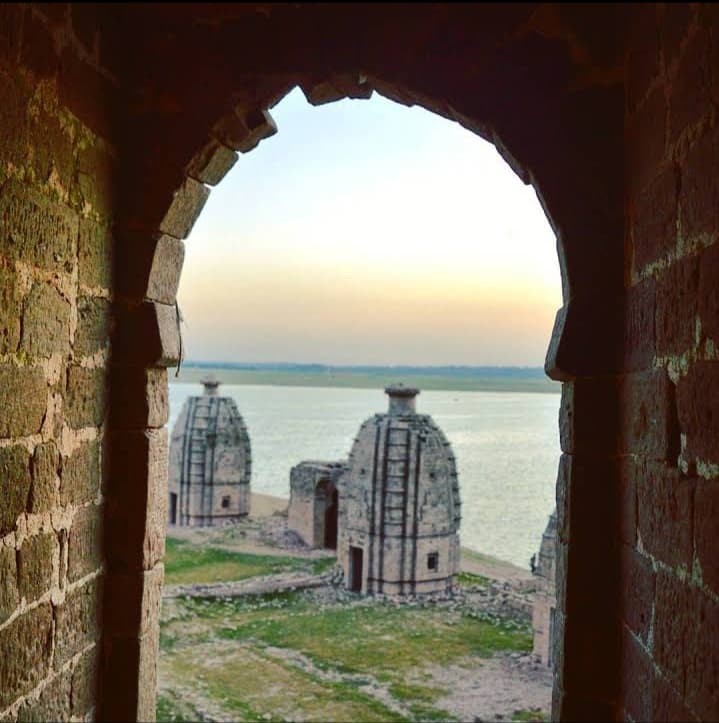
Bathu Temples
The Bathu Temples, also known as Bathu ki Ladi, are a cluster of ancient Hindu temples located in the Kangra district of Himachal Pradesh, India. Originally submerged by the Pong Dam reservoir in the 1970s, these temples are now only accessible for a few months each year when water levels recede. The main temple is primarily dedicated to Goddess Parvati and Lord Shiva, with some traditions also associating it with Lord Vishnu.