
Martand Sun Temple
Kashmiri architecture (blending Gandharan, Gupta, Chinese, Syrian-Byzantine influences)·8th century·India
The Martand Sun Temple, located in the Kashmir Valley of Jammu and Kashmir, India, is an eighth-century Hindu temple dedicated to Surya, the solar deity. Commissioned by Lalitaditya Muktapida, the temple was renowned for its unique architecture blending various styles. Despite its historical significance and architectural brilliance, it was later destroyed and has suffered further damage from earthquakes.
Key Facts
- ›Dedicated to Surya, the Hindu solar deity, also known as Martand.
- ›Commissioned in the eighth century CE by King Lalitaditya Muktapida.
- ›Suffered destruction by Sikandar Shah Miri and subsequent damage from earthquakes.
- ›An example of Kashmiri architecture with influences from Gandharan, Gupta, Chinese, and Syrian-Byzantine styles.
- ›Featured a large colonnaded courtyard surrounded by 84 smaller shrines.
- ›Declared a site of national importance by the Archaeological Survey of India.

Surya
- Architectural Masterpiece Blending Multiple Styles
- Historical Site Associated With Rulers of the Kashmir Valley
- Religious Significance As A Temple Dedicated To the Sun Deity Surya
Karkota Dynasty
Lalitaditya Muktapida
Depictions of Vishnu, Depictions of Ganga, Depictions of Yamuna, Depictions of Surya
About Martand Sun Temple
The Martand Sun Temple is a significant Hindu temple situated in Mattan, within the Anantnag district of the Kashmir Valley in Jammu and Kashmir, India. Dating back to the eighth century CE, it was dedicated to Surya, the revered solar deity in Hinduism, who is also known by the synonym Martand.
History and Establishment
Historical accounts, notably from Kalhana, indicate that the Martand Sun Temple was commissioned by King Lalitaditya Muktapida. This ruler was a prominent figure of the Karkota Dynasty, and his patronage led to the construction of this grand edifice.
Destruction and Degradation
The temple's history is also marked by destruction and subsequent degradation. According to chroniclers like Jonaraja and Hasan Ali, the temple was destroyed by Sikandar Shah Miri, who reigned from 1389 to 1413 CE. This act is often attributed to his zeal for Islamization and the influence of Sufi preacher Mir Muhammad Hamadani. Jonaraja specifically blamed Suhabhatta, a Brahman convert, for a reign of persecution against local Hindus. However, scholars caution that these accounts should be examined critically, suggesting that Sikandar's policies might have been influenced by realpolitik and attempts to assert state power, similar to previous Hindu rulers. The ruins of the Martand temple have also suffered further damage over time due to several earthquakes.
Architecture and Design
The Martand temple was an architectural marvel, built atop a plateau offering panoramic views of the Kashmir Valley. It is recognized as an excellent specimen of Kashmiri architecture, successfully blending influences from Gandharan, Gupta, Chinese, and possibly Syrian-Byzantine styles. The temple complex featured a large colonnaded courtyard, measuring 220 feet long and 142 feet broad, with its primary shrine at the center, surrounded by 84 smaller shrines. This design made it the largest example of a peristyle in Kashmir, characterized by its proportional chambers aligned with the temple's perimeter.
The primary entrance, situated on the western side of the quadrangle, reflected the grandeur of the entire temple through its elaborate decoration and allusions to the deities worshipped within. The central temple structure is thought to have had a pyramidal top, a common feature in Kashmiri temples. The antechamber of the main shrine contained various wall carvings depicting other deities such as Vishnu, and river goddesses like Ganga and Yamuna, alongside the sun-god Surya.
Conservation and Restoration
The Archaeological Survey of India has acknowledged the Martand Sun Temple's importance by declaring it a site of national importance in Jammu and Kashmir. It is listed among the centrally protected monuments. In recognition of its historical and architectural value, the Jammu and Kashmir government initiated efforts for its restoration in March 2024.
Cultural Presence
The Martand Sun Temple has also made its mark in popular culture, serving as a backdrop for several songs in Hindi films, including "Chala Bhi Aa Aaja Rasiya" from Man Ki Aankhen (1970) and "Tere Bina Zindagi Se Koi Shikwa Nahiin" from Aandhi (1975). More recently, it was featured in the 2014 film Haider, modeled on Shakespeare's Hamlet. The depiction in Haider drew criticism from some Kashmiri Pandits who felt the site was portrayed negatively, leading to calls for a ban.
Source: Wikipedia ↗
Frequently Asked Questions
When was the Martand Sun Temple built?
The Martand Sun Temple was commissioned in the eighth century CE. Historical accounts attribute its establishment to Lalitaditya Muktapida.
Who destroyed the Martand Sun Temple?
According to historical sources, the temple was destroyed by Sikandar Shah Miri between 1389 and 1413 CE. This act is often described as part of a zeal to Islamize society.
What architectural styles influenced the Martand Sun Temple?
The temple is considered an excellent specimen of Kashmiri architecture, blending Gandharan, Gupta, Chinese, and possibly Syrian-Byzantine forms. It featured a large colonnaded courtyard with its primary shrine at the center.
What is the current status of the Martand Sun Temple?
The Martand Sun Temple is currently in ruins, having suffered destruction and damage from earthquakes. However, the Archaeological Survey of India has declared it a site of national importance, and restoration efforts were initiated in March 2024.
What deities were depicted in the Martand Sun Temple?
The primary deity worshipped was Surya, the sun-god. Wall carvings in the antechamber also depicted other gods like Vishnu and river goddesses such as Ganga and Yamuna.
Related Temples (Hindu)
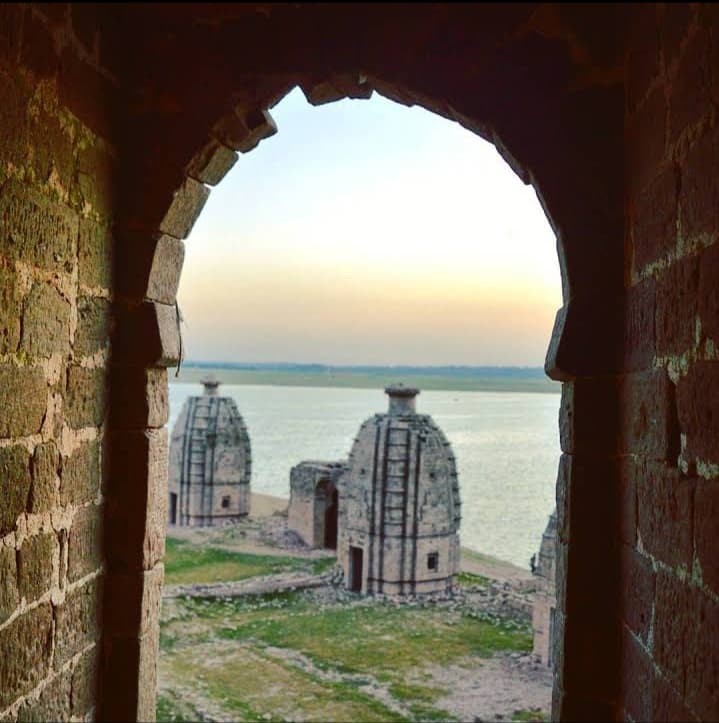
Bathu Temples
The Bathu Temples, also known as Bathu ki Ladi, are a cluster of ancient Hindu temples located in the Kangra district of Himachal Pradesh, India. Originally submerged by the Pong Dam reservoir in the 1970s, these temples are now only accessible for a few months each year when water levels recede. The main temple is primarily dedicated to Goddess Parvati and Lord Shiva, with some traditions also associating it with Lord Vishnu.

Masrur Temples
The Masrur Temples, an early 8th-century Hindu temple complex in Himachal Pradesh, India, are carved from a single monolithic rock. Dedicated to Shiva, Vishnu, Devi, and the Saura tradition, they showcase a North Indian Nagara architectural style, facing the Dhauladhar mountain range.

Pataleshwar Caves, Pune
The Pataleshwar Caves are an 8th-century rock-cut Hindu temple complex in Pune, Maharashtra, India, originally excavated during the Rashtrakuta period. Dedicated primarily to Shiva, the temple features a unique monolithic structure with a circular Nandi mandapa and a large pillared mandapa, with its sanctums carved deeper into the ground, giving it the name Pataleshwar, meaning 'Lord of the Underworld'. The site, managed by the Archaeological Survey of India, is a protected monument that has undergone restoration and now includes a surrounding garden and new idols.