
Markanda Mahadev, Chamorshi
The Markanda Mahadev Temple Complex, often referred to as 'Mini Khajuraho,' is an 8th-century Hindu temple complex dedicated to Lord Shiva, located on the banks of the Wainganga River near Chamorshi in Maharashtra, India. The temple's construction is attributed to the Rashtrakuta dynasty, and its outer walls feature intricate sculptures.
Key Facts
- ›The temple complex is dedicated to Lord Shiva.
- ›Its name is derived from the sage Markandeya, a devoted follower of Shiva.
- ›Construction is attributed to the Rashtrakuta dynasty, spanning from the 8th to the 12th century.
- ›The complex is spread over 40 acres and features many temples, some in a dilapidated condition.
- ›Intricate idols and sculptures adorn the outer walls of the temple complex.
- ›It is known locally as 'Mini Khajuraho' for its architectural style.

Shiva
Architectural Style, Historical Attribution To Rashtrakuta Dynasty, Religious Site Dedicated To Lord Shiva
Rashtrakuta Dynasty
Rashtrakuta Dynasty, Markandeya Rishi
Intricate Idols On Outer Walls
Wainganga River
About Markanda Mahadev, Chamorshi
The Markanda Mahadev Temple Complex, located on the banks of the Wainganga River near Chamorshi in the Gadchiroli District of Maharashtra, India, is a significant historical and religious site. Often referred to as 'Mini Khajuraho,' this 8th-century temple complex is dedicated to Lord Shiva.
Legend and Dedication
The name 'Markanda' is derived from Markandeya rishi, a revered sage and ardent devotee of Shiva. According to legend, the rishi performed years of penance on the banks of the Markanda River. In his devotion, he attempted to offer his head to Lord Shiva, who then appeared, halted his action, and blessed him with a temple in his name.
Architectural Heritage
The construction of the Markanda Mahadev Temple Complex is attributed to the Rashtrakuta dynasty, whose rule extended from the 8th to the 12th century. The complex spans an impressive 40 acres and, despite many of its temples being in a dilapidated condition, showcases intricate idols and sculptures on its outer walls. These detailed carvings are a testament to the artistic and architectural prowess of the era, lending the site its 'Mini Khajuraho' moniker.
Location and Accessibility
The temple complex is situated near the town of Chamorshi, with the nearest village being Marakand Deo. It is accessible via road from Gadchiroli and Chandrapur. Chandrapur serves as the nearest railway station, offering connections to major Indian cities, and is approximately 67 km from the temple site. Nagpur is about 190 km away.
Source: Wikipedia ↗
Frequently Asked Questions
Who is the Markanda Mahadev Temple Complex dedicated to?
The Markanda Mahadev Temple Complex is primarily dedicated to Lord Shiva. The complex's name originates from Markandeya rishi, a devout follower of Shiva who performed penance on the banks of a river and received a blessing for a temple in his name.
What is the historical origin of the Markanda Mahadev Temple Complex?
The temple complex's construction is attributed to the Rashtrakuta dynasty, with its origins dating back to the 8th century. The dynasty's patronage is believed to have extended from the 8th to the 12th century.
What is the architectural significance of the Markanda Mahadev Temple Complex?
The Markanda Mahadev Temple Complex is known as 'Mini Khajuraho,' suggesting a notable architectural style with intricate sculptures and idols. These detailed carvings are featured on the outer walls of the temple structures.
Where is the Markanda Mahadev Temple Complex located?
The Markanda Mahadev Temple Complex is situated on the banks of the Wainganga River, near Chamorshi town in the Gadchiroli District of Maharashtra, India. The nearest village is Marakand Deo.
What is the size of the Markanda Mahadev Temple Complex?
The temple complex is quite extensive, spread over an area of 40 acres of land. Within this area, there are numerous temples, though many are currently in a dilapidated state.
Related Temples (Hindu)
Bathu Temples
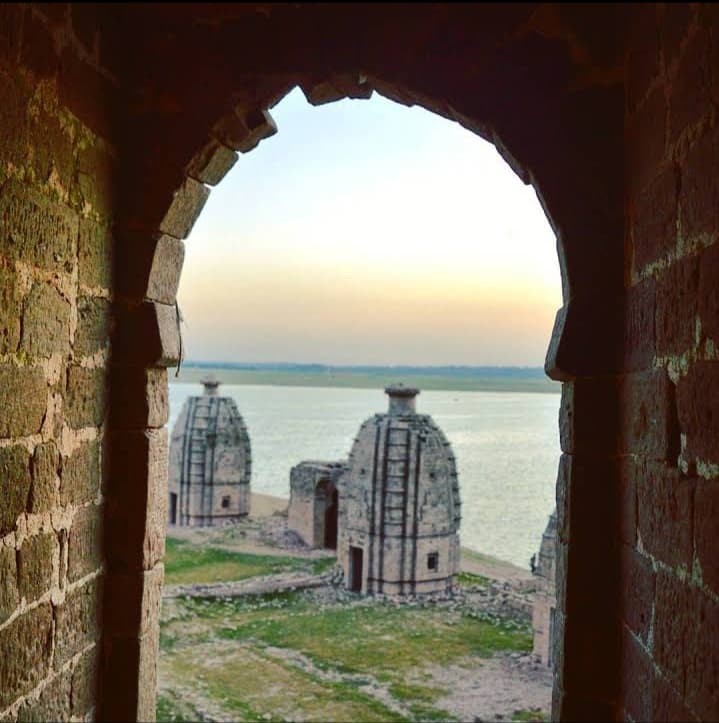
The Bathu Temples, also known as Bathu ki Ladi, are a cluster of ancient Hindu temples located in the Kangra district of Himachal Pradesh, India. Originally submerged by the Pong Dam reservoir in the 1970s, these temples are now only accessible for a few months each year when water levels recede. The main temple is primarily dedicated to Goddess Parvati and Lord Shiva, with some traditions also associating it with Lord Vishnu.

Masrur Temples
The Masrur Temples, an early 8th-century Hindu temple complex in Himachal Pradesh, India, are carved from a single monolithic rock. Dedicated to Shiva, Vishnu, Devi, and the Saura tradition, they showcase a North Indian Nagara architectural style, facing the Dhauladhar mountain range.

Pataleshwar Caves, Pune
The Pataleshwar Caves are an 8th-century rock-cut Hindu temple complex in Pune, Maharashtra, India, originally excavated during the Rashtrakuta period. Dedicated primarily to Shiva, the temple features a unique monolithic structure with a circular Nandi mandapa and a large pillared mandapa, with its sanctums carved deeper into the ground, giving it the name Pataleshwar, meaning 'Lord of the Underworld'. The site, managed by the Archaeological Survey of India, is a protected monument that has undergone restoration and now includes a surrounding garden and new idols.