
Madangopal Jiu Temple
The Madangopal Jiu Temple is a significant Hindu temple located in the village of Mellak, near Samta, Deulti, within the Howrah district of West Bengal, India. It is recognized as one of the largest "ath-chala" style temples in the region, distinguished by its distinctive eight-sloped roof.
Key Facts
- ›Located in Mellak village, near Samta, Deulti, West Bengal, India.
- ›Part of the Howrah district.
- ›Notable for its "ath-chala" architectural style.
- ›Features a roof with eight distinct slopes.
- ›Considered one of the largest "ath-chala" temples in West Bengal.
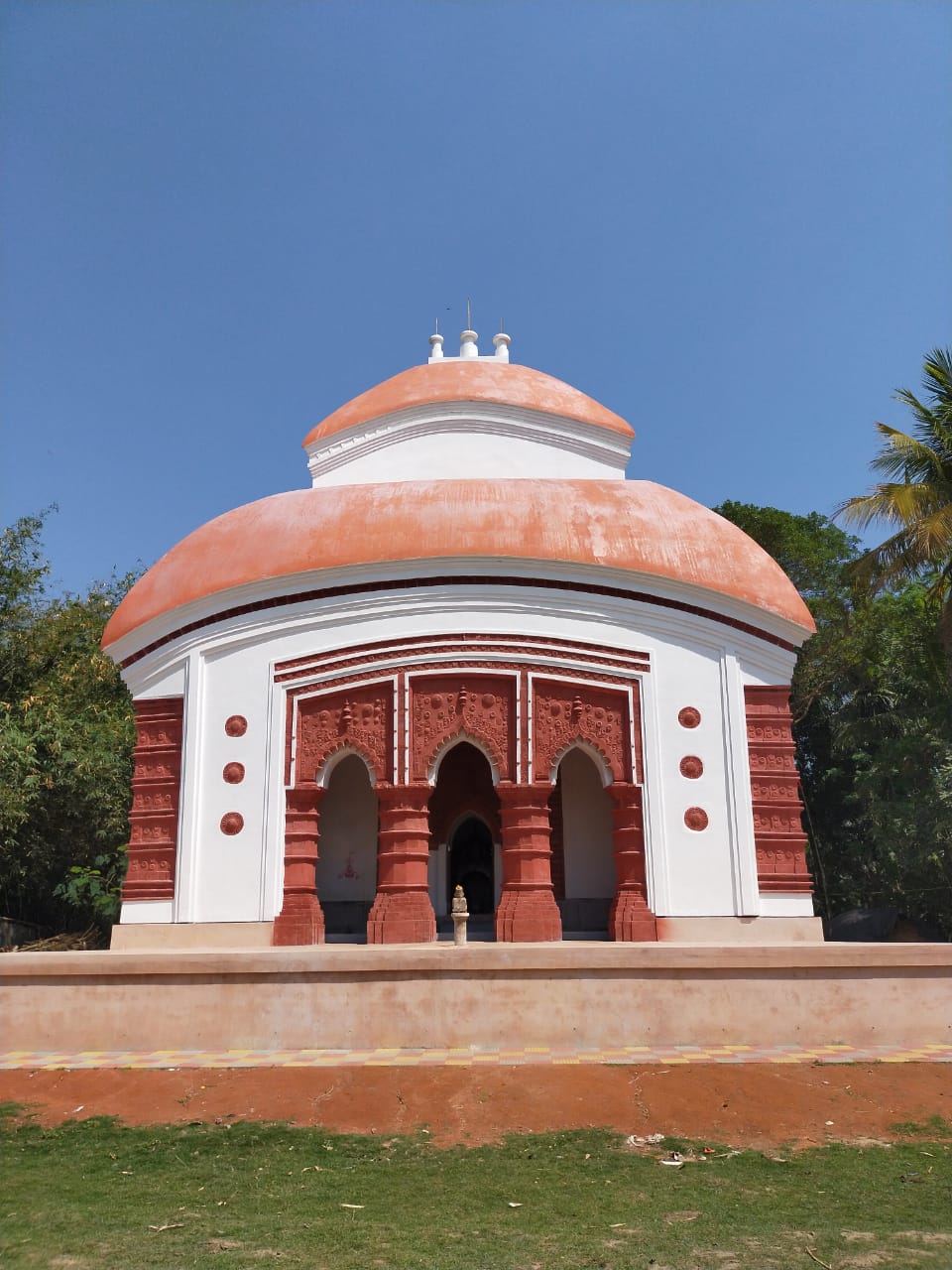
Madangopal Jiu
- Architectural Example of "Ath-Chala" Style
- One of the Largest "Ath-Chala" Temples In West Bengal
About Madangopal Jiu Temple
The Madangopal Jiu Temple is a Hindu place of worship located in the village of Mellak, near Samta and Deulti, within the Howrah district of West Bengal, India. The temple is dedicated to Madangopal Jiu.
Architecture
This temple is notable for its "ath-chala" architectural style, a characteristic feature found in many temples across West Bengal. The "ath-chala" design is specifically identified by its roof, which comprises eight distinct slopes. The Madangopal Jiu Temple is recognized as one of the largest examples of this particular style within West Bengal, highlighting its scale and architectural significance.
Source: Wikipedia ↗
Frequently Asked Questions
Where is the Madangopal Jiu Temple located?
The Madangopal Jiu Temple is situated in the village of Mellak, near Samta and Deulti, within the Howrah district of the Indian state of West Bengal.
What is the architectural style of the Madangopal Jiu Temple?
The temple is characterized by its "ath-chala" architectural style, which is a notable feature in West Bengal. This style is distinguished by its roof structure that has eight slopes.
What makes the Madangopal Jiu Temple architecturally significant?
It is recognized as one of the largest "ath-chala" temples found in West Bengal. The unique roof with its eight slopes contributes to its distinctive and significant architectural presence.
Related Temples (Hindu)

Kalighat Kali Temple
The Kalighat Kali Temple, a significant Hindu pilgrimage site in Kolkata, India, is dedicated to the goddess Kali. It is revered as one of the 51 Shakti Peethas, where a part of Goddess Sati's body is believed to have fallen. The present temple structure, dating back approximately 200 years, showcases the unique 'ath-chala' style of Bengal architecture.

Taraknath Temple
The Taraknath Temple, located in Tarakeswar, West Bengal, India, is a significant Hindu pilgrimage site dedicated to Lord Shiva, worshiped here as Tarakanatha. Constructed in 1729, it features a distinct Bengal architectural style with an 'atchala' structure and an adjacent 'natmandir'. The temple is renowned for its belief that a dip in the nearby Dudhpukur tank fulfills prayers and is considered one of the 64 Jyotirlingas.

Tanot Mata Temple
The Tanot Mata Temple is a significant Hindu shrine located in the Jaisalmer district of Rajasthan, India, near the Pakistan border. Revered as a form of Goddess Hinglaj Mata, the temple is famously associated with the Indian victories in the Indo-Pakistani Wars of 1965 and 1971, with local folklore attributing the successful outcomes to divine intervention. The Border Security Force of India now manages the temple complex, which also includes a victory tower and a war museum.