
Koodal Azhagar temple
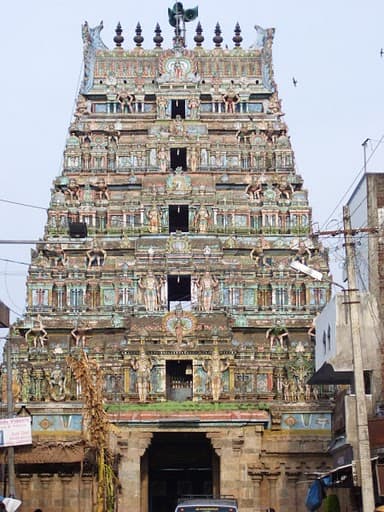
The Koodal Azhagar Temple in Madurai, Tamil Nadu, is a significant Hindu temple dedicated to Lord Vishnu. Constructed in the Dravidian architectural style, it is celebrated in early Tamil devotional literature and is recognized as one of the 108 Divya Desams. The temple is notable for housing the deity Vishnu in three distinct postures within its main shrine.
Key Facts
- ›Dedicated to Lord Vishnu, worshipped as Viyooga Sundarrajan.
- ›Constructed in the Dravidian architectural style.
- ›Glorified in the Naalayira Divya Prabandham, a Tamil canon of Alvar saints.
- ›Believed to have been originally built by the Pandyas, with later additions by Vijayanagara and Madurai Nayaks.
- ›Features a five-tiered rajagopuram and is surrounded by a granite wall.
- ›Houses the deity Vishnu in sitting, standing, and reclining postures in the central shrine.

Vishnu, Lakshmi
- Revered In Naalayira Divya Prabandham and Sangam Literature.
- One of the 108 Divya Desams Dedicated To Vishnu.
- Historical Importance Due To Pandya, Vijayanagara, and Madurai Nayak Patronage.
- Unique Navagraha Shrine Indicates Medieval Vaishnavite Cultural Practices.
Pandya, Vijayanagara Empire, Madurai Nayaks
Brahmotsavam
Granite
Pandyas, Vijayanagara Empire, Madurai Nayaks, Muthu K.R.V. Alagappa Chettiar
- Paintings of the Ashtadikpalakas
- Paintings Depicting Puranic Stories In Andal Shrine
- Stucco Images On the Ashtanga Vimana
Vaigai River, Teppakulam
About Koodal Azhagar temple
The Koodal Azhagar Temple, located in Madurai, Tamil Nadu, is a significant Hindu temple dedicated to Lord Vishnu. It is celebrated within the Naalayira Divya Prabandham, an important early medieval Tamil canon composed by the Alvar saints. The temple is recognized as one of the 108 Divya Desams, which are sacred abodes of Vishnu.
Architecture and Construction
Constructed in the Dravidian architectural style, the Koodal Azhagar Temple features a prominent five-tiered rajagopuram, or gateway tower, standing at 125 feet. The entire complex is enclosed by a substantial granite wall. Historical inscriptions suggest the temple was originally built by the Pandyas, with considerable later additions and renovations undertaken by the Vijayanagara Empire and the Madurai Nayaks kings, particularly during the 16th century. The central shrine is notable for housing the presiding deity, Koodal Azhagar, in three distinct postures: sitting, standing, and reclining, all carved from granite.
Legend and Religious Significance
According to local legend, the temple is associated with the story of ruler Vallabhadeva and the scholar Vishnucitta (later Periyalvar), who expounded sacred verses leading to salvation. The temple's name, "Koodal," is believed to refer to Vishnu's role as a bulwark against a great disaster during Mahapralaya, protecting devotees in Madurai. Its religious significance is further amplified by the presence of a Navagraha shrine, a feature usually found in Shiva temples, highlighting unique Vaishnavite practices of the medieval period.
Historical and Literary Mentions
Historical accounts and inscriptions indicate the temple's existence and endowments from as early as the 8th century. It is believed to be mentioned in ancient Sangam literature, including works like Madurai Kanchi, Paripāṭal, Kaliththokai, and Silappatikaram. The temple continues to be an active place of worship, maintained by the Hindu Religious and Charitable Endowments Department of the Government of Tamil Nadu, with daily rituals and prominent annual festivals like the Brahmotsavam.
Source: Wikipedia ↗
Frequently Asked Questions
Who is the presiding deity at Koodal Azhagar Temple?
The presiding deity at Koodal Azhagar Temple is Lord Vishnu, worshipped as Viyooga Sundarrajan. His consort, Goddess Lakshmi, is worshipped as Mathuravalli. The central shrine uniquely houses Vishnu in three forms: sitting, standing, and reclining.
What is the architectural style of the Koodal Azhagar Temple?
The Koodal Azhagar Temple is constructed in the Dravidian style of architecture. It features a five-tiered rajagopuram (gateway tower) and is enclosed by a granite wall. The vimana over the sanctum is of Ashtanga architecture.
What is the historical significance of Koodal Azhagar Temple?
The temple is historically significant as it is believed to have been originally built by the Pandyas, with later expansions by the Vijayanagara Empire and Madurai Nayaks. Inscriptions indicate substantial endowments and gifts for its maintenance. It is also mentioned in ancient Sangam literature.
What are the main festivals celebrated at Koodal Azhagar Temple?
The temple celebrates four daily rituals and three yearly festivals. The most prominent is the fourteen-day annual Brahmotsavam, held during the Tamil month of Vaikasi (May-June), during which the festive images are paraded through the streets.
What is the literary importance of the Koodal Azhagar Temple?
The temple is highly revered in the Naalayira Divya Prabandham, a compilation of Tamil devotional poems by the Alvar saints. It is also mentioned in ancient Sangam literature and various later works, highlighting its continuous religious and cultural importance.
What is unique about the religious practices at Koodal Azhagar Temple?
The Koodal Azhagar Temple follows the Tenkalai tradition of worship and adheres to the Vaikasana aagama. Uniquely among Vishnu temples, it features a Navagraha shrine, which is typically found in Shiva temples, indicating syncretic Vaishnavite practices during the medieval period.
Related Temples (Hindu)

Adi Srinivasa perumal temple
The Adi Srinivasa Perumal Temple, also known as Adi moola Venkataramanaswamy Temple, is a Hindu temple dedicated to Vishnu located in Mookanur, Tamil Nadu. Constructed in the Dravidian style and attributed to the Pallava dynasty, it is revered as one of the 108 Abhimana Kshethrams in the Vaishnavate tradition.

Shore Temple
The Shore Temple, located in Mahabalipuram, Tamil Nadu, India, is an 8th-century AD structural stone temple complex overlooking the Bay of Bengal. Built from granite blocks during the reign of the Pallava king Narasimhavarman II, it is one of the oldest such temples in South India and a significant UNESCO World Heritage Site.
Oppliyappan Temple
The Oppliyappan Temple, also known as Thiruvinnagar, is a Hindu temple dedicated to Lord Vishnu, located in Tamil Nadu, India. It is renowned for its legend of Vishnu marrying Lakshmi, who was raised as the daughter of sage Markandeya, a story that influences the temple's culinary offerings.