
Erakeswara Temple, Pillalamarri
Kakatiya·13th century·India
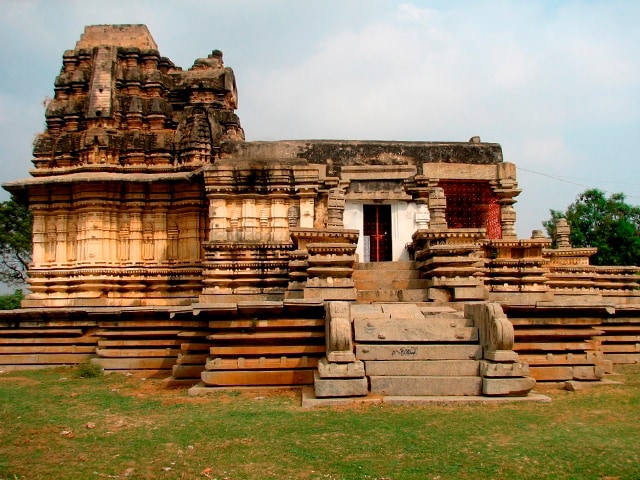
The Erakeswara Temple, located in Pillalamarri, Telangana, India, is a Saivite Hindu temple constructed around 1208 CE. Commissioned by Erakasani, wife of Bēti Reddi of the Recherla family, it is named after her, signifying "lord of Eraka." Despite facing vandalism in the 14th century, the temple was later re-established and is recognized for its intricate stone carvings, unique acoustic properties in its stone, and painted frescoes.
Key Facts
- ›The temple is dedicated to Lord Erakeswara, a form of Shiva.
- ›It was built in Pillalamarri, Telangana, India, on the banks of the Musi river.
- ›Construction was commissioned by Erakasani in 1208 CE, during the reign of Kakatiya King Ganapati Deva.
- ›The temple was vandalized during Alauddin Khilji's raids in the early 14th century.
- ›It is noted for its stone's acoustic properties, producing a metallic sound when tapped.
- ›The temple features intricately carved pillars and walls, some adorned with frescoes.
Shiva
- Historical Seat of Power For Recherla Reddy Rulers
- Commissioned By A Prominent Female Patron
- Architectural Example of Kakatiya Era Temples
- Unique Acoustic Properties of Its Stone
Kakatiya, Recherla
Stone, Granite, Brick, Lime
Erakasani, BēTi Reddi, Recherla Family
Intricately Carved Pillars, Intricately Carved Walls, Frescoes
Musi River
About Erakeswara Temple, Pillalamarri
The Erakeswara Temple, situated in the village of Pillalamarri in the Suryapet district of Telangana, India, is a significant Saivite Hindu temple with roots tracing back to the early 13th century. Constructed on the banks of the Musi river, its foundation is attributed to Erakasani, the wife of Bēti Reddi of the Recherla family, who were feudatories to the Kakatiyas. The temple is named after its patron, with "Erakeswara" translating to "lord of Eraka."
Historical Context
Pillalamarri historically served as a central seat of power for the Recherla Reddy rulers. While other Recherla figures are known for temple construction, the magnificent group of temples in Pillalamarri, including the Erakeswara Temple, were established by their paternal half-uncles and their wives. The temple's construction is placed around 1208 CE, with inscriptions referencing the reign of Kakatiya king Ganapati Deva. The temple faced destruction during Alauddin Khilji's invasions in the early 14th century but was later re-established by a local feudatory chief in 1357 CE.
Architectural and Material Significance
The Erakeswara Temple shares architectural similarities with other Kakatiya-era structures like the Ramappa Temple. It features a cruciform shape with porticos and an inner sanctum. Notably, the temple is constructed from stone and granite, with its sikhara made of brick and lime. The temple is renowned for the unique acoustic properties of its stone, which produces a metallic sound when tapped. The walls and pillars are adorned with intricate carvings and painted frescoes, showcasing the artistic prowess of the period.
Source: Wikipedia ↗
Frequently Asked Questions
Who commissioned the Erakeswara Temple at Pillalamarri?
The Erakeswara Temple was commissioned by Erakasani, the wife of Bēti Reddi of the Recherla family. She was a feudatory of the Kakatiyas. The deity Erakeswara is named after her.
When was the Erakeswara Temple built?
The temple was built in the early 13th century, specifically around 1208 CE. Inscriptions found at the site reference the reign of Kakatiya king Ganapati Deva in that period.
What is the significance of the name Erakeswara?
The name Erakeswara is derived from the commissioner of the temple, Erakasani. The name "Erakeswara" translates to "lord of Eraka," referring to her.
Has the temple always been in its current state?
No, the temple was vandalized during the raids of Alauddin Khilji into the Deccan region in the early 14th century. Later, in 1357 CE, a local feudatory chief re-established Lord Erakeswara.
What is architecturally notable about the Erakeswara Temple?
The temple is noted for its intricate stone carvings on pillars and walls, as well as painted frescoes. Additionally, the stone used in its construction is said to possess interesting acoustic properties, sounding like metal when tapped.
What is the architectural style of the Erakeswara Temple?
The architectural style of the Erakeswara Temple is described as being close to that of other Kakatiya era temples like the Ramappa temple and Kota Gullu. It is cruciform in shape with porticos and a garbhalaya.
Related Temples (Hindu)

Kapila Theertham
Kapila Theertham is a Shaivite temple located at the foot of the Tirumala hills in Andhra Pradesh, India. The temple is dedicated to Lord Shiva, referred to as Kapileswara, and is believed to have been installed by Sage Kapila. It is situated at the entrance of a mountain cave, with a temple tank fed by a mountain stream, and holds significant religious importance for pilgrims.

Mahamaya Temple
The Mahamaya Temple, located in Ratanpur, Chhattisgarh, India, is a significant Hindu temple dedicated to Goddess Durga and Mahalaksmi. It is recognized as one of the 52 Shakti Peethas and holds historical importance, with parts of the complex dating back to the 12th-13th centuries and a later structure built in 1492 CE.

Aundha Nagnath Temple
The Aundha Nagnath Temple, located in Hingoli district, Maharashtra, India, is revered as the eighth of the twelve Jyotirlinga shrines dedicated to Lord Shiva. Its architecture uniquely blends Hemadpanti and Maratha styles, featuring a distinctive basement sanctum and a rear-facing Nandi pavilion, a testament to the legend of Sant Namdev. The temple is a significant heritage site, holding religious importance for Hindus and also a place of reverence in Sikhism due to its connection with Sant Namdev and a believed visit by Guru Nanak.