
Dhingu Mata Temple
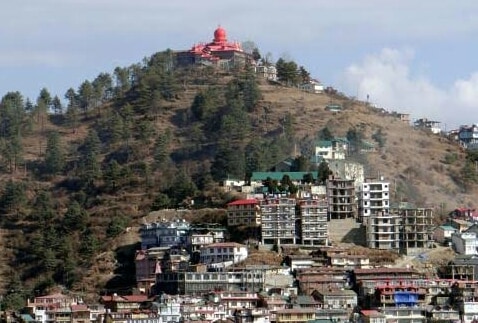
The Dhingu Mata Temple is situated atop Dhingu Dhar hill above Sanjauli in Shimla, Himachal Pradesh. Named after its founder, local ruler Raja Dhingu, the temple is reputed to have been commissioned by the king at the behest of Goddess Durga herself. It is a popular destination for both locals and tourists, known for its Akhand Jyoti and the belief that it fulfills devotees' wishes.
Key Facts
- ›The temple is located on Dhingu Dhar hill above Sanjauli in Shimla, Himachal Pradesh.
- ›It is named after its founder, local ruler Raja Dhingu.
- ›Construction of the temple is believed to have begun in the 19th century, making it over 100 years old.
- ›An Akhand Jyoti (eternal flame) has been continuously burning at the temple for many years.
- ›The temple complex houses ancient Pindis, a newly renovated idol, and an older idol behind it.
- ›Devotees believe their wishes are fulfilled at this temple.
Durga
Religious Pilgrimage, Local Devotion, Tourist Attraction
Local Ruler
Navratri
Raja Dhingu
Ancient Pindis, Renovated Idol, Old Idol
About Dhingu Mata Temple
The Dhingu Mata Temple is a significant Hindu place of worship located on top of the Dhingu Dhar hill, overlooking Sanjauli in Shimla city, Himachal Pradesh, India. The temple derives its name from its founder, Raja Dhingu, a local ruler.
History and Legend
According to local belief, the temple's genesis is divine. It is said that Goddess Durga herself appeared in the dreams of Raja Dhingu, expressing her desire to be consecrated in a temple built by him. Honouring this celestial wish, the king commissioned the construction of the temple. Historical estimates place its construction in the 19th century, indicating it is over a hundred years old. The temple is known for its Akhand Jyoti, an eternal flame that has been continuously burning for many years, symbolizing an unending divine presence. The complex features ancient Pindis, alongside a newly renovated idol from 2021, with an older idol preserved behind it.
Accessibility and Beliefs
The Dhingu Mata Temple is accessible by a link road that can accommodate small vehicles, leading to a municipal parking area at the top of Dhingu Dhar. For those preferring a more traditional ascent, approximately 400 stairs connect a link road above Sanjauli to the temple. The temple is a popular destination, with the belief that all wishes of devotees are fulfilled here. A Bhandara (community feast) is organized every Sunday, and the Navratri festival is celebrated with great joy, featuring the Durgasaptshati Paath for all nine days. The temple also houses idols of other deities such as Lord Shiva, Lord Rama, Lord Ganesha, and Lord Hanuman. The temple operates daily from 5:00 AM to 8:00 PM.
Source: Wikipedia ↗
Frequently Asked Questions
Who founded the Dhingu Mata Temple?
The Dhingu Mata Temple was founded by Raja Dhingu, a local ruler. Legend states that Goddess Durga appeared in his dreams and expressed her desire for him to build a temple for her.
When was the Dhingu Mata Temple built?
The temple is believed to have been constructed in the 19th century, making it over 100 years old. The text mentions a newly renovated idol from 2021, with an older idol present behind it.
How can one access the Dhingu Mata Temple?
The temple is accessible via a narrow link road suitable for small vehicles from Sanjauli market, leading to a municipal parking area. Alternatively, there are approximately 400 stairs from a link road above Sanjauli that lead up to the temple.
What is the significance of the Akhand Jyoti at Dhingu Mata Temple?
The Dhingu Mata Temple features an Akhand Jyoti, an eternal flame that has been burning constantly 24 hours a day for many years. This signifies continuous divine presence and devotion.
What is believed about the wishes of devotees at Dhingu Mata Temple?
It is widely believed that every wish of the devotees is fulfilled at this temple. This belief contributes to its popularity among worshippers.
When is the Dhingu Mata Temple open?
The temple opens daily at 5:00 AM and closes at 8:00 PM, allowing visitors and devotees ample time to visit and worship.
Related Temples (Hindu)

Satyanarayana Temple, Annavaram
The Satyanarayana Temple in Annavaram, Andhra Pradesh, is a prominent Hindu pilgrimage site dedicated to Lord Satyanarayana Swamy, an incarnation of Lord Vishnu. Situated atop Ratnagiri Hill, the temple is renowned for attracting thousands of devotees daily, particularly for the Satyanarayana Vratham, and is considered one of the wealthiest and most visited religious sites in the state.

Jhandewalan Temple
The Jhandewalan Temple in Delhi, dedicated to Vaishno Devi, was founded in the 19th century by Badri Bhagat. Originally located near a spring where Bhagat discovered an idol, the temple gained its name from a large flag (jhanda) hoisted to mark the site. It remains a significant religious center, particularly during the Navratri festival, and is known for its extensive charitable work.

Mata Mansa Devi Mandir
Mata Mansa Devi Mandir is a significant Hindu temple dedicated to Goddess Mansa Devi, a form of Shakti, located in the Panchkula district of Haryana, India. The temple complex, spread across 100 acres in the Shivalik foothills, was established in its current form between 1811 and 1815 by Maharaja Gopal Das Singh of Mani Majra and has been managed by the Shri Mata Mansa Devi Shrine Board since 1991.