
Baleshwar Temple
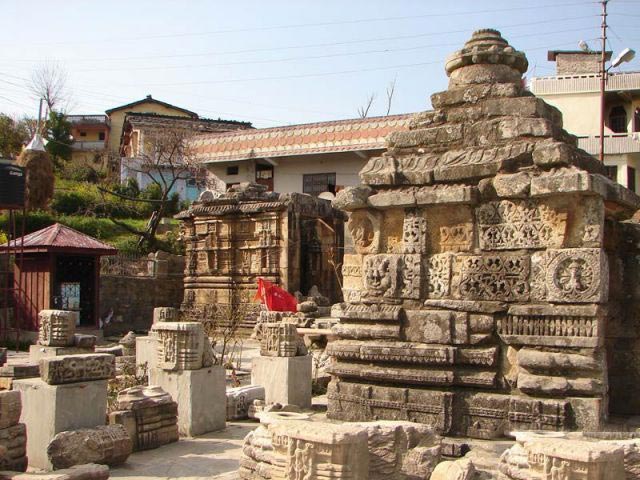
The Baleshwar Temple is an ancient Hindu temple dedicated to Lord Shiva, located in Champawat, Uttarakhand, India. Constructed by the rulers of the Chand dynasty, it is renowned for its intricate stone carvings and is believed to have been founded in the 13th century, with reconstruction efforts undertaken in the early 15th century.
Key Facts
- ›The temple is dedicated to Lord Shiva, also known as Baleshwar.
- ›It was built by the Chand dynasty rulers, with significant reconstruction by Uday Chand and Hari Chand.
- ›The temple showcases remarkable stone carving artistry.
- ›The complex also includes shrines dedicated to Ratneshwar and Champawati Durga.
- ›A freshwater resource known as a 'Naula' is situated near the temple.
- ›A large fair is held at the temple compound on the occasion of Mahashivratri.
Shiva, Baleshwar, Ratneshwar, Champawati Durga
- Architectural Example of Stone Carving
- Historical Site Associated With the Chand Dynasty
- Religious Pilgrimage Destination, Especially During Mahashivratri
Chand Dynasty
Mahashivratri
Stone
Garud Gyan Chand, Uday Chand, Hari Chand
- Carvings of Local Deities On the Exteriors of Ratneshwar and Champawati Durga Temples
Naula
About Baleshwar Temple
The Baleshwar Temple is an ancient Hindu temple located in the city of Champawat, within the state of Uttarakhand, India. It is dedicated to Lord Shiva, who is also known by the name Baleshwar. The temple is celebrated for its remarkable stone carving artistry and is a significant historical and religious site.
History and Construction
The temple's construction is attributed to the rulers of the Chand dynasty. Historical accounts suggest it was initially built in the 13th century AD, around 1390 AD, by Garud Gyan Chand. Later, significant reconstruction efforts were undertaken by Uday Chand between 1420 and 1421 AD, with the work being completed by Hari Chand, as evidenced by a copperplate inscription dated 1423 AD found at the temple.
Temple Complex and Features
The Baleshwar Temple complex houses the main shrine dedicated to Shiva. Within the same compound, there are two additional temples: one dedicated to Ratneshwar and another to Champawati Durga. The exteriors of the Ratneshwar and Champawati Durga temples are adorned with carvings depicting various local deities. A 'Naula,' a natural freshwater resource, is also situated close to the Baleshwar Temple.
Religious Significance and Festivals
The Baleshwar Temple is an active place of worship and a notable pilgrimage destination. It holds particular importance during the festival of Mahashivratri, on which day a large and crowded fair is organized within the temple compound, drawing numerous devotees and visitors.
Source: Wikipedia ↗
Frequently Asked Questions
Who is the primary deity worshipped at Baleshwar Temple?
The main deity worshipped at Baleshwar Temple is Lord Shiva, who is also referred to as Baleshwar. The temple complex also features shrines dedicated to Ratneshwar and Champawati Durga.
When was Baleshwar Temple built and by whom?
It is believed that Baleshwar Temple was built in the 13th century AD, specifically around 1390 AD, by Garud Gyan Chand. Reconstruction work was later initiated by Uday Chand between 1420 and 1421 AD and completed by Hari Chand.
What is notable about the architecture of Baleshwar Temple?
Baleshwar Temple is a marvelous symbol of stone carving. The exteriors of the Ratneshwar and Champawati Durga temples within the complex are intricately carved with depictions of local deities.
What other religious sites or features are associated with Baleshwar Temple?
Within the Baleshwar Temple compound, there are two additional temples: one dedicated to Ratneshwar and another to Champawati Durga. Nearby, there is also a 'Naula,' which is a freshwater resource.
Are there any significant events or festivals held at Baleshwar Temple?
Yes, a very crowded fair is held in the Baleshwar Temple compound on the day of Mahashivratri, attracting many devotees and visitors.
Related Temples (Hindu)

Kapila Theertham
Kapila Theertham is a Shaivite temple located at the foot of the Tirumala hills in Andhra Pradesh, India. The temple is dedicated to Lord Shiva, referred to as Kapileswara, and is believed to have been installed by Sage Kapila. It is situated at the entrance of a mountain cave, with a temple tank fed by a mountain stream, and holds significant religious importance for pilgrims.

Mahamaya Temple
The Mahamaya Temple, located in Ratanpur, Chhattisgarh, India, is a significant Hindu temple dedicated to Goddess Durga and Mahalaksmi. It is recognized as one of the 52 Shakti Peethas and holds historical importance, with parts of the complex dating back to the 12th-13th centuries and a later structure built in 1492 CE.

Aundha Nagnath Temple
The Aundha Nagnath Temple, located in Hingoli district, Maharashtra, India, is revered as the eighth of the twelve Jyotirlinga shrines dedicated to Lord Shiva. Its architecture uniquely blends Hemadpanti and Maratha styles, featuring a distinctive basement sanctum and a rear-facing Nandi pavilion, a testament to the legend of Sant Namdev. The temple is a significant heritage site, holding religious importance for Hindus and also a place of reverence in Sikhism due to its connection with Sant Namdev and a believed visit by Guru Nanak.