
Ashtalakshmi Temple
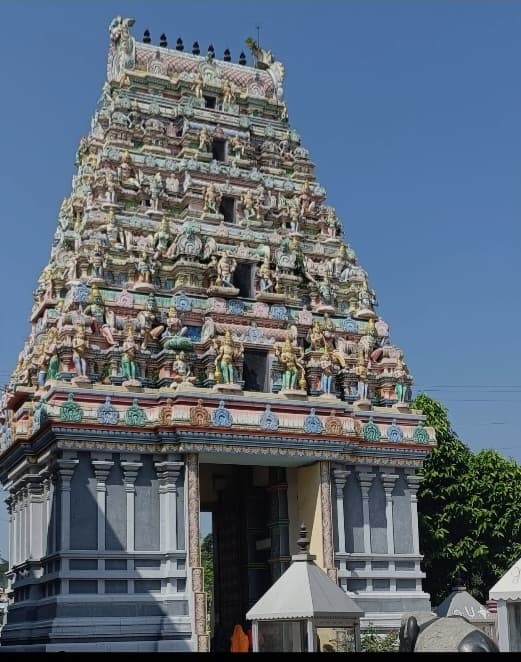
The Ashtalakshmi Temple in Hyderabad, India, is a prominent Hindu temple dedicated to the eight forms of Goddess Lakshmi. Built in the South Indian architectural style, it showcases intricate carvings and houses idols of the Ashtalakshmi goddesses, each adorned with gold jewelry.
Key Facts
- ›Dedicated to the eight forms of Goddess Lakshmi: Ashtalakshmi.
- ›Built in the South Indian architectural style.
- ›Consecrated in April 1996 under the auspices of the Kanchi Kamakoti Peetam.
- ›Features 134 vigrahams (idols) of lesser-known gods adorning the mahagopuram.
- ›Constructed over five years with a total expenditure of Rs 10 million.
- ›The design was inspired by the Ashtalakshmi Temple in Chennai.

Lakshmi
- Dedicated To the Eight Forms of Goddess Lakshmi
- Example of South Indian Architecture In Hyderabad
- Built Under the Auspices of the Kanchi Kamakoti Peetam
Sand, Cement
Kanchi Kamakoti Peetam
- Eight Forms of Goddess Lakshmi
- 134 Vigrahams of Lesser-Known Gods On the Mahagopuram
About Ashtalakshmi Temple
The Ashtalakshmi Temple, located in Ramakrishnapuram, Kothapet, Hyderabad, India, is a significant Hindu temple dedicated to the worship of Goddess Lakshmi in her eight principal forms. Consecrated in April 1996 under the guidance of the Kanchi Kamakoti Peetam, it stands as a notable example of South Indian architecture within the state of Telangana.
Design and Construction
The architectural design of the Ashtalakshmi Temple draws inspiration from its counterpart in Chennai, with several adaptations incorporated during its construction. The temple's realization was a collective effort, funded by numerous public donations, and it took five years of continuous work to reach its present form, with an expenditure totaling Rs 10 million. Padmashri S.M. Ganapati Sthapathi and M. Mathiyalagan Sthapathi were the principal architects and designers of the structure. The temple's mahagopuram is adorned with approximately 134 vigrahams (idols) of lesser-known deities, showcasing the artists' skill. Although constructed from sand and cement, the temple exhibits intricate carvings, particularly on the gopuram. Inside, idols of Adilakshmi, Aishwaryalakshmi, Santanalakshmi, Dhanalakshmi, Dhanyalakshmi, Gajalakshmi, Vijayalakshmi, and Varalakshmi are enshrined, each richly adorned with gold jewelry, including the kasula Peru necklace.
Source: Wikipedia ↗
Frequently Asked Questions
When was the Ashtalakshmi Temple consecrated?
The Ashtalakshmi Temple was consecrated in April 1996. Its construction took five years to complete.
What is the architectural style of the Ashtalakshmi Temple?
The temple is built in the South Indian architectural style. Its design was largely borrowed from the Ashtalakshmi Temple in Chennai, with some modifications made during construction.
Which forms of Goddess Lakshmi are worshipped at this temple?
The temple is dedicated to the eight forms of Goddess Lakshmi: Adilakshmi, Aishwaryalakshmi, Santanalakshmi, Dhanalakshmi, Dhanyalakshmi, Gajalakshmi, Vijayalakshmi, and Varalakshmi. These idols are richly ornamented.
Who was responsible for the design and construction of the temple?
The design and architecture were conceived by Padmashri S.M. Ganapati Sthapathi and M. Mathiyalagan Sthapathi. The temple was a collective endeavor, with significant contributions from the public.
What are some notable features of the temple's exterior and interior?
The mahagopuram is adorned with approximately 134 vigrahams of lesser-known gods. The temple's exterior boasts intricate carvings, and the interior houses the richly ornamented idols of the Ashtalakshmi goddesses.
Related Temples (Hindu)
Vishnudham Mandir
Vishnudham Mandir in Samas, Bihar, is a significant Hindu temple renowned for housing the second largest idol of Lord Vishnu globally. Discovered in 1992, the black granite idol is believed to date back to the Gupta or Pala period and is a focal point for devotees, with worship continuing in a partially constructed temple. The temple's construction was inspired by the Tirupati temple and aims to become a major tourist destination.

Bhu Varaha Swamy temple
The Bhu Varaha Swamy temple in Srimushnam, Tamil Nadu, is a significant Hindu temple dedicated to Varaha, the boar avatar of Vishnu, and his consort Lakshmi. Constructed in the South Indian architectural style, it is recognized as one of the 108 Abhimana Kshethrams in Vaishnavism and holds historical importance with contributions from the Vijayanagara Empire and Thanjavur Nayak kings.

EME Temple
The Dakshinamoorthy and Navgraha EME Temple in Vadodara, Gujarat, is a unique Hindu temple dedicated to Lord Shiva, built in 1966 by the Indian Army's EME School. Its distinctive geodesic dome design, inspired by Buckminster Fuller, incorporates architectural elements from major world religions, symbolizing secularism.